Last updated November 17, 2026
DIY vs Professional New Detached ADU: What’s Safe to Do Yourself
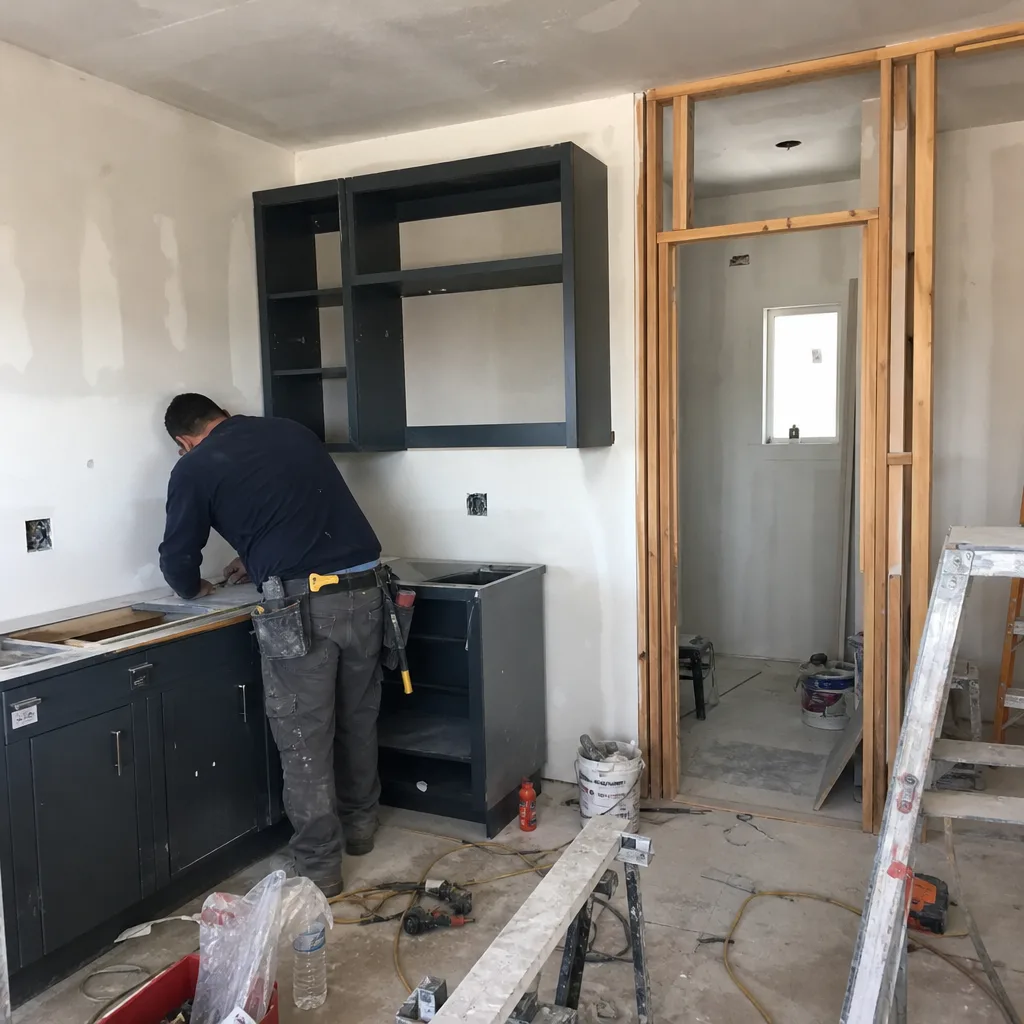
Most of what you’ll find online about building your own ADU quietly assumes you live somewhere else. It’s written by people in California, or Texas, or wherever the channel happens to be based, and it never mentions the part of Nevada law that turns “I’ll just pull the permits myself” into a five-year anchor on your property’s resale value. Here’s what you’ll learn in this guide: which work is genuinely owner-performable once you hold an owner-builder permit in Clark County, which work is a hard no regardless of what you sign, and what the real cost difference looks like when you price your own time and the resale restriction into the math. We write this from Las Vegas, where the specifics matter.
Quick Answer
Under Nevada contractor licensing law (NRS 624), you may act as your own owner-builder for a new detached ADU if you own and will occupy the property, but the permit you sign carries a five-year resale restriction, and several categories of work – electrical panel wiring, gas piping, structural framing sign-off, and HVAC refrigerant systems – still require a licensed subcontractor even with that permit in hand. The DIY-safe list is short: painting, finish carpentry, landscaping, and certain fixture installs. Everything that keeps a Las Vegas detached ADU from failing inspection falls to licensed trades.
Table of Contents
- What Nevada’s Owner-Builder Permit Actually Allows (And Restricts)
- The Five-Year Resale Restriction Explained
- Tasks That Are Legally DIY in Clark County
- Tasks That Require a Licensed Subcontractor Regardless of Permit Status
- The Insurance and Lender Gap
- Cost Comparison: Professional Design-Build vs Owner-Builder
- What Changes in Las Vegas Specifically
- When to Call a Professional
What Nevada’s Owner-Builder Permit Actually Allows (And Restricts)
Nevada Revised Statutes 624 defines which construction work requires a licensed contractor. An owner-builder exemption allows a property owner to construct, alter, repair, or improve a structure on their own property without holding a contractor’s license – provided the structure is for their own occupancy and not intended for sale or lease within a defined window. For a new detached ADU in Las Vegas, that last clause is the one that matters. A detached ADU is by definition a secondary dwelling unit, and if you plan to rent it, sell the property, or refinance with the ADU as an income-producing asset, an owner-builder permit puts you in the same category as a spec builder who hasn’t held a license. Clark County’s permit intake treats the owner-builder application as a legal declaration, not a light formality. You’ll sign it under penalty of perjury. Hiding the fact that a licensed framer did your structural work doesn’t remove the restriction – it just means you’re now out of compliance on two fronts instead of one.
How the permit works, in order:
- You submit the ADU permit application as owner-builder, attesting the structure is for your own use.
- Clark County issues the permit with the restriction that appears on the certificate of occupancy.
- Any subsequent transfer of title within the restriction window triggers disclosure of the owner-built status to the buyer and their lender.
- Sale or refinance within the window can require the structure be re-permitted under a licensed contractor, or a specific carve-out negotiated with the lender.
If you want to build a Las Vegas detached ADU as a long-term asset, this restriction is usually the single largest cost of the DIY path – bigger than any one trade bill. New detached ADU in Las Vegas is where we cover the professional path in full.
The Five-Year Resale Restriction Explained
Here’s the specific language most out-of-state DIY content never covers. When you pull an owner-builder permit on a Clark County ADU, the resulting certificate of occupancy notes the property as owner-built, and that note sticks for five years from the date of final inspection. It’s not a vague flag. It appears in title work, it appears in appraisal reports, and it appears in the resale disclosure. If you sell during that window, the buyer’s lender can require the structure be brought up to “licensee-built” standard before funding the loan – which means a licensed contractor’s drawing set, a new permit, and in practice redoing any work that doesn’t have a documented licensed inspection record. We’ve seen the re-permit cost land at 15 – 25% of the original build for a Las Vegas ADU, because the structural and MEP work can’t be grandfathered without the paper trail.
Refinancing is its own snag. Conventional lenders and FHA both treat owner-built structures with extra caution. In practical terms this means:
- Conventional refinance: the appraiser may require a licensed inspection before the ADU is counted as rentable square footage, which affects your value-based loan sizing.
- FHA or VA cash-out: owner-built secondary units often need an additional licensed inspection or won’t be counted at all.
- Sale within the window: disclosure is mandatory and the buyer’s lender controls the remedy, not you.
- Sale after five years: restriction drops, but the owner-built history is still visible in title history and appraisers often still flag it.
For a Las Vegas property purchased between 2015 and 2025 at current prices, an ADU is often meant to serve as a rental or multi-generational asset. That five-year window complicates exactly the exit strategy most buyers are planning.
Tasks That Are Legally DIY in Clark County
If you hold a pulled owner-builder permit in Clark County, you can legally perform these tasks yourself without a licensed contractor. This is the actual list – not the list you get from a YouTube video, which usually implies you can frame your own ADU and roll the electrical into the same permit. You can’t.
- Interior and exterior painting. No license, no specialty permit. The paint spec matters in Las Vegas – 100°F+ summers and UV exposure mean elastomeric coatings on stucco are a practical requirement, not a preference.
- Finish carpentry. Baseboards, trim, door casings, cabinet installation. Not rough framing.
- Landscaping and grading. Planting, hardscape, drip irrigation. Clark County’s water-smart rules apply to the ADU’s separate irrigation zone.
- Some fixture installation. Faucets, toilet seats, ceiling fans, light fixtures on existing circuits – under the permit conditions that the rough-in was performed by a licensed trade and inspected before you touch it.
- Flooring. Tile, LVP, engineered wood, so long as the subfloor is the licensed contractor’s work and has passed inspection.
The permit conditions matter. Every task above assumes the underlying rough-in was completed under a licensed permit and passed inspection. If you paint before plumbing final is signed off, you’ll cut the wall back open. We see that happen in Las Vegas more often than anyone would guess.
Tasks That Require a Licensed Subcontractor Regardless of Permit Status
This is the part of the guide that saves you the most money and the most time. Even with an owner-builder permit in hand, these categories require a Nevada-licensed subcontractor with an active permit on file:
- Electrical panel and service work. Pulling a new service, replacing a panel, wiring the ADU’s kitchen circuits, running the subpanel feed from the main – this is licensed electrical work, full stop. It’s also genuinely dangerous. A 200-amp panel feed can kill you.
- Gas piping. Any new gas line from the meter to the ADU (for a range, water heater, or dryer) is licensed plumber or gas-fitter work. No exceptions for owner-builder.
- Structural framing and structural sign-off. You can physically swing a hammer on framing under some county interpretations, but the structural inspection and the engineering sign-off on a detached ADU require a licensed contractor and a licensed engineer. The sign-off is what lenders care about.
- HVAC refrigerant systems. EPA Section 608 certification is required to install or service the refrigerant loop. No owner-builder exemption exists for this. Ductwork and equipment setting can sometimes be split out, but the line set and charge are licensed work.
- New roof assemblies on a detached structure. Though framing overlaps, roof sheathing and waterproofing on a detached ADU typically fall under the licensed roofing contractor’s scope.
The simple tell: if it can kill you, if a lender cares about the paper on it, or if the EPA regulates it, it’s licensed work. We cover the sequence in full under ADU design & permitting in Las Vegas.
The Insurance and Lender Gap
An owner-built ADU changes how your homeowner’s policy treats the structure. Standard HO-3 policies cover “structures on the residence premises” – which sounds like it covers the ADU – but most carriers require separate endorsement for a secondary dwelling unit, and owner-built construction often falls outside what the policy will underwrite without additional inspection. In practical terms, a homeowner in Las Vegas who completes an owner-built detached ADU frequently finds:
- The structure isn’t listed on the policy until a licensed inspector documents it.
- If someone is injured inside the ADU (a tenant, a family member, a contractor), liability coverage is questionable until the ADU is separately scheduled.
- Fire and water-damage claims inside an unscheduled ADU have been denied on the “not part of the insured residence” reading.
- Tenant-occupied owner-built units almost always trigger an additional landlord policy or rider.
On the lender side, Fannie Mae’s appraisal guidelines require the ADU to be “legally permissible” and “inspected” to count toward value. An owner-built structure with a five-year restriction open usually fails at least one of those tests. A licensed, permitted, inspected ADU clears both.
Cost Comparison: Professional Design-Build vs Owner-Builder
Here’s where the DIY math usually collapses. The all-in cost of an owner-builder new detached ADU in Las Vegas looks cheap on the front page of a spreadsheet and expensive by the time you close out the project. What we see across our own projects and the ones we’re asked for a second opinion on:
- Professional design-build, new detached ADU: $180,000 – $340,000 all-in for a one- or two-bedroom unit in Las Vegas, drawings through final inspection, one written price before any work begins. Timeline typically 9 – 14 months.
- Owner-builder, with realistic time: $140,000 – $260,000 in hard costs, plus 20 – 40% in soft cost for the time the owner spends managing trades, plus a realistic 4 – 8 month extra timeline against a professional build.
- Correction cost of one failed inspection sequence: $8,000 – $28,000 depending on which trade fails and whether the correction uncovers a sequencing error.
- Re-permit cost if you sell in the five-year window and the buyer’s lender requires it: 15 – 25% of your original build.
- Refinance value loss: unscheduled owner-built ADUs often appraise for 40 – 60% of comparable permitted ADU value, or don’t count at all.
Total that up honestly and the $40,000 – $80,000 “savings” of the owner-builder path is frequently a $20,000 – $60,000 loss once a correction or a resale restriction hits. And that’s before pricing the 500 – 900 hours a serious owner-builder will spend on the project. Under our Haven Standard Clause 1, we do not quote words – we quote a written price before any work starts, so the comparison above is the comparison, not a guess.
What Changes in Las Vegas Specifically
Three local factors shift the DIY math in ways that out-of-state ADU content never addresses. First, the Las Vegas climate is hard on finishes. UV exposure at 2,000 feet altitude deteriorates exterior paint and sealants on an aggressive schedule – 3 – 5 years for a stucco recoat versus 7 – 10 in temperate climates – which means cheap DIY exteriors cost twice as much over the ADU’s life. Second, Clark County’s water-smart rules govern the ADU’s irrigation zone separately from the main house; a DIY landscaped unit that doesn’t meet the turf-area limits can fail final landscape inspection. Third, the heat affects HVAC sizing. An undersized mini-split on a Las Vegas detached ADU will underperform the manufacture spec by mid-June and short-cycle for the rest of the summer – the unit technically works but the owner replaces it in three years. We specify James Hardie siding on most Las Vegas detached ADUs specifically because of the UV and monsoon pattern, and we coordinate prefab systems from Abodu or Cover only where the manufacturer’s warranty survives the local climate.
For anyone converting an existing garage rather than building new, the local math is different enough that we cover it separately under garage conversion ADU in Las Vegas – the permit rules are generally simpler, and the five-year restriction question is still worth asking early.
Common Mistakes to Avoid
- Treating the owner-builder permit as a license to run the whole build. It isn’t. Half the trades you’ll need are legally required to be licensed, and the county verifies this at rough-in inspection.
- Pricing the ADU on hard costs alone. Owner-builders typically underestimate the management time by a factor of three, and in Las Vegas trade scheduling is tight enough that a three-week slip cascades into a two-month slip.
- Ignoring the five-year restriction until sale time. The restriction is decided the day you sign the permit application. If you plan a sale or refinance within five years, this is the number that should determine your path.
- Reusing out-of-state ADU plans. A plan set that passed in a California jurisdiction won’t clear Clark County structural review without a licensed Nevada engineer’s stamp – and re-stamping a stranger’s drawing usually costs more than pulling fresh plans.
- Painting or finishing before final inspections. In Las Vegas this is the single most common owner-builder self-inflicted cost we see – repainting a whole interior after a plumbing correction runs $4,000 – $9,000.
- Skipping the inland-zone permit set for a detached structure. A detached ADU is a new structure, not an alteration – it needs the full set including energy compliance, and skipping the energy calc is a common owner-builder shortcut that fails final.
- Assuming your homeowner’s policy covers the ADU. In our experience, most Las Vegas carriers won’t schedule an owner-built secondary unit without a licensed inspection, and coverage gaps show up at claim time, not before.
When to Call a Professional
Call us before you sign the owner-builder application if any of these are true: you plan to rent, sell, or refinance within five years; you’re financing any portion of the ADU (lenders price the restriction); you want the ADU counted in your property’s appraised value; you’re not certain which trades require a licensed contractor; or your time is worth more than $40 an hour and you’d rather spend 800 hours elsewhere. The whole point of the design-build model is a single contract at a single written price – drawings, permit set, and construction in one document – so the designer and builder can’t point at each other when the structural correction lands. Ellery ADU Studio Las Vegas offers free estimates in Las Vegas – call (866) 779-3194. We’ll also review any written estimate you’re already holding, at no cost, and tell you what’s missing from it.
Frequently Asked Questions
You can build parts of it yourself under an owner-builder permit pulled through Clark County, but you cannot legally perform electrical panel work, gas piping, structural sign-off, or HVAC refrigerant work yourself – those require a licensed Nevada subcontractor. The owner-builder permit also carries a five-year resale restriction that appears on the certificate of occupancy.
It means that if you sell or refinance the property within five years of final inspection, a buyer’s lender or your refinance lender can require the ADU to be re-permitted under a licensed contractor or a specific carve-out before funding. The restriction rides with the certificate of occupancy, not the owner, so it transfers to the buyer and gets disclosed at sale.
Painting, finish carpentry, landscaping that meets the water-smart rules, some fixture installation on existing inspected circuits, and flooring over a passed subfloor. That’s essentially the complete list. Everything from framing sign-off to the electrical subpanel requires a licensed trade, and the county verifies licenses at inspection.
Usually not without additional scheduling and often not without a licensed inspection documenting the structure. Most Las Vegas carriers treat an unscheduled owner-built secondary dwelling unit as outside the standard HO-3 policy, which creates a coverage gap that shows up at claim time.
Professional design-build for a new detached ADU in Las Vegas typically runs $180,000 – $340,000 all-in, drawings through final inspection, with one written price before any work begins. The owner-builder route usually saves $40,000 – $80,000 in hard cost on paper but rarely in practice. Call (866) 779-3194 for a written estimate on your property – the estimate is free and so is a second opinion on any quote you already have.
Yes, this is legal and common. The complication is that your schedule, your inspection sequencing, and your correction costs are yours to manage, and the five-year resale restriction still applies to the finished structure regardless of how many licensed trades worked on it. The permit is stamped owner-builder – that’s the disclosure, not who did the work.
The Bottom Line
The DIY-versus-professional decision for a Las Vegas detached ADU comes down to three numbers, not a YouTube skill chart. The five-year resale restriction, the correction cost of a single failed inspection sequence, and the refinance value loss of an unscheduled owner-built unit together routinely exceed the $40,000 – $80,000 the owner-builder path appears to save. The legally DIY list in Clark County is short – paint, finish carpentry, landscaping, some fixtures, flooring – and the licensed-only list is the rest of the project. If you plan to hold the ADU as a rental, refinance within five years, or count it in your property’s appraised value, the professional path is the one that pays. Call (866) 779-3194 for a free estimate in Las Vegas and a written price before any work starts.
Written by the team at Ellery ADU Studio Las Vegas.