Last updated November 17, 2026
DIY vs Professional Junior ADU & Interior Conversion: What’s Safe to Do Yourself
A homeowner who rewired his own garage for twenty years without a single incident can still get a stop-work order and a mandatory demolition order by touching the wrong wall in a junior ADU. The wall in question is the fire-separation assembly between the JADU and the main house, and a drywall patch that looks perfect can void its one-hour rating. The line between safe DIY and dangerous DIY in a Las Vegas JADU conversion isn’t skill. It’s the permit trigger. This guide draws that line by trade, by Nevada license classification, and by the insurance consequences of getting it wrong.
Quick Answer
In a Las Vegas junior ADU conversion, the only genuinely DIY-safe work is finish-level: interior paint, cabinet hardware, door hardware on non-fire-rated doors, and landscaping on the JADU side of the lot. Anything that touches the electrical panel, load-bearing walls, plumbing rough-in, gas lines, or the fire-separation assembly between the JADU and the main dwelling requires a licensed trade and inspected permits, regardless of your skill level. That’s a hard legal line, not a recommendation.
Table of Contents
- What is the permit threshold for a JADU conversion in Las Vegas?
- Which Nevada contractor license classifications apply to a JADU conversion?
- Why is the fire-separation wall the highest-risk DIY zone?
- What work is genuinely safe to do yourself?
- What does owner-builder status actually permit in Nevada?
- How does unpermitted JADU work affect your homeowners insurance?
- What’s different about a JADU conversion in Las Vegas?
- Common Mistakes to Avoid
What is the permit threshold for a JADU conversion in Las Vegas?
The permit threshold is the specific point where a project stops being cosmetic and starts being construction. A JADU conversion crosses that line the moment work affects any of the following: the electrical panel or any branch circuit, load-bearing members, the plumbing supply or drain system, gas piping, the building envelope’s weather sealing, or the fire-separation assembly between units. In Las Vegas, the city and Clark County each administer their own building permits, and both require a licensed contractor or a qualified owner-builder for permitted work. There’s no “small enough to skip” exception on the fire assembly or the panel.
We’ve seen homeowners start a JADU conversion believing a permit was only required for structural work, then discover their new subpanel, their relocated bathroom drain, and their re-framed closet wall all triggered separate permits. A Clark County permit inspector can and will issue a stop-work order that halts the project for weeks. If work has advanced past the point of inspection, the enforcement can require uncovered assemblies to be opened back up so they can be verified.
The practical way to think about it: if a licensed trade would sign their name to the work in the permit set, you need a permit. That’s most of a JADU conversion. The finish work listed later in this guide is what’s left. Under Haven Standard Clause 1, every Ellery project carries a written price before any work begins, which means the permit scope is spelled out before you decide what to keep and what to hand off.
Which Nevada contractor license classifications apply to a JADU conversion?
Nevada classifies contractor licenses by trade group, and the Nevada State Contractors Board issues the credentials. For a junior ADU conversion, the three classifications you’ll see most in the permit set are C-2, C-4, and C-21. Each covers a distinct trade, and each must be separately held by the licensed individual or entity who signs and performs that scope.
- C-2 (Electrical Contractor): Any electrical work beyond swapping a light fixture or a standard receptacle in-kind. Panel work, new circuits, subpanels, and any branch wiring for the JADU’s kitchen and bathroom are C-2 scope.
- C-4 (Plumbing and Heating Contractor): Supply and drain lines, water heater installation, gas piping, and venting. A JADU conversion typically needs plumbing because the unit requires its own kitchenette and bathroom, or at minimum a wet bar and half-bath depending on the design.
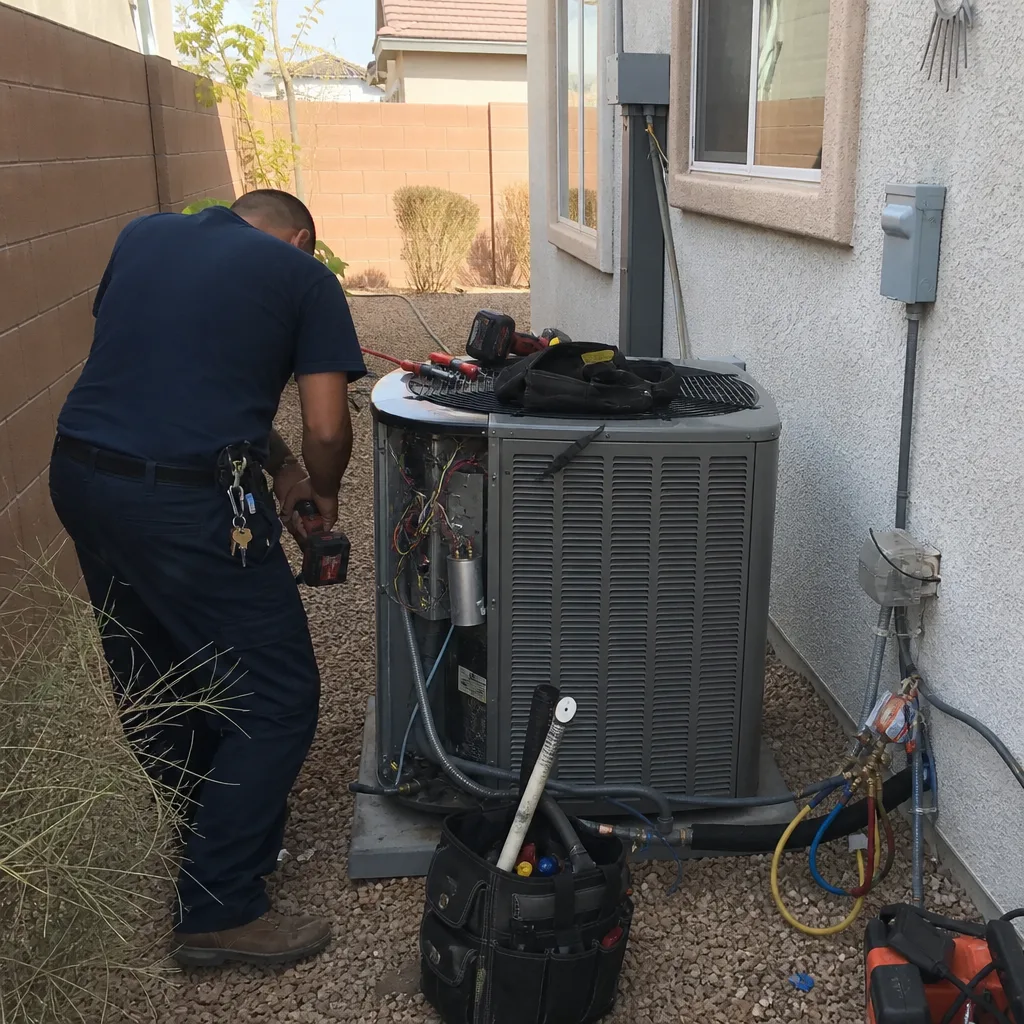
- C-21 (Refrigeration and Air Conditioning Contractor): HVAC work, including the mini-split or ducted system a JADU will need to survive a Las Vegas July. Installing the unit and charging the refrigerant lines is C-21 scope; in most cases a heating and air contractor will also hold this classification.
Structural, framing, and drywall work falls under a general building contractor’s license (B or B-2 in Nevada). Fire-separation assembly details cross into framing and drywall, and the assembly must be installed exactly as detailed in the stamped drawing. A trade carrying one classification cannot legally perform another’s scope, which is one reason the design-build model matters: under a single contract, the correct licensed trade is assigned to each scope by default. Our ADU Design & Permitting in Las Vegas page walks through how the permit set assigns trades.
Why is the fire-separation wall the highest-risk DIY zone?
The fire-separation assembly between a JADU and the main dwelling is the single highest-risk DIY zone in the entire project, and the reason is the one-hour rating. A one-hour wall isn’t just “two layers of drywall.” It’s a tested assembly with specific requirements for the number of drywall layers, the fastener spacing and length, the type of joint compound, the penetration detailing where boxes and pipes pass through, and the continuity of the assembly at floor, ceiling, and wall intersections. Changing any one of these details can void the rating, even if the wall looks complete.
What makes it dangerous is how ordinary it appears. A homeowner who has hung drywall before looks at the existing wall and sees a standard partition. They patch around a new electrical box, they run a cable through a factory-installed knockout instead of a fire-rated penetration seal, they add a coat of standard joint compound where the assembly specifies a specific product, and the wall now fails inspection. If a fire later starts in the JADU, the entire rating is in question, and the loss investigation will trace back to the assembly.
We’ve seen this in older Las Vegas neighborhoods where garages and additions were converted informally long before JADU rules existed. The fix in those cases usually requires opening the assembly to re-install it to the drawing, which means a stop-work order, added cost, and a delay measured in months. The fire wall is not a trade-off between cost and quality – it’s a binary. It passes or it doesn’t. Our Garage Conversion ADU in Las Vegas page covers the assembly details we specify, and our Ellery ADU Studio Las Vegas home page shows how the photo record documents each stage.
What work is genuinely safe to do yourself?
The scope of safe DIY in a Las Vegas JADU conversion is narrow but real. Painting, cabinet and door hardware, landscaping on the JADU side of the lot, and a handful of other finish items are legal to do yourself in most cases, and they don’t risk the permit, the fire assembly, or the insurance policy. Here’s the short list:
- Interior paint. Walls, ceilings, and trim, after the licensed trades finish and inspection is signed off. Painting is cosmetic and doesn’t touch any permit scope.
- Cabinet hardware. Knobs, pulls, and hinges on already-installed cabinets. The cabinet boxes themselves are installed by the finish carpenter; adding hardware afterward is fine.
- Door hardware on non-fire-rated doors. Passage knobs, deadbolts, and privacy locks on bathroom and bedroom doors that are not part of the fire assembly. Never swap hardware on a fire-rated door without checking the assembly’s listing, because the door and frame are part of the assembly.
- Landscaping on the JADU side of the lot. Mulch, gravel, low-water plantings, and a small patio that sits away from the building envelope. Don’t trench near gas or electrical lines, and check utility locates before any digging.
- Some shelving and closet systems. Freestanding closet rods and shelves that don’t require fastening into the fire assembly.
- Furnishings and window treatments. Obviously DIY, but worth naming because the biggest cost overruns on JADU finish-outs come from the interior selections, and a homeowner with a clear design eye can save real money here.
Everything outside this list should go to the licensed trade assigned to the scope. The line is the permit trigger, not your confidence. On a new build comparison, the safe DIY scope is even smaller; the New Detached ADU in Las Vegas page covers the full hard-cost scope where finish-only doesn’t apply the same way.
What does owner-builder status actually permit in Nevada?
Nevada owner-builder status lets a homeowner pull permits on their own primary residence for construction work they perform themselves, without holding a contractor’s license. What it does not do is authorize unlicensed work performed by anyone else, or convert a rental-designated JADU into a DIY project. The moment the unit is intended for rent, or the homeowner sells the property within a short window after completion, the owner-builder exemption narrows or disappears entirely.
The rules that trip homeowners up in Las Vegas:
- You must occupy the property as your primary residence. A JADU designated for rental income or an accessory rental does not convert to owner-builder scope by designation alone.
- You must be doing the work yourself. Hiring unlicensed “handymen” to perform C-2, C-4, or C-21 scope under an owner-builder permit is a violation even if the permit is in your name.
- You carry the liability. Owner-builder permits pass inspection responsibility to the homeowner, and any defect is yours to fix, discover, and pay for. There’s no written warranty behind the work.
- The disclosure follows the property. Nevada requires owner-builder work to be disclosed in certain resale situations, and Clark County records can flag unpermitted construction during a title search.
For most of the clients we work with, the owner-builder path trades a small labor savings for a large liability exposure on a six-figure JADU asset. Under Haven Clause 1, we quote a written price before work starts, so the licensed path carries a known number rather than a running estimate.
How does unpermitted JADU work affect your homeowners insurance?
A homeowners policy is very likely to deny a fire claim if unpermitted work in the JADU contributed to the loss. That’s the consequence most homeowners never hear about. The policy language varies by carrier, but the pattern is consistent: material misrepresentation of the property, unpermitted construction, and failure to disclose occupancy changes are all standard exclusions or grounds for rescission. When the claims adjuster finds a JADU the insurer never knew existed, or a fire-assembly wall that was never inspected, the entire claim can be denied.
There’s a second problem beyond the claim denial: the coverage amount. A finished JADU with a kitchenette, bathroom, HVAC, and finishes adds real value to the property. If your policy is written on a house without that square footage, and it burns, the settlement will be calculated on the coverage you carried, not on what it costs to rebuild. Disclosing the JADU and updating coverage as it’s completed closes that gap.
We require our clients to receive the documented photo record at the end of every visit, because the record is what an adjuster wants to see when a claim is filed. The photo record plus the permit set plus the inspection sign-offs are the evidence that the JADU exists on paper and on the policy. That combination is what moves a claim from “under investigation” to paid.
What’s different about a JADU conversion in Las Vegas?
Las Vegas adds three things to a JADU conversion that most national guides skip. The first is climate. July high temperatures routinely exceed 110°F in the valley, and a JADU that relies on a single window unit or a passive cooling design fails halfway through the summer. The HVAC scope isn’t optional here; it’s a design requirement, and the C-21 trade installation is what makes the unit habitable year-round. Insulation and roof assembly details also matter more than in milder climates, because the cooling load on a small unit is unforgiving.
The second is the existing building stock. Many Las Vegas homes, especially those built between 1990 and 2005, have stucco-on-frame assemblies with specific detailing for the fire wall and the building envelope. A JADU conversion that touches the exterior wall triggers flashing and weather-barrier corrections that aren’t obvious until the stucco is removed. We specify James Hardie cladding and trim on affected exterior faces because the material draws match the local supply chain and the installation details are documented by the manufacturer.
The third is the permit landscape. The City of Las Vegas and Clark County each have their own ADU rules, review timeframes, and inspection scheduling, and the rules continue to shift as state law pushes local jurisdictions to streamline approvals. Prefab and modular options, whether from Abodu or Cover, still require local foundation, utility, and fire-separation work, and those scopes come from Las Vegas licensed trades. That’s why the design-build model matters here – the permit set and the construction are one contract, and neither side can point at the other when a Clark County inspector flags a detail.
Common Mistakes to Avoid
- Patching the fire wall without checking the assembly. A single layer of standard drywall over a fire assembly, or a fastener pattern that doesn’t match the drawing, can void the one-hour rating. The wall will look finished and fail inspection.
- Running electrical on an owner-builder permit for unlicensed helpers. If you pull the permit and hire an unlicensed friend of a friend to do the wiring, the permit is still in violation. C-2 scope requires a C-2 license.
- Assuming the JADU doesn’t need HVAC in Las Vegas. A design without a proper C-21 installed system will fail a habitability check and cost more to retrofit later. In July, the unit is unusable without it.
- Not disclosing the JADU to the insurance carrier. A finished, occupied JADU on an undisclosed policy is grounds for a claim denial. Update coverage before the unit is occupied.
- Starting work before the permit set is stamped. Las Vegas inspectors will stop work on unpermitted scope, and re-opened walls add cost measured in thousands, not hundreds. Under Haven Standard Clause 5, the scope is locked at signing, no door-side upsells, no scope creep.
- Skipping the documented photo record. Photos of the fire assembly, the panel, and the plumbing rough-in before drywall closes are the only evidence an adjuster or a future buyer will accept. Take them, keep them, hand them off at sale.
- Treating the fire wall as a weekend drywall job. The most common, and the most expensive, mistake. If a trade touches the fire assembly, a licensed framer or drywaller should install it to the stamped drawing.
When to Call a Professional
Call a professional the moment your JADU scope includes any electrical panel work, any new branch circuit, plumbing supply or drain work, gas piping, HVAC, structural framing, or anything at all touching the fire-separation assembly between the JADU and the main dwelling. Those scopes carry C-2, C-4, C-21, or general building license requirements in Nevada, and no amount of homeowner skill converts them to DIY. Also call when the JADU is designated for rental, when the property is being sold within a few years, or when the existing assembly details are uncertain and you need someone to open the wall and identify what’s actually there. Ellery ADU Studio Las Vegas offers free estimates in Las Vegas – call (866) 779-3194. A Free Second Opinion is also available on any written estimate you already have in hand.
Frequently Asked Questions
You can do the finish-level portion yourself, but the permit-required scopes must be performed by a licensed trade. In Las Vegas, that means electrical (C-2), plumbing (C-4), HVAC (C-21), structural framing, and any work affecting the fire-separation assembly between units cannot legally be DIY even under owner-builder status. Painting, cabinet hardware, non-fire-rated door hardware, and landscaping are the realistic DIY scope.
Yes, in essentially every case. A JADU conversion requires a building permit from the City of Las Vegas or Clark County depending on the property’s jurisdiction, plus trade permits for electrical, plumbing, and mechanical work. Only cosmetic changes that don’t touch the structure, the building envelope, the systems, or the fire assembly sit outside the permit threshold. Call (866) 779-3194 for a free estimate if you’re unsure where your scope lands.
You risk a stop-work order, mandatory demolition of unpermitted work, and a denied insurance claim if a loss occurs. Clark County can also flag the unpermitted construction during a title search at sale, which delays or blocks closing. The cost of bringing the work into compliance after the fact usually exceeds the cost of doing it permitted in the first place.
C-2 for electrical, C-4 for plumbing and heating, C-21 for refrigeration and air conditioning, and a general building classification for the structural and envelope work. Each scope must be performed by a contractor holding that specific classification, and the license number appears on the permit documentation. A single license cannot cover another trade’s scope in Nevada.
It can. Most policies contain exclusions for unpermitted construction and require disclosure of material property changes and occupancy shifts, and a fire claim tied to unpermitted work in the JADU is at high risk of denial. Even a payable claim will be settled on the coverage you carried, which won’t match the cost to rebuild a JADU the insurer never knew existed. Disclose the JADU and update coverage before it’s occupied.
Yes. The one-hour rating depends on specific assembly details – the drywall layers, fastener length and spacing, joint compound type, penetration seals, and continuity at floor, ceiling, and wall intersections. Patching the assembly with standard materials can void the rating even if the wall looks complete. That’s why this is the single highest-risk zone in a JADU conversion, and why a licensed framer or drywaller should install it to the stamped drawing.
The Bottom Line
The safe DIY scope in a JADU conversion is narrower than most homeowners expect, and the reason is the permit trigger, not skill. Painting, cabinet hardware, non-fire-rated door hardware, and landscaping are yours to do. The electrical panel, plumbing, HVAC, structural work, and the fire-separation assembly between units require licensed trades and inspected permits in Las Vegas. Skipping the permit risks a stop-work order, mandatory demolition, and an insurance claim denial on a unit you’re counting on as a long-term asset. If a licensed trade would sign their name to the scope, it needs a permit and a licensed contractor. The rest can wait for the weekend.
Ellery ADU Studio Las Vegas quotes a written price before any work begins, delivers a documented photo record on every visit, and stands behind every project with the 365-Day Done Right Promise. If you’re weighing a junior ADU conversion and want to know exactly which scope is safe to do yourself and which requires a licensed trade, call (866) 779-3194 for a free estimate – a live person answers, and a Free Second Opinion is available on any written estimate already in hand.
Written by the team at Ellery ADU Studio Las Vegas.