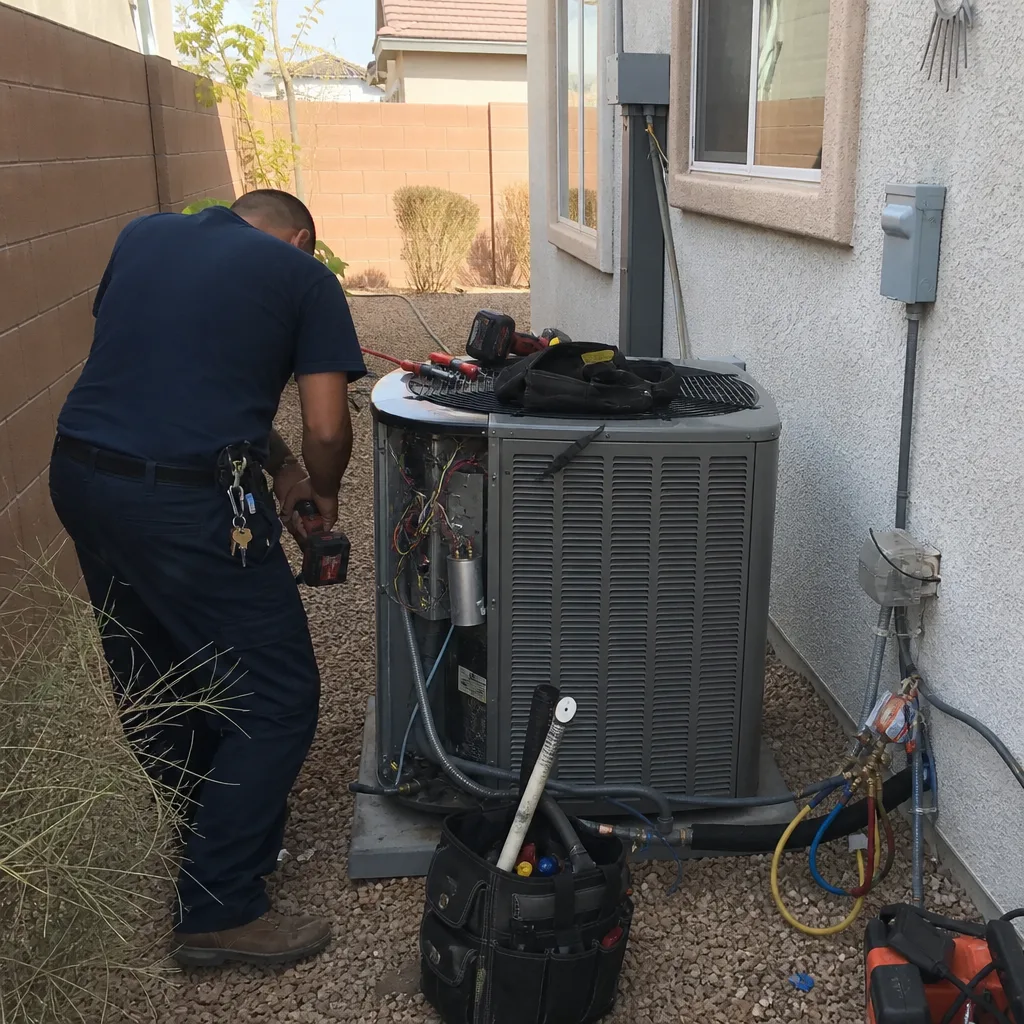
Last updated November 17, 2026
How Long Does ADU Site Prep & Utilities Take? Timelines and What to Expect
Here is a number that surprises almost every homeowner we talk to: NV Energy’s new service application for a detached ADU currently runs 8 to 14 weeks from submittal to energization in the Las Vegas valley. That lead time has to be started before your foundation is poured, not after. Site prep and utility work is the most schedule-volatile phase of any ADU project because it depends on agencies outside your property line, and those agencies don’t move in parallel with each other. This guide maps each one, shows which steps can overlap and which stack, and gives you a realistic calendar for the three lot types we see most often across Las Vegas.
Quick Answer
ADU site prep and utilities in Las Vegas typically take 8 to 16 weeks from permit issuance to fully connected, depending almost entirely on which outside agencies are involved. On a standard infill lot with utilities already at the property line, budget 8 to 10 weeks. A lot needing a utility extension from the street runs 12 to 16 weeks. A property coordinating with an SNWA recycled water irrigation system can push past 16. The single biggest schedule lever is filing agency applications on Day 1 of permit submittal rather than after the permit is in hand.
Table of Contents
- Why Site Prep Is the Most Schedule-Volatile Phase
- The Four Agencies and Their Timelines
- Which Steps Run in Parallel and Which Must Stack
- The Most Common Schedule Error We See
- Three Las Vegas Lot Scenarios and Their Timelines
- How Permit-Set-First Sequencing Saves Months
- A Phase-by-Phase Site Prep Calendar
- Common Mistakes to Avoid
Why Site Prep Is the Most Schedule-Volatile Phase
Every other phase of an ADU build is largely inside our control. Framing follows the drawings. Roofing follows framing. The trades move in a known order on a known clock. Site prep is different because the critical path runs through four outside organizations, and not one of them reports to us. When someone asks how long an ADU takes in Las Vegas, the honest answer is that the vertical construction is predictable and the horizontal utility work is where the calendar bends.
The reason is simple: these agencies don’t coordinate with each other, and each has its own queue. SNWA processes meter applications on one timeline, NV Energy handles service and energization on another, Clark County Public Works runs its own sewer capacity verification, and 811 utility marking has a legally mandated window that can’t be compressed. Stack those wrong and a six-week site phase becomes a fourteen-week one. We’ve watched projects sit idle for a month waiting on a trench design that couldn’t be finalized until a capacity letter arrived.
Our technicians have up to 11 years of experience reading these queues, and the pattern is consistent: the projects that finish site work ahead of schedule are the ones where every application was filed the day the permit set went in, not the day the permit came back. That is a sequencing decision, made at design, not a construction miracle. It’s why we treat the permit set as the core product rather than a document that floats in front of construction.
Las Vegas adds its own wrinkle. Summer trenching on hard caliche soil is slow and the heat window compresses crews into early mornings. Winter is easier to schedule but holiday staffing at the utility agencies tightens the queues. Neither is a reason to delay a project; both are reasons to plan the sequence before the first shovel.
The Four Agencies and Their Timelines
Here is the map we keep in front of every client, with the processing windows as we currently observe them. Treat these as ranges, not promises: agency queues move, and the source is our own project log across the Las Vegas valley. Verify current figures at the time of your own submittal.
- SNWA meter application: Filed when a new or upgraded water meter is required for the ADU. Current observed window is roughly 4 to 8 weeks from a complete application to meter set. Incomplete applications, especially those missing a site plan scaled to the meter size, reset the clock.
- NV Energy service application: The long pole. Submittal to energization currently runs 8 to 14 weeks in the valley. This covers the service application, load letter, meter coordination, and final energization. It must be initiated early, and the utility’s engineering review often asks for trench and conduit details that have to already exist in your design.
- Clark County Public Works sewer capacity verification: Required before you finalize trench design for any connection to the public sewer. Current window is roughly 3 to 6 weeks. You cannot design the lateral at final elevations until the county confirms the capacity and the connection point.
- 811 utility marking: Legally mandated before any excavation. The standard window in Nevada is a two-business-day notice, but locate tickets on busy corridors can take longer. This one is short and cheap, but skipping it is illegal and dangerous.
Those four windows, laid end to end, are why the naive assumption that utilities happen “at the end” blows up the schedule. Each of these agencies has to be engaged while the permit is still in review, not after. If you want the full picture of how permitting and site work interlock, our ADU Design & Permitting in Las Vegas page walks through the paper trail in order.
One more note on cost, since it frames the sequencing: site prep and utilities on a Las Vegas ADU typically run $18,000 to $45,000 all-in, drawings through final inspection, depending on whether you’re connecting to utilities at the property line or extending from the street. We put those ranges on the page because you should be pricing the scope before you commit, and because the number is always quoted in writing before work starts.
Which Steps Run in Parallel and Which Must Stack
The whole game is knowing what can overlap. The agencies won’t coordinate for you, but you can submit in a sequence that lets the timelines run side by side.
Can run in parallel:
- NV Energy service application and 811 utility marking. The service application moves through the utility’s engineering review while 811 marks the corridor for the trench route. Neither waits on the other.
- SNWA meter application and the geotechnical soil report. The soil report informs foundation design and trench depth; the meter application is administrative. File both in the same week.
- NV Energy service application and the permit set’s site plan. If the electrical service layout is already drawn into the permit set, the utility review has what it needs while the plan check continues.
Must be sequential:
- Sewer capacity verification before trench design is finalized. This is the one that causes the most delay. The county’s capacity letter and connection point determine your lateral elevations, and you can’t dig a trench to elevations you don’t have. Final trench design waits on the county.
- 811 marking before any excavation. No exceptions, no “we know where the gas line is.” The ticket comes first.
- NV Energy energization after trench, conduit, and meter set. The utility’s clock includes its own final inspection, and it won’t energize a service that isn’t complete.
We’ve found that sequencing the permit drawings around these dependencies is the single largest thing a design-build studio can do to protect a client’s calendar. A detached ADU project where the electrical service and trench civil work are drawn to the utility’s own detail standards can have the NV Energy application in the day the set is submitted. A project where those details are vague loses weeks to revision cycles. If you’re weighing a detached build, our New Detached ADU in Las Vegas guide details how the drawings and the utility coordination sit in one contract. If you’d rather convert an existing garage, the Garage Conversion ADU in Las Vegas page covers the shorter utility path those projects usually take.
The Most Common Schedule Error We See
The mistake is assuming utility connections happen at the end of construction, after the framing and finishes are done. That single assumption is responsible for more blown ADU schedules than any contractor delay we’ve seen.
When utility work is treated as a final step, the homeowner and the builder both assume the trenches get dug once the building is up. By then the meter application hasn’t been filed, the sewer capacity letter hasn’t been requested, and the NV Energy queue hasn’t even started its 8-to-14-week clock. The building sits closed and unpowered while the calendars catch up. We’ve had clients from previous builders call us in month six of a stalled project, with a finished structure and no service.
The fix is counterintuitive. Utility coordination isn’t a construction step at all; it’s a design step. Every application should be filed while the permit is still being reviewed. The trench details, the service layout, the meter location, and the sewer connection elevations should all live in the permit set, so the agencies have what they need on the first submittal. That’s the difference between a six-week site phase and a fourteen-week one, and it’s decided on paper long before anyone touches a shovel.
We’ve built the Ellery ADU Studio Las Vegas process around this premise. The permit set is the product, and utility sequencing is baked into it. That’s also why the written price is locked before any work begins: if the trench design is final in the drawings, the site work price is final too, and nobody discovers a surprise line item later. Under the Haven Standard, the written price you sign is the price you pay.
Three Las Vegas Lot Scenarios and Their Timelines
Realistic site prep and utility phases vary by lot. Here are the three we see most often across the valley and what each one costs you in calendar time.
Scenario 1: Standard Infill Lot With Existing Utilities at the Property Line
The most common case in established Las Vegas neighborhoods. The water main, sewer lateral, and electrical service already exist at the property line from the main house, and the ADU can tap in with a short extension. SNWA may require a meter upgrade but usually not a new meter set. NV Energy handles a service extension from the existing panel.
- Timeline: 8 to 10 weeks from permit issuance to connected.
- What drives it: The NV Energy queue is the long pole, at 8 to 14 weeks, but a straightforward service extension sits at the fast end. The sewer capacity verification, 3 to 6 weeks, overlaps with the utility filing.
- Site prep cost, typical all-in: roughly $18,000 to $28,000, drawings through final inspection.
Scenario 2: Lot Requiring Utility Extension From the Street
Typically a deeper lot or a newer parcel where the existing utilities stop short of where the ADU will sit. This is the scenario that punishes poor sequencing hardest because the trench route, grading, and utility extension all have to be designed together and then reviewed by the county and the utility in sequence.
- Timeline: 12 to 16 weeks from permit issuance to connected.
- What drives it: The NV Energy application must be filed early because the extension details need utility review, and the county sewer capacity letter gates the final lateral design. 811 marking covers a longer trench route.
- Site prep cost, typical all-in: roughly $30,000 to $45,000, drawings through final inspection.
Scenario 3: Lot With an SNWA Recycled Water Irrigation System
This one is specific to certain Las Vegas valley properties with dual-plumbed irrigation, and it’s the scenario most likely to push past 16 weeks. When an ADU footprint crosses or sits near an existing recycled water line, the irrigation system has to be decommissioned, rerouted, or coordinated around, and SNWA has to confirm the approach before excavation.
- Timeline: 16+ weeks, occasionally longer if the irrigation reroute requires a separate SNWA review.
- What drives it: The recycled water coordination stacks in front of the trench sequence, and the design team has to draw the reroute into the civil site plan before the county will approve the sewer design.
- Site prep cost, typical all-in: varies widely, from $35,000 to $55,000, drawings through final inspection, depending on reroute length.
The range is wide on purpose. Every number is quoted in writing once the drawings and site conditions are final, and the written price is the one that holds. We don’t surprise clients mid-trench.
How Permit-Set-First Sequencing Saves Months
The way to compress the site phase is to move the paperwork forward. Here is the ordered sequence we build into every Las Vegas project, and why each step is where it is.
- Day 1 of permit submittal: The NV Energy service application goes in with the permit set, including the load letter and service layout the utility’s own details require. The 8-to-14-week clock starts the day the permit drawers are handed off, not the day the permit is issued.
- Day 1 of permit submittal: The SNWA meter application is filed if a new or upgraded meter is required, with a site plan scaled to the meter size so the application isn’t kicked back for an incomplete submittal.
- Week 1 of permit submittal: The Clark County sewer capacity verification request goes in with the site plan and proposed connection point. The county’s 3-to-6-week letter can arrive while the broader permit is still in plan check.
- Before any excavation: The 811 locate ticket is opened. Two-business-day minimum, longer on busy corridors.
- After the county’s sewer letter: Trench design is finalized at the elevations and connection point the county confirms. This is the first time the trench can be drawn with confidence, which is why the county request must lead.
- After trench, conduit, and meter set: NV Energy energizes the service. The building is ready for occupancy.
This is what we mean when we say the permit set is the core product. A set that has the utility service layout, trench civil details, and irrigation coordination drawn in is a set the agencies can approve on the first pass. A set that doesn’t have them is a set that loses weeks to revision letters, and those weeks are what turn a 6-week site phase into a 14-week one. Prefab systems don’t dodge this: even a Plant Prefab or Abodu unit needs the exact same site utility coordination, and the factory lead time only pays off if the site is ready when the module arrives.
If you already have a written estimate from another builder and want to compare sequencing before you commit, we offer a free second opinion on any written estimate already in hand. There’s no obligation and no sales pressure; you’ll get our read on whether the utility sequencing in that estimate is realistic for your lot.
A Phase-by-Phase Site Prep Calendar
Here’s the calendar we walk clients through, laid out in the order the work actually happens, not the order people assume it does. The weeks are from permit issuance for a standard infill lot with utilities at the property line.
- Weeks 1 to 2, plan set and agency filing: The permit set is submitted and every utility application goes in the same week. This is the calendar protection step and it’s non-negotiable.
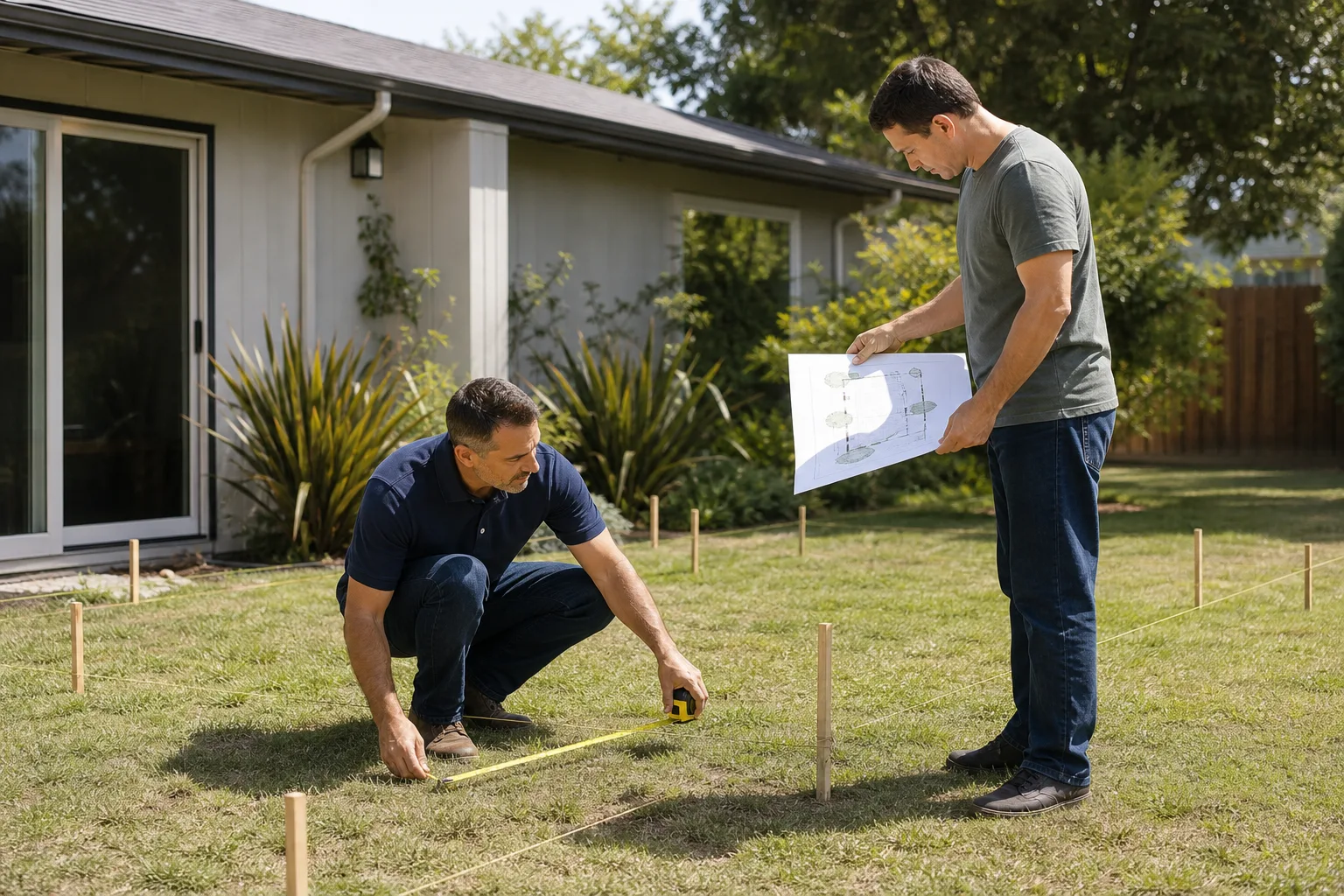
- Weeks 1 to 4, demolition and site clearing: Existing landscaping, hardscape, and any outbuildings come out. Soil conditions are documented. Caliche encountered at grade is flagged for the trench plan.
- Weeks 3 to 6, sewer capacity and trench design: The county capacity letter arrives and the trench design is finalized at the confirmed connection point. Overlaps with the utiliy filing queue.
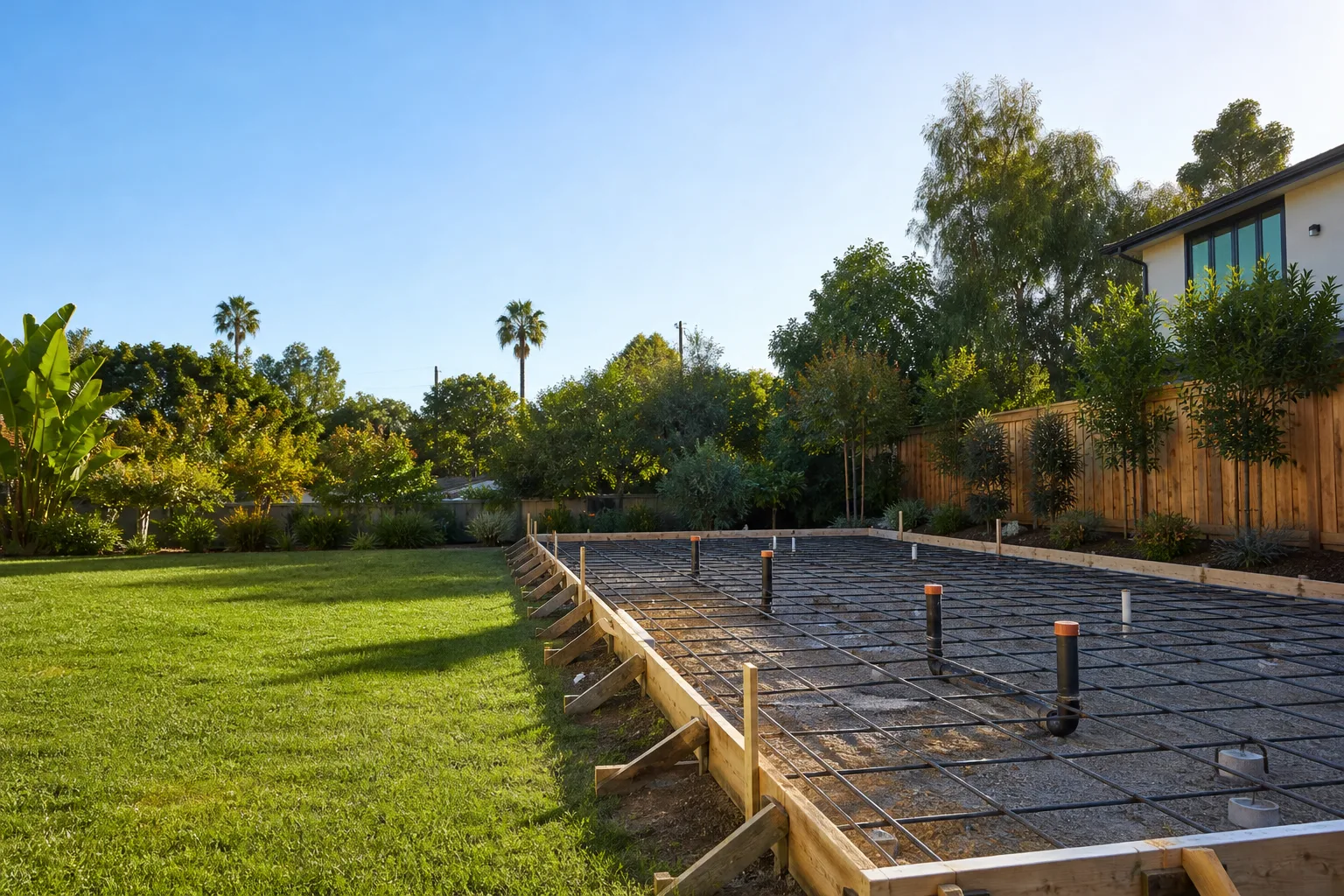
- Weeks 5 to 7, trenching and conduit: 811 marking is confirmed, then trenches are cut and conduit, sewer lateral, and water line are run to the confirmed elevations. An inspection by the county happens before backfill and it’s scheduled in advance.
- Weeks 6 to 10, meter set and service: SNWA sets or upgrades the meter, NV Energy installs its service pull and meter can, and the energization test is scheduled. This is the phase most likely to slip if the earlier applications were filed late.
- Weeks 8 to 10, final site prep inspection: Grading, drainage, and backfill are inspected. The site is signed off and ready for vertical construction. On a standard lot, this lands inside the 8-to-10-week window.
Each step is paired with a documented photo record under the Haven Standard, so you receive evidence of what was found and what was done at every visit, not a summary. The 365-Day Done Right Promise applies to the whole job: if the finished ADU isn’t built to the permitted drawings and the site work doesn’t match the approved plan, we make it right, in writing, before the project even starts.
Common Mistakes to Avoid
- Filing utility applications after the permit is issued. The NV Energy queue is the long pole at 8 to 14 weeks, and starting it after permit issuance wastes a month to two months. File on Day 1 of submittal.
- Designing the trench before the county confirms sewer capacity. The capacity letter determines your lateral elevations and connection point; designing the trench first means redesigning it later. Request the county verification in week one.
- Ignoring the 811 ticket. Digging without a locate ticket is illegal in Nevada and dangerous. It’s a two-business-day window, and there’s no shortcut.
- Treating utility work as the final construction step. This is the single most expensive assumption in the process. Utilities are designed and filed, not tacked on at the end.
- Assuming the SNWA recycled water line doesn’t matter. On lots with dual plumbing, the irrigation system has to be coordinated before excavation, and the reroute has to be drawn into the civil site plan. Skipping this costs weeks.
- Using a permit set that has no utility detail. A set without service layout, trench civil details, and irrigation coordination loses weeks to agency revision cycles. Ask for the drawings before you sign.
- Pricing site prep without a written scope. Site work prices swing with soil, trench length, and utility taps. A verbal range before the drawings are final is not a price. Ask for a written price before any work begins.
When to Call a Professional
Site prep and utility work should go to a licensed design-build studio whenever the project involves an NV Energy service application, a sewer capacity verification, or any excavation near the property line. These are not weekend projects: the utility connections and trench work require licensed trades, permits, and sequencing that ties back to the drawings. Call a professional on day one if your lot requires a utility extension from the street, if you have an SNWA recycled water system, or if a previous builder has already started the project and stalled. Ellery ADU Studio Las Vegas offers free estimates in Las Vegas – call (866) 779-3194. If you already have a written estimate in hand, ask for the free second opinion on it before you commit.
Frequently Asked Questions
Usually 8 to 16 weeks from permit issuance to fully connected, depending on the lot. Standard infill lots with utilities at the property line run 8 to 10 weeks, lots requiring a utility extension from the street run 12 to 16, and lots with SNWA recycled water coordination can push past 16. Call (866) 779-3194 for a free estimate on your specific lot.
The utility’s process covers a service application, load letter review, meter coordination, and final energization, and each step runs on its own queue separate from the county and from SNWA. Filing on Day 1 of permit submittal is the only way to keep it off the critical path. Call (866) 779-3194 for a free estimate that accounts for the actual utility timeline.
Yes, and they should. The permit set has to contain the service layout and trench civil details that the utility’s own standards require, so the agency reviews can run while the county finishes plan check. Doing it any other way adds weeks. Call (866) 779-3194 for a free estimate.
Typically $18,000 to $45,000 all-in, drawings through final inspection, depending on whether you’re connecting to existing utilities or extending from the street. Recycled water coordination can push the upper end higher. Every quote is written before work starts, and the price you sign is the price you pay. Call (866) 779-3194 for a free estimate.
No. The written price is locked at signing under the Haven Standard, and scope is set from the approved drawings. If the drawings are final and the trench design is confirmed with the county, there is no surprise line item when the crew breaks ground. Call (866) 779-3194 for a free estimate.
Yes. NV Energy, SNWA, 811, and Clark County Public Works applications are part of the one-contract design-build scope, filed from the permit set. You don’t chase agencies; we do. Call (866) 779-3194 for a free estimate on your project.
The Bottom Line
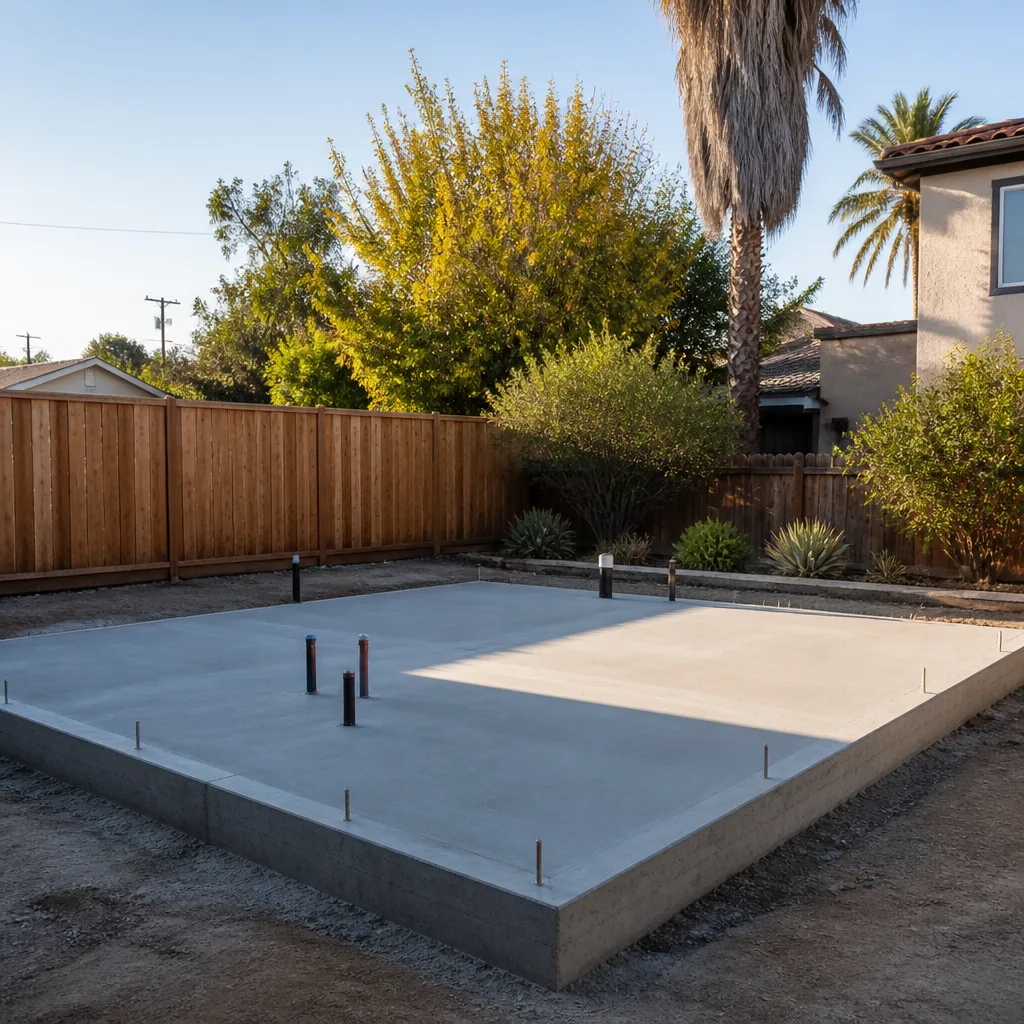
ADU site prep and utilities in Las Vegas take 8 to 16 weeks for a reason: four outside agencies each run their own queue, and the sequence you file in decides whether those queues overlap or stack. The standard infill lot lands inside 8 to 10 weeks, the street-extension lot in 12 to 16, and the recycled-water lot past 16. The persistent mistake is treating utilities as a final step. Design them into the permit set, file the agency applications on Day 1, and the site phase stops being your schedule’s weak point. Every Ellery project starts with a written price and a documented scope, and it ends with a photo record of what was built.
Call (866) 779-3194 to schedule your free estimate. A live person answers 24/7, no voicemail queue, and if you already have a written estimate, we’ll give you a free second opinion before you commit.
Written by the team at Ellery ADU Studio Las Vegas.