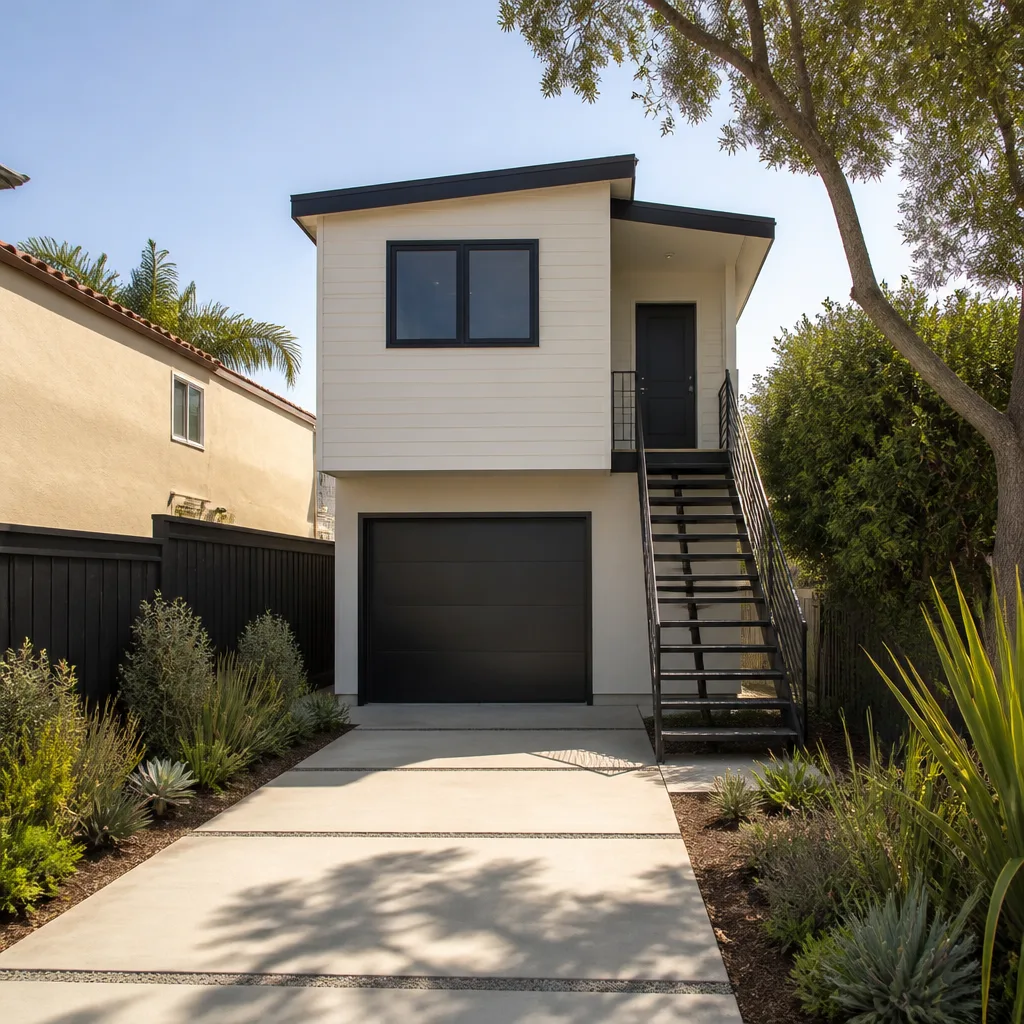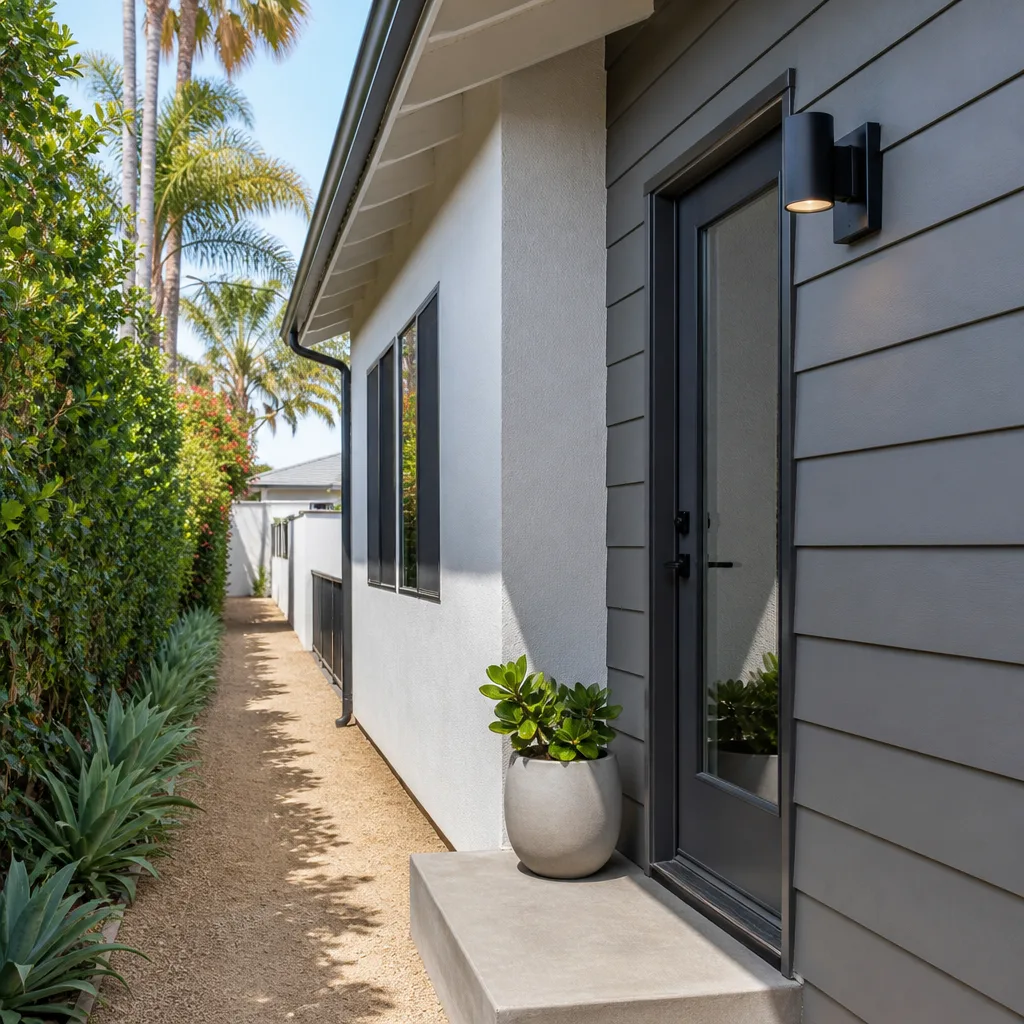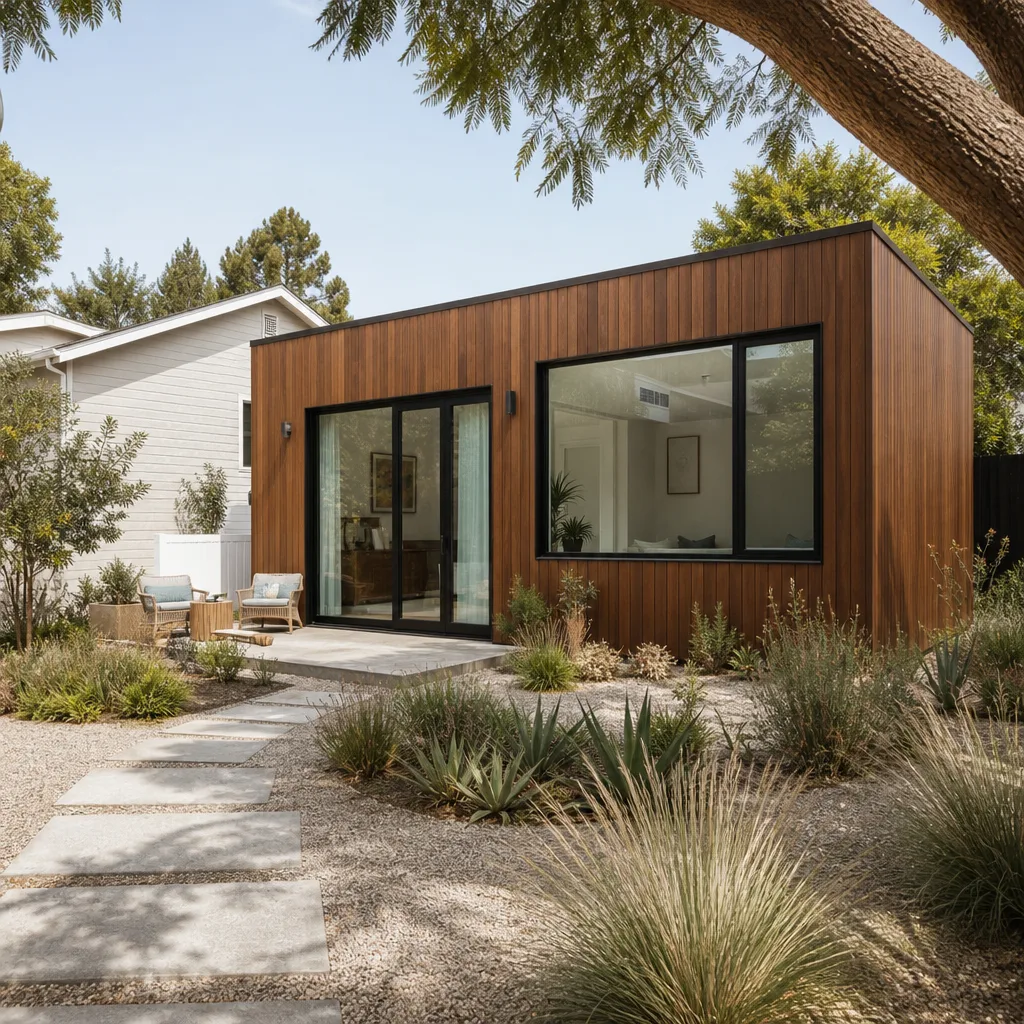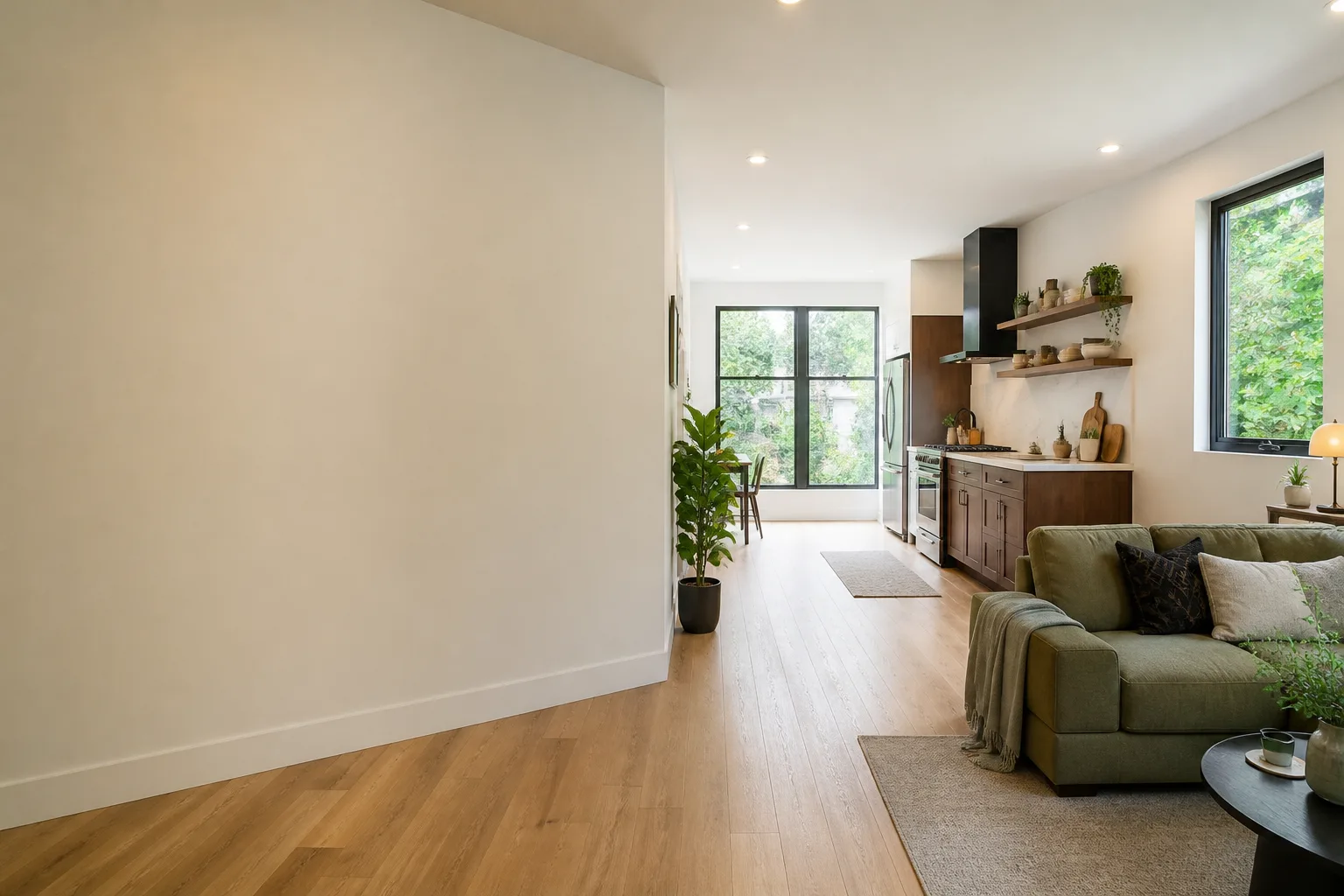
Mighty Buildings Garage Conversion ADU: The Las Vegas Owner’s Guide
We install and service the exterior envelope, structural connections, foundation interface, and utility rough-ins on Mighty Buildings garage conversion ADUs across Las Vegas. A full envelope and structural retrofit on an existing conversion 3D-printed by Mighty Buildings typically runs $18,000 – $46,000 installed, depending on panel count, slab condition, and whether the electrical service needs upgrading to carry the ADU load. The same-scope repair with no panel replacement is a fraction of that, and most Las Vegas jobs we take on land between $6,500 and $14,000.
Owners rarely call us because something “broke.” They call because of a symptom: hairline cracking along the printed panel seams after a summer of 115°F swings, a bathroom drain that pulls odor when the AC runs, or a hairline gap at the threshold that shows up every monsoon season. The trigger is usually the transition between the 3D-printed shell and the conventional framed rough-in, not the shell itself.
Key Takeaways
- Mighty Buildings garage conversions in Las Vegas fail most often at the panel-to-slab interface and at the MEP penetrations, not in the printed wall.
- Las Vegas heat cycling (110°F+ summer highs against 65°F winter lows) is the single biggest driver of seam movement on 3D-printed shells here.
- Installed envelope and structural repair ranges $6,500 – $14,000 for a targeted fix and $18,000 – $46,000 for a full retrofit.
- Written price before any work starts, documented photo record of every visit, and the 365-Day Done Right Promise apply to every Las Vegas job.
Which Mighty Buildings Models This Applies To
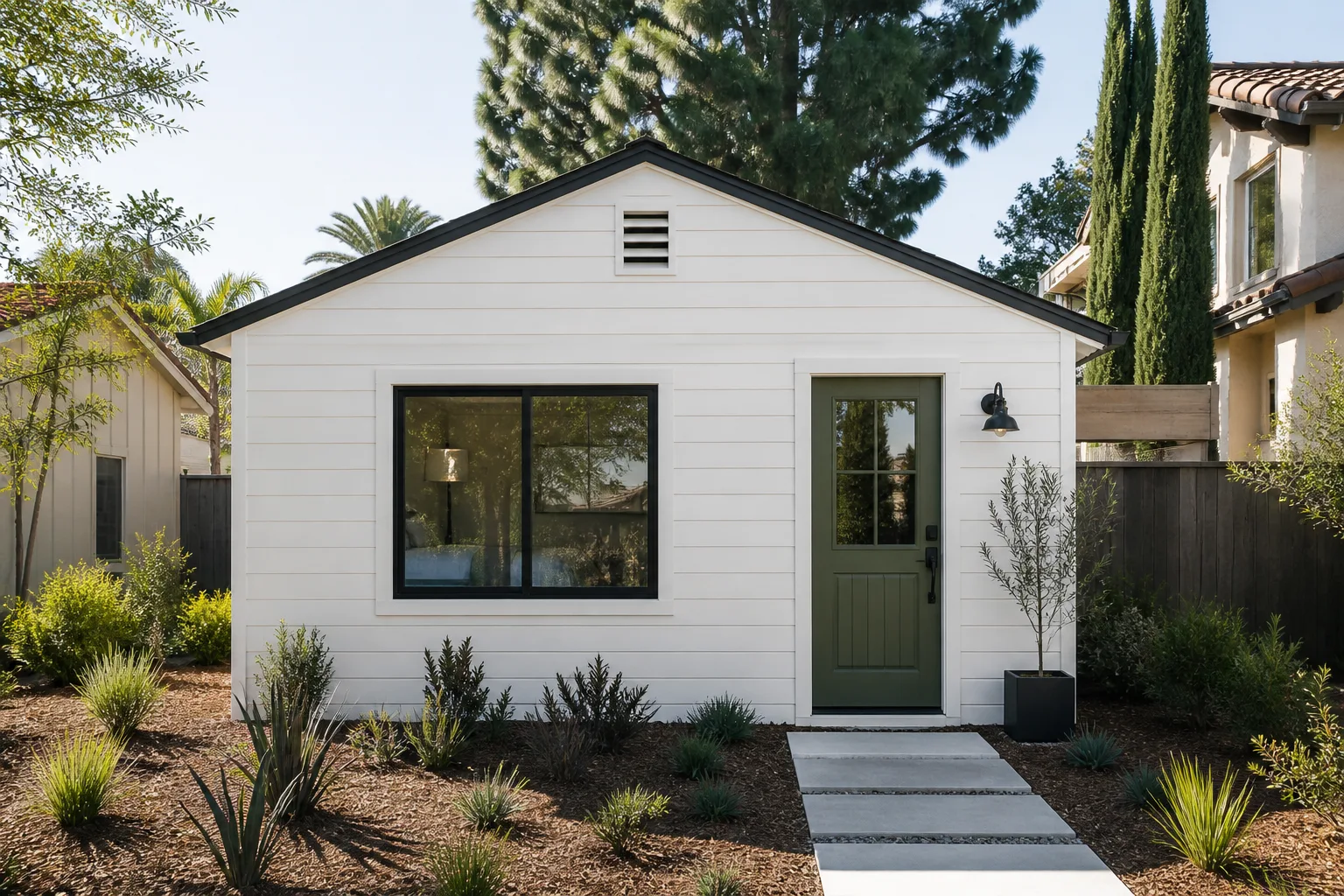
Mighty Buildings built garage conversion ADUs on its 3D-printed panel system, and the company’s catalog evolved across product generations in ways that matter when you’re matching a replacement part. The printed wall panels, the toggle-and-track connection hardware, and the MEP chases (the channels where plumbing and conduit run inside the wall) changed dimensions between earlier and later production runs. What this means for a Las Vegas owner: part fit depends on your specific build, not just the model name on your paperwork.
To identify what you have, check three things. First, pull the engineering and permit set from your build file. The panel schedule on those drawings lists the printed panel thickness and the connection hardware spec. Second, measure the printed wall thickness at an exposed corner; the system used a specified printed thickness that varies by generation. Third, look for the serial or production tag on the electrical panel cover or inside the mechanical closet. Those three data points let us match the correct hardware, sealant, and penetration boots.
On OEM versus aftermarket: for 3D-printed shells, the connection hardware and the proprietary sealant specified on the drawings are worth staying with the OEM spec. The printed wall surface doesn’t accept a generic construction adhesive the way a CMU or wood-frame wall does, and a substituted sealant can fail at the seam within a season. For generic items like electrical devices, plumbing fixtures, and standard flashing, a quality equivalent is fine and we’ll say so. Ellery ADU Studio Las Vegas is an independent service provider and is not affiliated with Mighty Buildings; we specify and coordinate the system alongside our own design-build work, which also covers Abodu, Cover, and Dvele prefab and modular products where a client already owns one.
Signs Your Mighty Buildings Garage Conversion ADU Is Failing
How Las Vegas owners usually find out something’s wrong with the ADU envelope or rough-in, with the cause behind each symptom:
- Hairline cracks tracking along printed panel seams. Thermal movement across a Las Vegas day-night swing opens the seam faster than in milder climates, and the sealant specified for cooler markets can lose adhesion at the panel edge.
- Water staining at the threshold during monsoon season. The threshold detail between the existing garage slab and the ADU floor is where water gets in if the flashing wasn’t lapped to shed toward the driveway; a single July downpour exposes it.
- A sewer or drain odor that appears when the AC cycles. A dry or improperly vented trap at a rough-in penetration lets the pressure from the HVAC system pull sewer gas through a fixture; the culprit is usually at the MEP chase exit point.
- Bathroom exhaust or dryer venting that shows condensation on the interior wall. In Las Vegas, a vent run that’s too long or under-insulated condenses in the cool of winter and stains the printed surface at the penetration boot.
- Gaps or movement at the panel-to-slab interface. The printed shell and the conventional foundation move differently under heat; if the anchor and sealant at the base weren’t specified for Las Vegas temperature range, the interface opens.
Replacement Cost & What’s Included
Here’s what the work costs in Las Vegas, with the parts-plus-labor broken out transparently:
| Scope | Installed Range | What’s Inside It |
|---|---|---|
| Seam sealant renewal and panel-edge repair | $6,500 – $9,800 | OEM-spec sealant, prep, re-seal of failed seams, documentation photo record |
| Threshold and flashing retrofit | $8,200 – $12,500 | Lapped flashing, weather barrier, threshold rebuild, photo record |
| MEP penetration boots and venting correction | $7,400 – $11,800 | Correctly sized boots, vent run correction, sealing at the chase exit |
| Panel-to-slab anchor and interface repair | $9,500 – $14,000 | Anchor hardware per engineering, elastomeric sealant, interface rebuild |
| Full envelope and structural retrofit | $18,000 – $46,000 | Panel replacement where needed, all interfaces, MEP correction, documentation |
The range is driven by panel count, how far water has traveled behind the sealant, and whether the electrical service can carry the ADU without an upgrade. Every project is quoted with a written price before any work starts, and the work carries our 365-Day Done Right Promise, backed in writing. We include a documented photo record on every visit, so you have evidence of what was found and what was done, not a verbal summary.
DIY or Call Us?
Here’s the honest split. You can safely check, on your own: look for cracks at the panel seams, look for staining at the threshold, look for condensation at the vent boots, and listen for the drain odor. Writing those findings down with a date and a photo is genuinely useful and costs you nothing.
What you shouldn’t do yourself: re-anchor the shell to the slab, rebuild the threshold flashing, or open the electrical panel to trace the MEP chase. The panel-to-slab connection carries the structural load of the printed shell, and a poor re-anchor in Las Vegas heat movement can crack the panel above it. The threshold is where water intrusion starts, and a lap that’s wrong by half an inch is wrong. For anything touching the electrical service, the printed wall fastening, or the structural anchor, use a trained professional. If a written estimate is already in your hand from another party, we’ll give you a free second opinion on it. Call (866) 779-3194 and we’ll talk through what you found.
FAQs
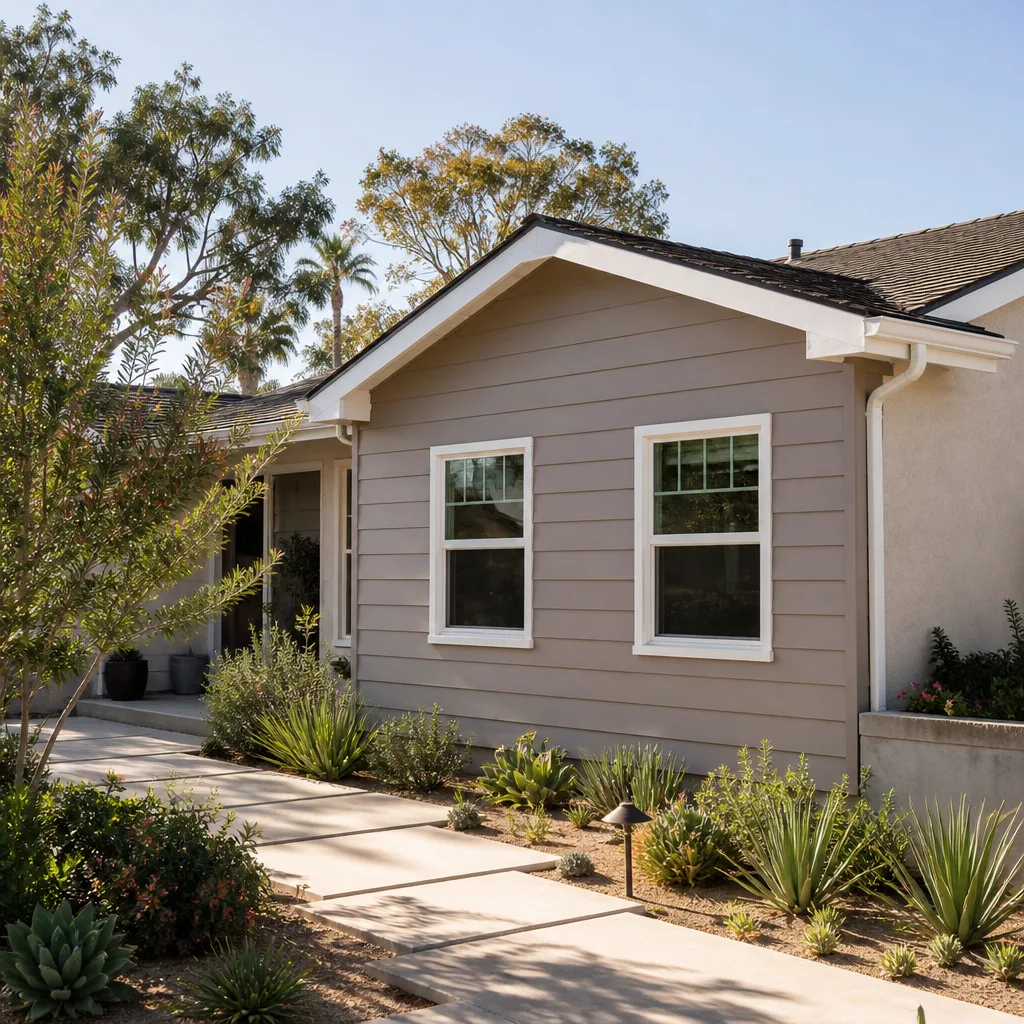
With proper seam sealant and threshold flashing, the printed shell is a long-life assembly; the parts that wear out are the sealant, the penetration boots, and the threshold detail, which need attention on roughly a five to eight year cycle in Las Vegas heat. The 3D-printed panel itself doesn’t rot or termite like a wood-frame wall, which is part of what drew Mighty Buildings buyers here in the first place. Call (866) 779-3194 for a free estimate on any specific failure.
Most Las Vegas jobs we see are repairs, not replacements: seam re-sealing, threshold rebuild, penetration boot replacement, and interface re-anchoring cover the vast majority. A full panel replacement is only warranted when the printed panel itself has structurally cracked, which is rare and usually traceable to an unrepaired anchor issue. We’ll tell you plainly which one you’re looking at before any work starts.
A targeted repair like sealant renewal or a threshold retrofit is typically one to two days; a full envelope retrofit that touches multiple panels runs five to ten working days depending on what’s behind the sealant. We schedule around your use of the ADU and put the duration in the written scope. Call (866) 779-3194 to schedule your free estimate.
We source OEM-spec hardware and sealant matched to your specific Mighty Buildings production run, identified from the engineering set and the panel measurements, and we specify quality aftermarket equivalents only where the component is generic and the substitution is documented in the scope. We don’t carry parts on a truck; each job is specified and ordered to the build. If you have the permit set and photos, call (866) 779-3194 and we’ll start the match.
If your Mighty Buildings garage conversion ADU in Las Vegas is showing seam cracks, threshold leaks, or drain odor, the fastest way to a real number is a conversation. Call (866) 779-3194 to schedule your free estimate. You’ll get a written price before any work starts, a free second opinion on any estimate already in hand, and a live person on the line 24/7. We’re an independently owned and operated design studio, and Ellery ADU Studio Las Vegas is not affiliated with Mighty Buildings.
Written by the team at Ellery ADU Studio Las Vegas, serving Las Vegas and nearby areas.