A free site visit, a check of what your lot allows and a written, line-item price.
Get your free estimateWhat ADU Permits Actually Cost in Las Vegas, NV
ADU permit costs in Las Vegas typically run $3,500-$12,000 for the Clark County building permit that checks your drawings and inspects the build, but that’s only the first invoice. The full permitting budget for a Las Vegas ADU usually lands between $12,000 and $27,000 once you add the Las Vegas Valley Water District (LVVWD) connection fee and the regional impact fee. Call (866) 779-3194 for a free estimate and we’ll put those fees in writing, as named line items, before anything else starts.
Most of what homeowners find when they search this topic is written for California. Those fee-cap articles, the ones citing statutes that limit impact fees for small ADUs, don’t apply in Nevada. Clark County runs a different structure, and the permit fee is often the smallest of three bills you’ll pay. Here’s how the money actually splits.
The three permits you’re paying for in Clark County
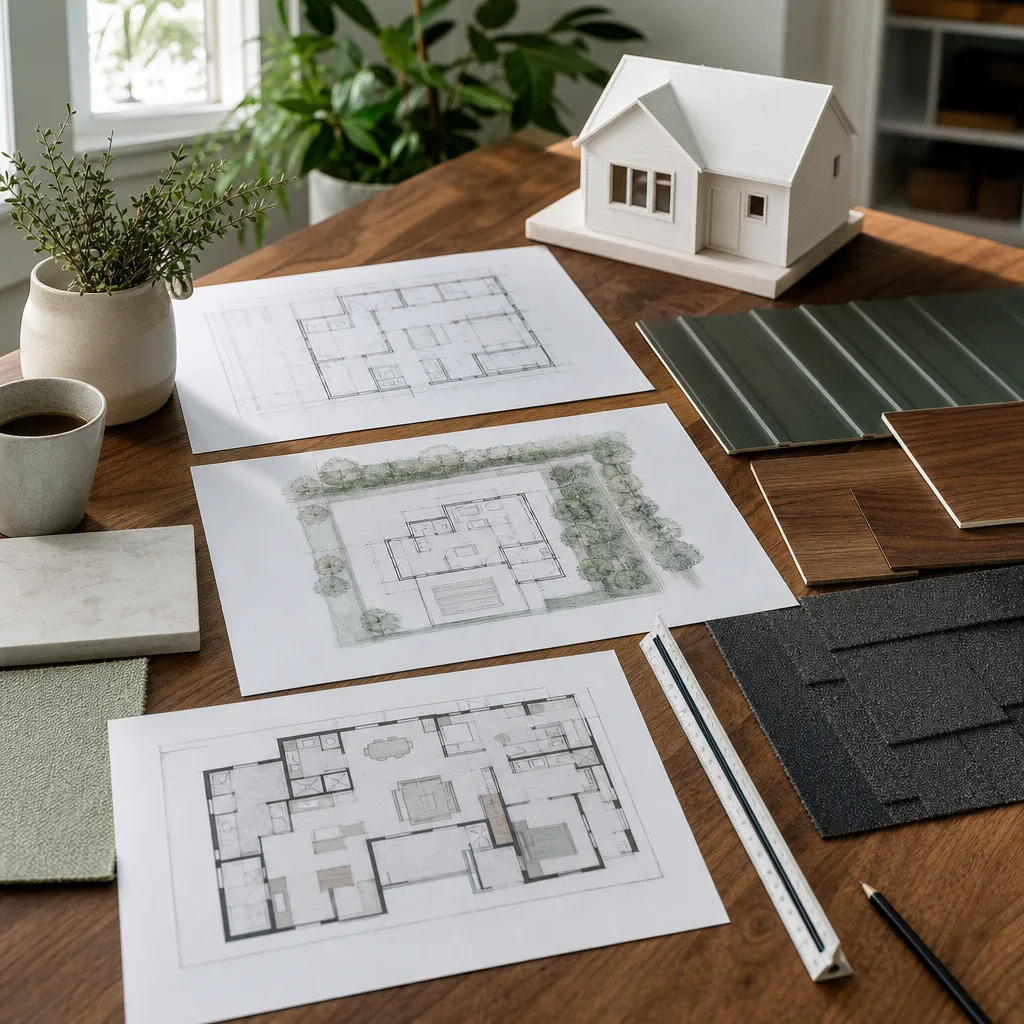
When a homeowner in Las Vegas asks us what permitting costs, we don’t answer with one number. We answer with three, because a Las Vegas ADU touches three separate reviewers who each bill separately.
- Clark County building permit. Calculated on construction valuation, not square footage. On a typical detached ADU valuation of $180,000-$260,000, plan review and permit fees land around $3,500-$9,000. The number moves with the scope: a garage conversion is valued lower than a new detached build.
- LVVWD water and sewer connection fee. This is a separate invoice from the county and it’s where budgets surprise people. For a new ADU that adds a full kitchen and bathroom, expect $6,000-$12,000, depending on meter size and whether the lot needs a new tap or can share the existing service.
- Regional infrastructure and impact fee. Southern Nevada assesses impact fees on new dwelling units to fund roads, parks, and public facilities. Budget $2,500-$6,000 for a single ADU. The exact figure depends on the property’s jurisdiction and land-use category.
Add those and you’re at the $12,000-$27,000 range above. In our experience, the water/sewer and impact fees together routinely exceed the building permit fee itself. That’s the fact missing from nearly every adult-ADU cost page ranking for this query.
| Line item | Typical range |
|---|---|
| Clark County building permit (plan review + inspections) | $3,500 - $9,000 |
| LVVWD water/sewer connection fee | $6,000 - $12,000 |
| Regional infrastructure / impact fee | $2,500 - $6,000 |
| HOA architectural review fee (master-planned communities) | $150 - $1,500 |
| SNWA water-budget offset review (if adding kitchen/laundry) | varies, offset required |
| Total permitting budget, all in | $12,000 - $27,000 |
Every project Ellery ADU Studio Las Vegas takes on carries a written price before work begins (Haven Standard, Clause 1). That quote itemizes permit fee estimates as a named line, not a “TBD” placeholder you discover later. Under Clause 5 (No Surprises), the scope is locked at signing. No door-side upsells, no fee that appears after you’ve signed.
Why HOA approval comes before the county will even look at your file
In most Las Vegas master-planned communities, the county won’t accept your permit application until the HOA has signed off on the architectural design. This is a sequencing trap that costs homeowners weeks, and sometimes thousands, because they file with the county first and get bounced.
The HOA review cycle runs 4 to 10 weeks in most master-planned communities. Some HOAs retain their own architect and charge a review fee of $150-$1,500 to run your drawings past it. Those are 4 to 10 weeks of calendar time that only start after you have a permit-ready set to submit. Filing out of order means those weeks run twice.
The housing stock matters here too. Most Las Vegas homes sit on small lots inside master-planned communities with block walls and narrow side yards. A detached ADU has to fit between setbacks that don’t leave much room, and the HOA architectural guidelines often constrain height, materials, and roofline beyond what the county requires. This is where a permit set engineered for both reviewers, the county’s plan check and the HOA’s architectural committee, saves real money. Drawings that ignore the HOA pass the county and fail the HOA, or the reverse, and each restart resets the clock.
SNWA water-use review: the requirement nobody warns you about
Here’s a Las Vegas-specific step with no California equivalent worth mentioning. The Southern Nevada Water Authority reviews projects that add a kitchen or laundry, because a new ADU increases the water budget on that parcel. In some cases SNWA requires a water-budget offset, meaning you demonstrate the property stays within its allocation, which can mean swapping lawn for drip-irrigated desert landscaping or adding hardscape before the unit gets its occupancy sign-off.
This connects directly to how ADUs are built here. Southern Nevada’s water-conservation rules mean virtually every ADU needs its own drip-irrigated desert landscape or hardscape, not turf. Combined with 110°F-plus summers and the July-September monsoon, the design also needs cool roofing, deep shading, and a separate HVAC system for the unit. All of that gets baked into the permit set, because it’s what the county and SNWA will review. A design that treats water and heat as afterthoughts comes back as corrections. We build the drawings to clear Clark County’s first-review cycle, and the reason that matters on paper is simple: every resubmittal restarts a 4- to 6-week review clock and adds correction fees.
Our ADU Design & Permitting work exists to shorten that clock, not to bill you for it twice.
What a correction round really costs you
A rejected plan set isn’t a free redo. In Clark County each resubmittal re-enters the queue and restarts the review period, so the “fee” is both the correction charge and another 4 to 6 weeks of calendar time you can’t get back. On a project you’re trying to finish before a lease or a family move-in, that delay is the expensive part.
Designing to pass first-review is the difference between a smooth permit and a stalled one. That’s why we treat the permit set as the core product, not an afterthought. On a typical Las Vegas job the existing slab reads about 4 inches, within range for a garage conversion, and that one measurement tells us how the foundation line item is written before we ever file. We document what we find and hand you the record, so the scope and the drawings match what the county reviews.
What this looks like in Las Vegas, project to project
Common scenarios we see
The garage conversion in an older neighborhood. A homeowner near the Historic Westside wants to convert a detached garage. Hard water and years of intense sun have left the existing exterior degraded, so the permit set specifies UV-resistant materials and fresh exterior protection, and the slab gets checked for thickness before the conversion drawings are finalized.
The master-planned-community detached build. A family in a newer community files HOA paperwork first, using a design that already respects the block-wall setbacks and narrow side yard. County submittal follows HOA sign-off, not the reverse, and that sequencing is what keeps the 4-to-10-week HOA clock from running in parallel with a wasted county review.
The prefab shortcut on a tight lot. Some lots here are too small or too constrained for a site-built detached ADU. Ellery specifies and coordinates modular systems from makers like Mighty Buildings and Boxabl within the same single contract, which can shorten on-site construction in exchange for a different permitting path. Prefab still needs a permit set, water/sewer connection, and impact fee, so the fee structure above applies either way. A Tuff Shed-style outbuilding is a separate category and doesn’t qualify as a habitable ADU.
FAQ
A Las Vegas ADU permit budget runs $12,000-$27,000 all in: the Clark County building permit ($3,500-$9,000), the LVVWD water/sewer connection fee ($6,000-$12,000), and the regional impact fee ($2,500-$6,000). The building permit alone is often the smallest of the three. Call (866) 779-3194 and we’ll put each fee in writing as a named line item.
Yes, in most Las Vegas master-planned communities the HOA has to approve the architectural design before the county will accept your permit application. That architectural review adds 4-10 weeks and sometimes an HOA-retained architect’s review fee. Filing HOA-first, with a design that already satisfies both reviewers, is the sequencing that saves time.
Yes. Projects that add a kitchen or laundry trigger a Southern Nevada Water Authority connection review, and in some cases a water-budget offset is required. That offset usually means demonstrating the parcel stays within its allocation, often through desert landscape or hardscape in place of lawn. It’s a permit-stage requirement, so it belongs in the plan set from day one.
We can, and the free second opinion makes that easy: bring us any written estimate you already have and we’ll review it. When the drawings themselves are the problem, a corrected permit set designed to clear first review is often cheaper than a second correction round, because each resubmittal restarts a 4- to 6-week Clark County review clock.
Get your ADU permit costs in writing
Before you sign anything, know what the county, the water district, and the impact fee will actually charge, itemized as named lines. Call (866) 779-3194 for a free estimate on your Las Vegas ADU project. A live person answers, day or night, and a documented photo record and the 365-Day Done Right Promise come standard.
Written by the team at Ellery ADU Studio Las Vegas, serving Las Vegas, NV.
What Our Customers Say
"Every allowance was itemised at the start, so the finish selections did not turn into a surprise at the end."
- Benedict H."The permit set and the build were one contract with one number. Our neighbours used two firms and spent a year watching them blame each other."
- Helena V."Garage conversion finished on the drawings and close to the schedule. They were honest that the sewer connection was the unknown, and it was."
- Arjun D.