Last updated November 17, 2026
New Detached ADU Maintenance Schedule: What to Do and When
Stucco on a new detached ADU in Las Vegas starts showing hairline cracks within about 18 months if nobody seals it. Not because the stucco went on wrong. Because few maintenance guides are written for a climate where exterior surfaces hit 180°F in July, then cool 40 degrees overnight, then take a monsoon wall of water in August. Those cracks become a water intrusion problem the first time a summer storm finds them. This guide lays out a maintenance calendar built for the Mojave, not for a generic template. You’ll get the month-by-month schedule, the Nevada rental compliance items, the warranty-preservation tasks by trade, and a realistic annual reserve for a 600-square-foot detached ADU.
Quick Answer
Budget one HVAC service before summer (March or April), one drainage and roof inspection before monsoon season (June), one stucco and caulk inspection after the heat breaks (October), and one weatherstripping and detector check before winter (November). Set aside roughly $1,200 to $2,000 a year for a 600-square-foot detached ADU in Las Vegas, weighted toward the HVAC filter and coil work that desert dust punishes hardest. Skip any of these and you risk voiding the manufacturer warranties on the equipment you paid for.
Table of Contents
- The Las Vegas Month-by-Month Maintenance Calendar
- Why the Desert Compresses Maintenance Intervals
- Rental Compliance: What Nevada Legally Requires
- Warranty-Preservation Tasks, By Trade
- What Annual Maintenance Actually Costs
- Which Tasks Trigger a Permit in Nevada
- Common Mistakes to Avoid
- Frequently Asked Questions
The Las Vegas Month-by-Month Maintenance Calendar
Treat the year in four blocks that follow the desert’s actual rhythm: the run-up to summer, the monsoon stretch, the cool-down, and the short winter. Each block has two or three tasks that matter more than everything else that month. The schedule below is what we hand to owners after a new detached ADU clears final inspection.
- March – April (pre-summer): Full HVAC service, condenser coil clean, filter swap, refrigerant check. Confirm the ADU stays below the temperature threshold your lease or rental agreement states.
- May: Roof and flashing walk, gutter and downspout clear, exterior caulk touch-up on the sunny south and west walls before the heat peaks.
- June (pre-monsoon): Yard drainage grade check, window and door seal inspection, attic or ceiling access look for early moisture staining.
- July – August (monsoon): Monthly visual scan after each storm system, indoor humidity watch, AC filter check every 30 days in dust-heavy weeks.
- September – October (post-summer): Stucco hairline-crack inspection and reseal, caulk renewal at penetrations, exterior paint spot-check.
- November: Weatherstripping and door-sweep replacement, smoke and CO detector test, exterior security lighting check.
- December – February: Pest and rodent entry-point seal, water heater flush if the unit is tanked, general written record of the year’s findings.
That cadence is roughly a third tighter than what a maintenance guide written for a coastal climate would tell you. In Las Vegas, the summer block alone does damage a milder market spreads across a full year.
Why the Desert Compresses Maintenance Intervals
Three forces act on a detached ADU in Las Vegas at once: ultraviolet exposure, heat cycling, and dust infiltration. UV breaks down sealants and paint faster here than almost anywhere in the country. Day-to-night temperature swings of 30 to 40 degrees work joints and caulk lines open and closed thousands of times a season. And the dust that blows in off the surrounding desert packs into condenser coils, window tracks, and vent screens.
The practical result is that intervals you’d see in a general guide get shortened. We schedule exterior sealant work at 12 to 18 months in Las Vegas where a milder climate might get three years. HVAC filter changes run monthly through the windy spring, not quarterly. Roof inspections happen twice a year here, not once.
This matters beyond cosmetics. A detached ADU that a family rents out or uses as a long-term asset carries warranty obligations and, if occupied, code obligations. Deferred maintenance on the compressed desert schedule pushes you into both. If you’re still in the design phase, the ADU Design & Permitting in Las Vegas stage is where you select the cladding and roofing that hold up to this climate in the first place. Choosing a metal roof or a heat-rated stucco system up front changes the maintenance line item for the next decade.
Rental Compliance: What Nevada Legally Requires
A rented detached ADU in Las Vegas has legal maintenance obligations that a homeowner-occupied one does not. Nevada habitability standards and most local rental ordinances require working smoke and carbon monoxide detectors, a functioning heating and cooling system, and safe exterior lighting. The exact inspection intervals can vary by jurisdiction, so confirm current requirements with the city or county before you set a schedule for a rental unit.
In practice, we recommend these minimums for a Las Vegas rental ADU:
- Smoke and CO detectors: test monthly by the occupant, replace batteries at least twice a year, replace the whole device per the manufacturer’s rated lifespan (often 10 years). Keep a written log.
- HVAC filter documentation: keep dated records of every filter change. If a habitability complaint ever arises, the paper trail showing the system was serviced is your defense.
- Exterior lighting: verify entry, walkway, and any shared-area fixtures work on the winter check and again mid-summer.
- Water intrusion record: document any stain or leak immediately. In a monsoon climate, an unreported ceiling stain becomes a mold claim.
Written records do more than protect you legally. They’re the same documentation habit that keeps a warranty valid. We deliver a documented photo record on every visit to the ADUs we build, so owners start with a baseline of what was found and what was done, not a summary of how it felt.
Warranty-Preservation Tasks, By Trade
Warranties are contracts, and most of them require proof of routine care to stay active. Miss the required service and a manufacturer can deny a claim even on a component that failed for a covered reason. Here’s what each trade’s warranty typically expects on a Las Vegas detached ADU, and what an inspection involves.
Roofing
Most roofing warranties require an annual professional inspection and prompt repair of any damaged flashing or sealant. Keep the inspection report. In Las Vegas, add a second look before monsoon season. The inspection covers flashing at the roof-to-wall junction, vent boots, and any area where blown dust has collected and trapped moisture.
HVAC
Equipment warranties usually require documented annual maintenance by a qualified technician plus regular filter changes. In this climate, that annual service is non-negotiable because dust loads the coil. Skipping it, or doing filter changes with no record, is the single most common way owners lose HVAC coverage.
Stucco and cladding
A stucco warranty inspection means checking for hairline cracking, confirming the sealant at penetrations and control joints is intact, and resealing where UV has degraded the finish. This is the 18-month crack issue from the top of this page. A reseal coat done on schedule is what keeps the warranty and the wall both valid.
Prefab and modular systems
If your ADU uses a prefab or modular system, the shell warranty rules can differ from site-built. Owners of a unit specified through a system like Mighty Buildings or Plant Prefab should follow that manufacturer’s specific inspection checklist alongside the general schedule. Boxabl and Tuff Shed units carry their own care documents. We coordinate those warranty requirements within the same single contract when we build a New Detached ADU in Las Vegas, so the owner isn’t left reconciling three sets of instructions after handover.
What Annual Maintenance Actually Costs
For a 600-square-foot detached ADU in Las Vegas, plan on an annual reserve of roughly $1,200 to $2,000. The spread depends on your HVAC equipment, roof type, and whether the unit is rented. Break it down by system so you can see where the money goes.
- HVAC service and filters: $250 – $450 a year. The pre-summer service plus monthly filters through the dusty months. Highest-value line on the list.
- Roof and gutter inspection: $150 – $350 a year for routine inspection and minor sealant work. Repair costs are separate if something is found.
- Stucco and caulk reseal: $200 – $500 a year when spread across the reseal cycle. The weather-facing walls cost more.
- Detectors, batteries, weatherstripping, small consumables: $75 – $150 a year. Cheap, and the items most often skipped.
- Contingency reserve: $300 – $500 a year. Covers the water heater flush, a surprise repair, or the pest-seal work that desert rodents demand.
These are Las Vegas market ranges for routine care, not a quote for your specific ADU. What systems you have and how the unit is used shift the numbers. The one rule that doesn’t shift: any maintenance or repair work we quote comes with a written price before work starts, per Haven Standard Clause 1. There’s no separate “call for a price” step here.
Which Tasks Trigger a Permit in Nevada
Routine maintenance generally does not need a permit. Replacing a filter, resealing stucco, changing weatherstripping, testing detectors, and repainting are owner tasks. But some repairs cross into permitted work, and doing them unpermitted can create a problem when you sell or rent the unit.
Where the line typically falls:
- Adding a mini-split to replace a failed HVAC unit: usually requires a permit because it’s new mechanical equipment and possibly new electrical work. Swapping a like-for-like unit in the same location is often simpler, but confirm with the jurisdiction.
- New electrical circuits, panel changes, or added outlets: permit required.
- Plumbing alterations or a new water heater in some cases: frequently permitted; check current local rules.
- Structural changes, new openings, or roof structure work: permit required.
- Replacing a light fixture, a filter, or a detector: routine owner task, no permit.
Permit requirements in Nevada vary by jurisdiction, so confirm before you contract the work. If you’re converting a space or adding a system, our Garage Conversion ADU in Las Vegas page covers how we handle permitting on conversions. The rule of thumb: if the work changes the mechanical, electrical, plumbing, or structural system, assume it needs a permit until the city says otherwise.
Common Mistakes to Avoid
- Running a coastal maintenance schedule in the desert. Quarterly filter changes and three-year sealant cycles don’t hold up here. The UV and heat cycling on a Las Vegas ADU demand a tighter cadence.
- Skipping the pre-monsoon drainage check. A grade that slopes toward the ADU foundation turns a routine August storm into a water intrusion event. Check it in June, not after the first flood.
- Letting stucco cracks go unsealed. Hairline cracks at 18 months are normal. Left alone through a monsoon, they become a repair job. Reseal on the fall inspection.
- Changing HVAC filters without a written record. In a rental, the log is what proves habitability compliance if a complaint ever lands.
- Assuming a prefab shell means no maintenance. A modular unit from a brand like Boxabl still needs detector checks, roof inspection, and sealant care. The shell warranty has its own requirements.
- Doing permitted mechanical work without a permit. Adding a mini-split unpermitted can stall a future sale or rental inspection. Confirm the requirement first.
- Skipping the annual HVAC service to save money. The service costs a few hundred dollars. The coil replacement it prevents costs far more, and the skipped service can void the equipment warranty.
When to Call a Professional
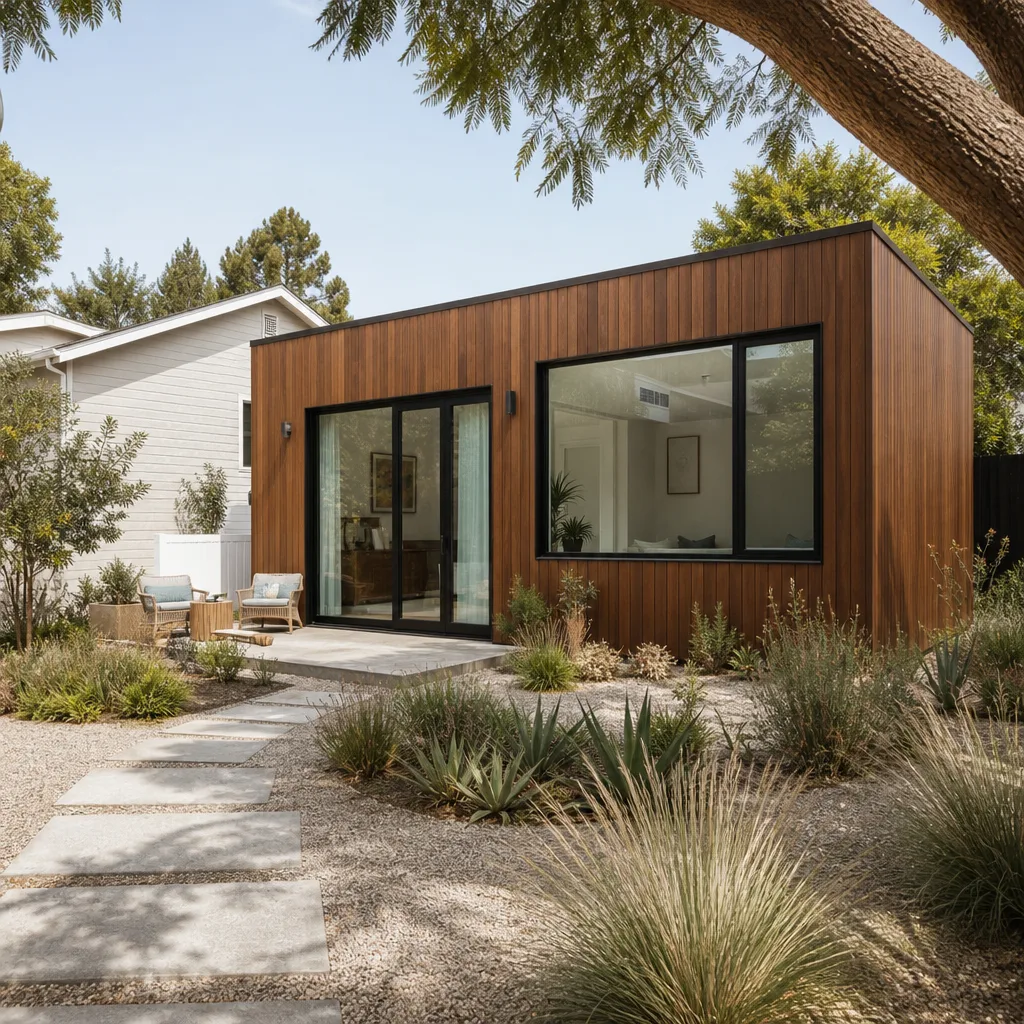
Some tasks in this schedule are fine for an owner with a ladder and a detector tester. Others need a licensed trade. Call a professional when the HVAC system is short-cycling, when you find moisture staining you can’t trace, when the stucco cracking is more than hairline, when a roof flashing detail looks lifted, or when the job you’re planning touches electrical, plumbing, or structural systems and may need a permit. Those are the situations where a wrong move creates a warranty problem or a code problem, not just an inconvenience. Our technicians have up to 11 years of experience with desert climate systems, and crews are background-checked with the license number printed on every page. Ellery ADU Studio Las Vegas offers free estimates in Las Vegas – call (866) 779-3194. A live person answers, and if you already have a written estimate in hand from another builder or maintenance provider, we’ll give you a free second opinion on it.
Frequently Asked Questions
Plan on four scheduled checkpoints a year: pre-summer HVAC service in March or April, pre-monsoon drainage and roof inspection in June, post-summer stucco and caulk inspection in September or October, and a winter weatherstripping and detector check in November. Monthly HVAC filter checks through the dusty spring are additional. The desert compresses intervals by roughly a third versus a milder climate. Call (866) 779-3194 for a free estimate on any maintenance scope you want handled by a trade.
Roughly $1,200 to $2,000 a year, broken across HVAC service and filters, roof and gutter inspection, stucco reseal, small consumables, and a contingency reserve. The HVAC line is the highest value because desert dust loads the coils. Call (866) 779-3194 for a written price on any specific maintenance or repair work – estimates are free.
Nevada habitability standards require working smoke and carbon monoxide detectors, functional heating and cooling, and safe exterior lighting, but the exact inspection intervals vary by jurisdiction, so confirm with the city or county. The safe practice is monthly detector tests, documented filter changes, and written records of every service visit. Call (866) 779-3194 for a written quote on a maintenance agreement that produces that documentation.
Usually yes, because a mini-split installs new mechanical equipment and often new electrical work, both of which are typically permitted. Replacing a failed unit in the same location is sometimes simpler, but confirm with the jurisdiction before contracting the work. Call (866) 779-3194 and we’ll walk you through what the scope involves and quote it in writing.
It can. Roofing warranties usually require an annual inspection, and HVAC equipment warranties typically require documented annual service and regular filter changes. A stucco warranty inspection means checking for hairline cracks and resealing on schedule. Missing those steps lets a manufacturer deny a legitimate claim. Call (866) 779-3194 to schedule the warranty-preserving service before the summer season.
Partly. A prefab or modular shell from a brand like Mighty Buildings or Plant Prefab carries its own warranty inspection checklist that sits alongside the general Las Vegas schedule. The climate-driven tasks, HVAC, drainage, sealant, and detectors, still apply. When we build, we coordinate those manufacturer requirements within the single contract so the owner gets one clear set of instructions. For the full single-contract model, see our Ellery ADU Studio Las Vegas home page. Call (866) 779-3194 for a free estimate.
The Bottom Line
A new detached ADU in Las Vegas needs a maintenance schedule built for a desert that hits 180°F on exterior surfaces and dumps monsoon rain in August. Four checkpoints a year, monthly filter work in the dusty months, an annual reserve of $1,200 to $2,000 for a 600-square-foot unit, and written records at every step. That’s what keeps the stucco sealed, the HVAC warranty active, and a rental unit compliant. Defer it and the 18-month stucco crack becomes a water intrusion repair. The climate doesn’t negotiate, but the schedule is simple once you know it. Any repair or maintenance scope we take on comes with a written price before work starts and a documented photo record when it’s done.
Written by the team at Ellery ADU Studio Las Vegas.