Tuff Shed Site Prep & Utilities: The Las Vegas Owner’s Guide
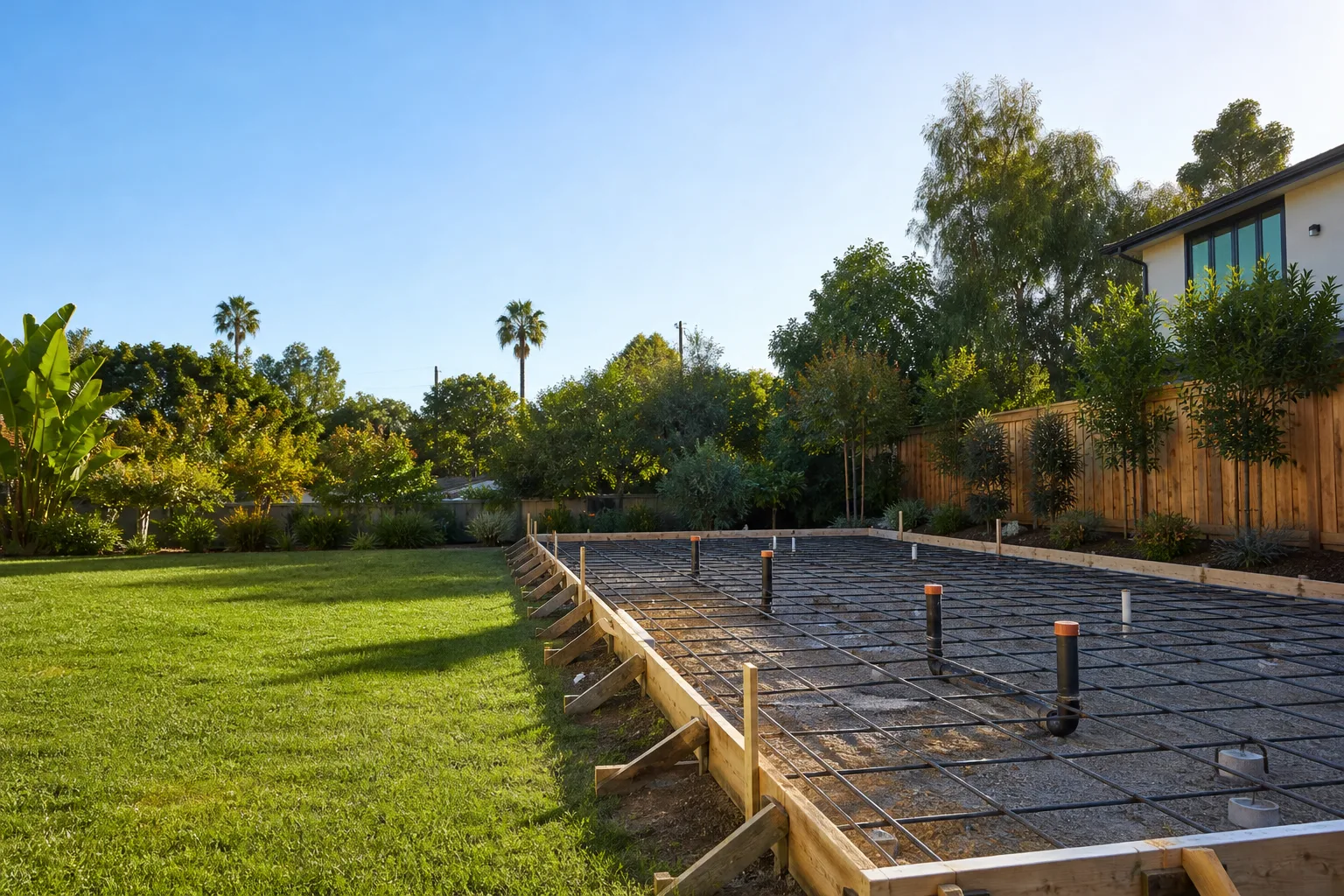
We handle Tuff Shed-compatible site prep and utilities work for Las Vegas homeowners, and the installed cost typically lands between $2,400 and $11,500 depending on whether we’re leveling an existing pad or cutting in new electrical, water, and drainage. Small pad corrections and utility runs can often be scheduled within a few days; full site packages take longer because the work is sequenced around permits and inspection. Most owners find out something is wrong one of two ways: the floor starts to feel springy, or the first monsoon-season rain leaves a water line across the slab.
Ellery ADU Studio Las Vegas is an independent design-build studio. We are not affiliated with Tuff Shed, and we don’t install their buildings. What we do is prep the ground, run the utilities, and take the site work through inspection so the building sits on something that holds up.
Key takeaways:
- Caliche and expansive clay under Las Vegas lots are the two biggest reasons a Tuff Shed pad heaves or settles within a few years.
- Electrical and gas connections to an accessory structure are permit work. We pull the permits and pass the inspections.
- Every project gets a written price before any work starts, per Haven Standard Clause 1.
- We issue a documented photo record on every visit, so you see what was under the slab, not a summary of it.
Which Tuff Shed Models This Applies To
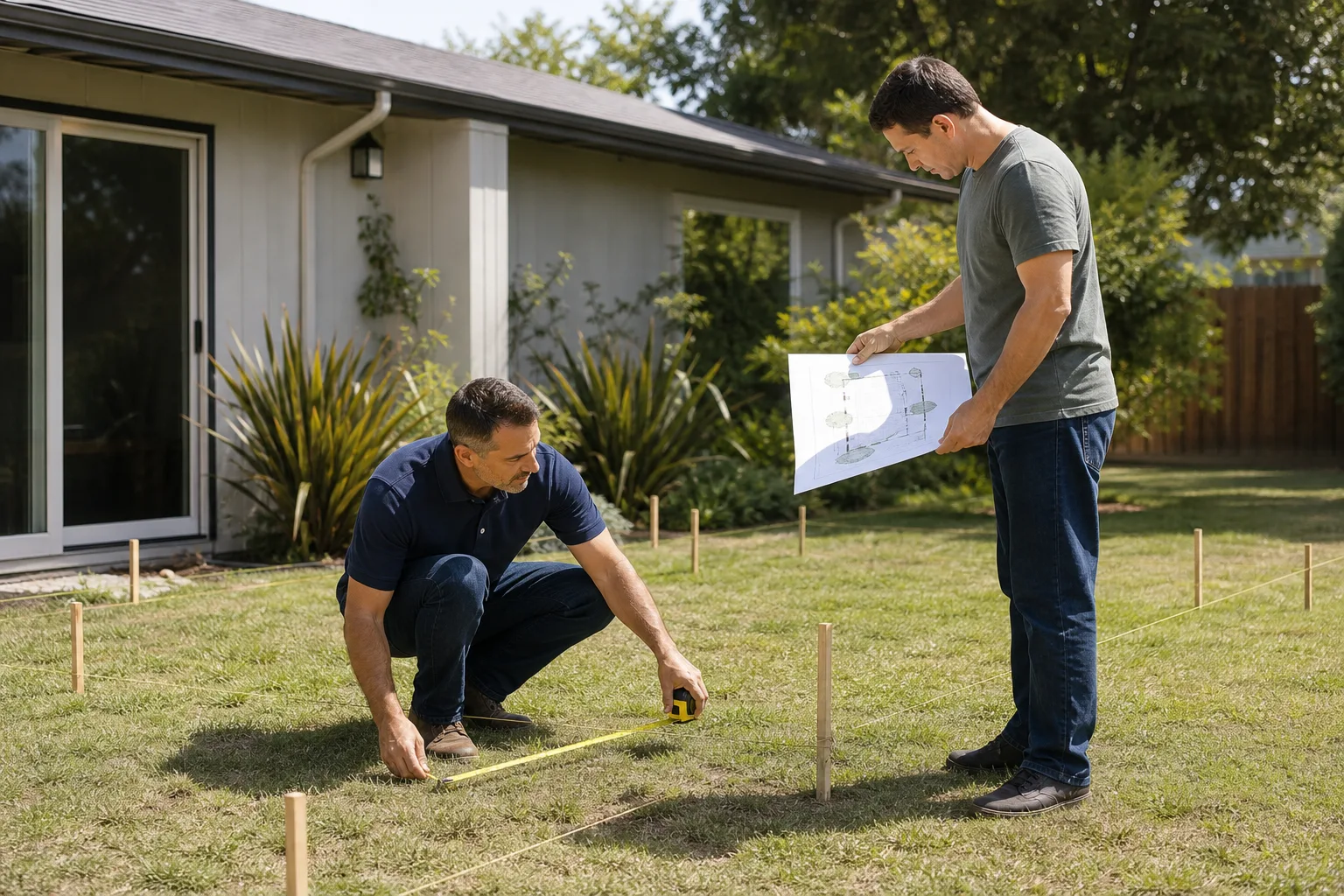
Site prep and utilities are building-agnostic work, but the requirements change with the model. Tuff Shed’s Premier and Tahoe series, along with the TR-800 and TR-700 lines, all carry different footprint loads, door swing clearances, and anchor schedules. A Tahoe with a loft puts more point load on four corners than a flat-floor Premier of the same square footage, which changes how thick and how reinforced the pad needs to be. Before we quote, we identify the building from the order documents or the stamped plate inside the door frame, then measure the actual footing locations on site. Those two numbers don’t always agree, and the measurement wins.
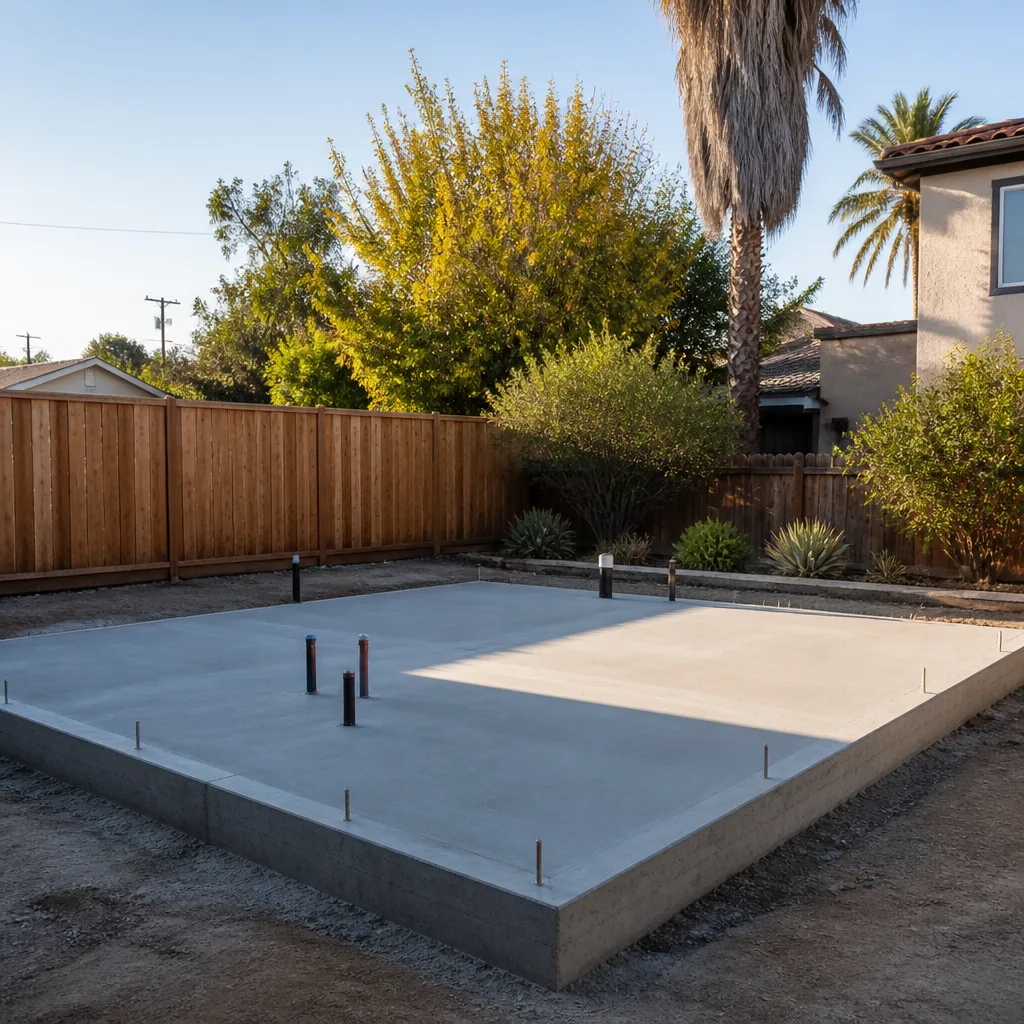
For a Las Vegas lot, the compatibility gotcha is the slab you inherit, not the shed you buy. Many properties built between 2015 and 2025 have a rear pad poured for a prior owner’s project, and it may be 3.5 inches thick with no rebar, sitting on 6 inches of uncompacted fill. That pad will not carry a loaded Tuff Shed floor system through a decade of summer heat cycling. We core it and measure rather than guess.
On the OEM-versus-aftermarket question: for Tuff Shed’s own building components, genuine parts matter and we don’t substitute. For site work, there is no “Tuff Shed” brand of concrete, conduit, or drainage. We specify materials to the load and code requirement, and we write the material list into the scope so you can see exactly what’s going in the ground.
Signs Your Tuff Shed Site Prep & Utilities Is Failing
Site work fails quietly, then all at once. These are the symptoms we’re called out for most in Las Vegas:
- Springy or uneven floor inside the shed. The pad has settled under one or more corners, usually where fill wasn’t compacted. By the time you feel it, the floor joists have been carrying a load they weren’t designed for.
- Doors that stick in July and swing free in January. Expansive clay is swelling and shrinking with the moisture cycle. The building is moving because the ground under it is moving.
- Water pooling at the base after a storm. Drainage was never graded away from the structure, or the pad sits below the surrounding grade. Las Vegas gets its annual rain in a handful of hours, and a shed with no positive slope takes on water fast.
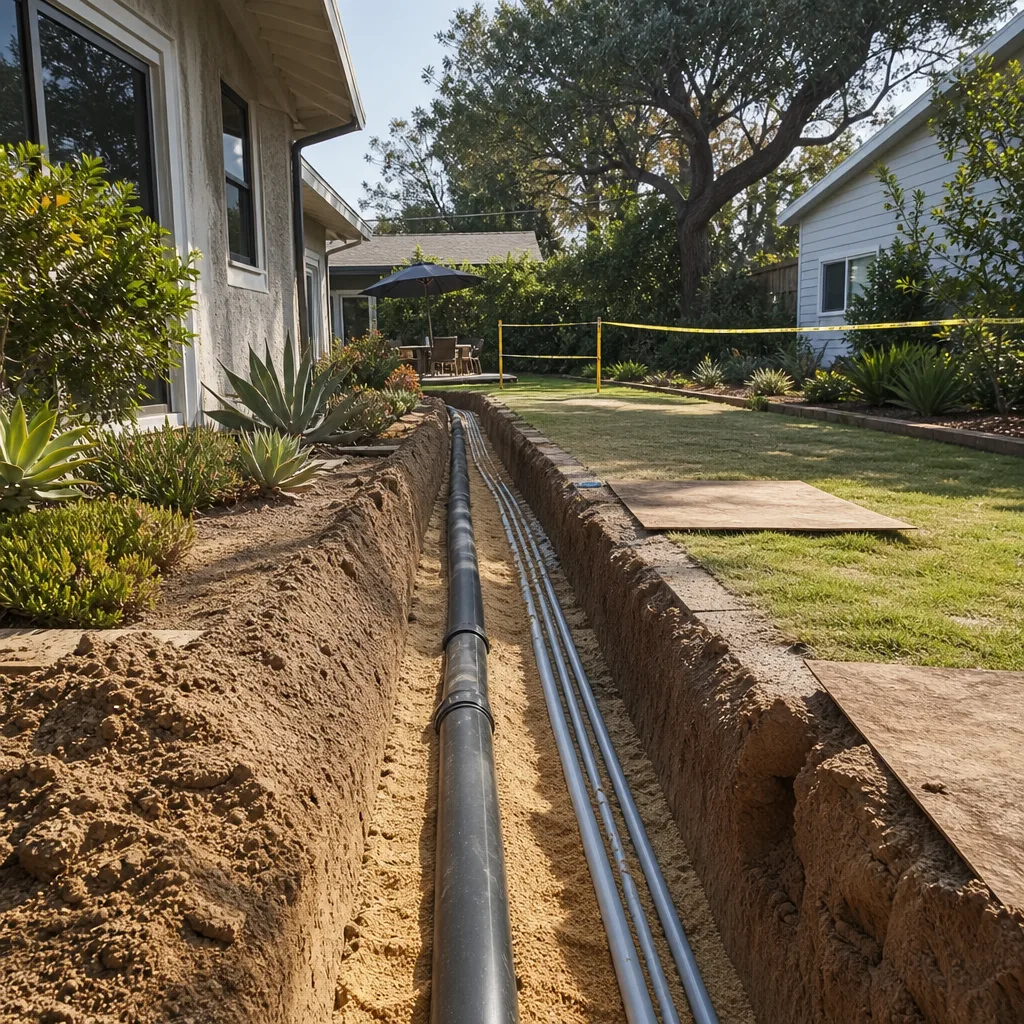
- Tripped breaker when you run a light and a tool at once. The electrical run was sized for a single circuit and someone added load. Undersized conduit and undersized wire are common on owner-run utility work.
- Cracks radiating from a corner of the slab. Caliche layers weren’t broken up before the pour, so the concrete cracked rather than the ground giving. A cracked pad is a structural problem, not a cosmetic one.
Replacement Cost & What’s Included
These are the all-in installed ranges we quote for Las Vegas, parts and labor together, through final inspection:
- Pad leveling and re-compaction (existing slab retained): $1,200 – $2,800
- New reinforced slab, 4-inch with rebar on graded base: $2,400 – $5,600
- Electrical run, trench, conduit, panel connection, one to three circuits: $1,800 – $4,200
- Water line and hose bib to the structure: $700 – $1,600
- Grading, drainage, and positive slope away from the building: $900 – $2,400
- Full site package, new pad plus electrical plus drainage: $5,800 – $11,500
The range is driven by trench length, how far the panel is from the structure, whether the existing pad can be saved, and whether caliche has to be excavated and replaced. Every one of these is quoted as a line item with a written price before we start. Under Haven Standard Clause 1, the number you sign is the number you pay. The work carries a 365-Day Done Right Promise: if the finished site work isn’t built to the permitted drawings, we make it right.
DIY or Call Us?
There’s real value in what you can check yourself. Walk the perimeter after a rain and note where water stands. Look at the base for daylight between the slab and the shed’s bottom plate. Put a level on the floor and see which way it runs. Open the panel and confirm the breaker labeled for the shed is the one actually feeding it. None of that carries risk.
Where DIY goes wrong is the part that gets buried. Trenching for electrical without calling in locates risks hitting a gas or irrigation line, and 811 locates are free. Pulling a permit for a subpanel feed and doing the connection to code is a different job than running a cord. Working around a live panel is genuinely dangerous, and we’d rather you didn’t. And a pad poured over uncompacted fill looks perfect for two summers before it doesn’t. Call (866) 779-3194 and we’ll tell you what we’d do, and what it costs, in writing.
FAQs
How long does site prep and utilities work last in Las Vegas?
A well-built pad with proper base prep and drainage should hold for 20 years or more in this climate. The failure point is rarely the concrete. It’s the soil under it and the water management around it. UV and heat cycling wear out sealants and exposed conduit faster here than in milder climates, so we check those on a shorter cycle.
Can the pad or utility run be repaired instead of replaced?
Often, yes. A slab with minor settling can be mudjacked and re-leveled at a fraction of replacement cost, and an undersized circuit can sometimes be re-pulled through existing conduit. We core and inspect first, then tell you which path the evidence supports. Call (866) 779-3194 for a free estimate.
How long does the work take?
A pad correction is typically one to two days. A full site package with new slab, electrical, water, and drainage runs five to ten working days, plus permit and inspection time. We schedule around weather and give you the sequence in writing before we start.
How do you source the materials?
We specify to the load and code requirement and buy through licensed local suppliers, with the material list written into your scope. We don’t claim to stock parts or carry inventory; each job is specified for that site. For the shed’s own components, we coordinate with Tuff Shed’s genuine parts channel, and we also coordinate prefab and modular systems from Abodu, Cover, and Dvele under the same single contract when a project calls for it.
Ellery ADU Studio Las Vegas has designed, permitted, and built 900+ ADUs since 2015, each with a written price before work started and a documented photo record at completion. Our technicians have up to 11 years of experience. If you already have a written estimate in hand, we’ll give you a free second opinion on it.
Call (866) 779-3194 for a free estimate. A live person answers, day or night.
Written by the team at Ellery ADU Studio Las Vegas, serving Las Vegas and nearby areas.