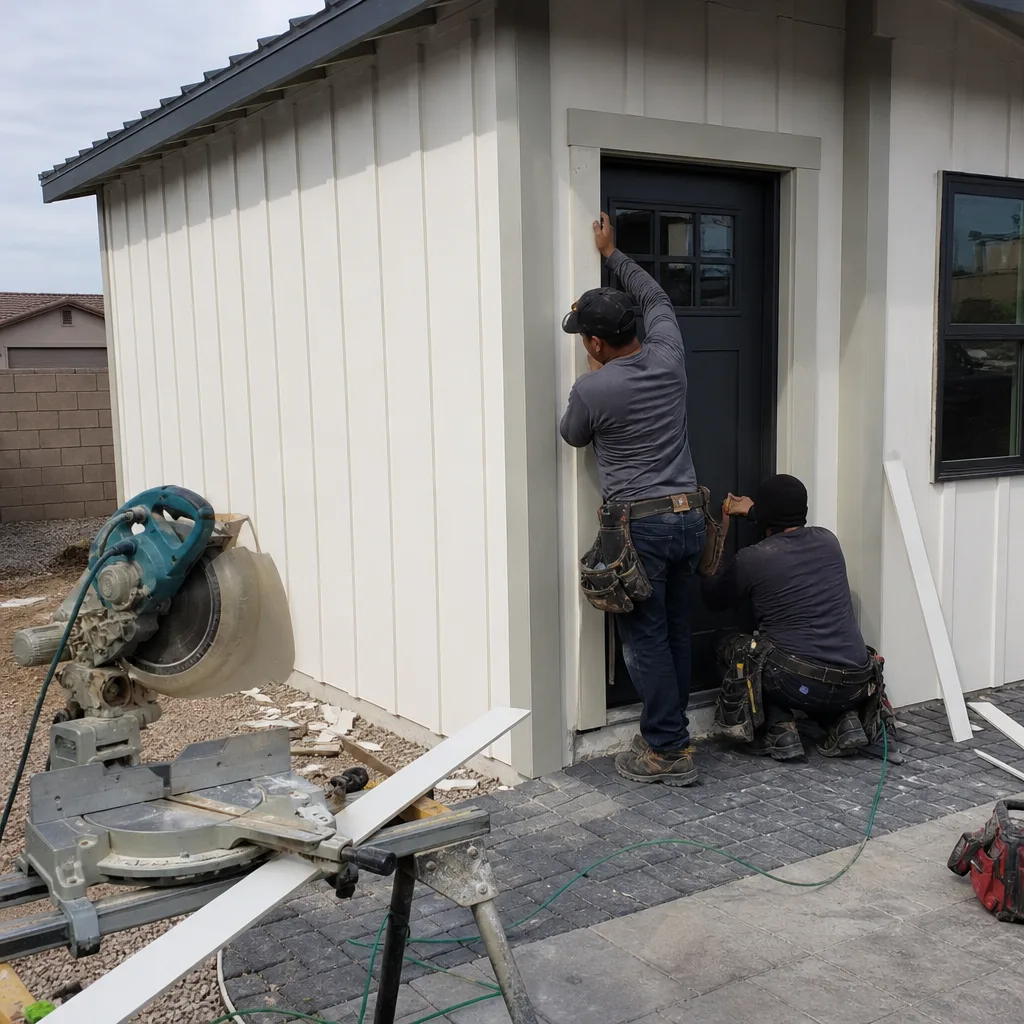
Last updated November 17, 2026
DIY vs Professional ADU Site Prep & Utilities: What’s Safe to Do Yourself
Nevada is one of 22 states where the owner-builder exemption explicitly does not protect work on a rental-designated unit. That single fact reshapes the entire DIY question for anyone building an accessory dwelling unit in Las Vegas. The assumption most homeowners carry into an ADU project – “I can do the site work on my own land” – quietly collapses the moment the finished unit is intended for a tenant. This guide walks through the specific statute, the narrow band of work that remains genuinely permissible, what happens when the utility discovers an unlicensed connection, how your insurance carrier reads the situation, and how to verify every trade on the project before they set foot on the property. By the end you’ll know exactly where the line sits in Las Vegas and why.
Quick Answer
For a rental-designated ADU in Nevada, almost no site prep or utility scope is legally DIY-able. NRS 624.031 allows an owner-builder exemption for a home you personally occupy, but that exemption does not extend to a unit you intend to rent – every sewer, water, gas, and electrical connection must be pulled by a licensed contractor under an inspected permit. The genuinely permissible owner work is limited to vegetation clearing, non-structural grading that doesn’t touch drainage easements, and decorative hardscape outside utility corridors.
Table of Contents
- What NRS 624.031 Actually Says About Owner-Builder Work
- The Rental Carve-Out That Eliminates DIY Scope for ADUs
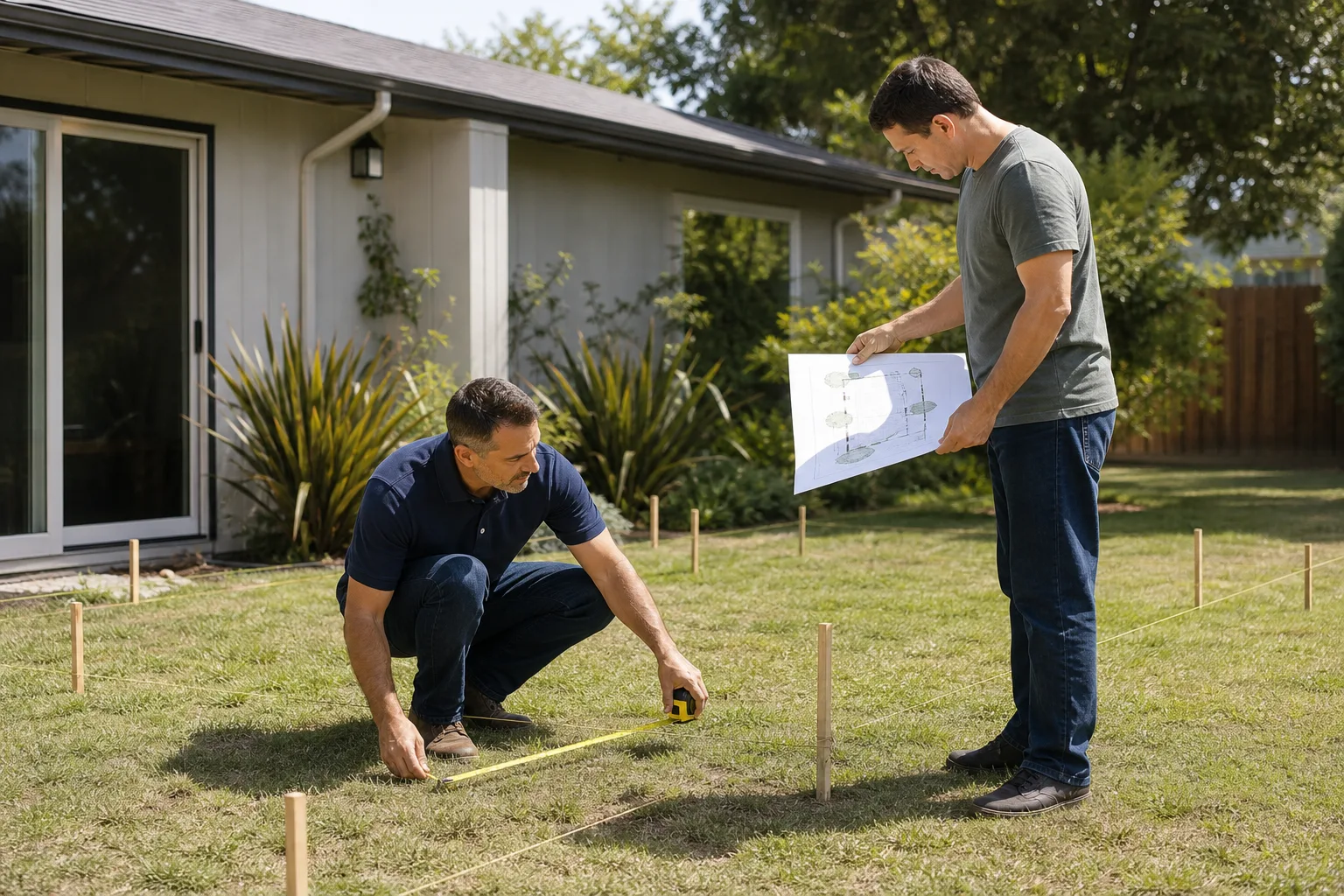
- The Narrow Band of Work That Is Genuinely Permissible
- What Happens When SNWA or NV Energy Discovers an Unlicensed Connection
- How Your Homeowner’s Policy Reads Unpermitted Utility Work
- How to Verify Every Trade Through the NSCB Database
- A Realistic Site Prep & Utilities Sequence for a Las Vegas ADU
- Common Mistakes to Avoid
What NRS 624.031 Actually Says About Owner-Builder Work
Nevada Revised Statute 624.031 defines a contractor as anyone who, for compensation, undertakes to construct, alter, repair, or improve any building or structure. It then carves out a specific exemption for an owner who builds on their own property for their own use and occupancy. Read that last clause carefully – “own use and occupancy” is the operative language. The statute was written to let a homeowner build a house they will live in, not to let a homeowner act as a general contractor on a speculative or rental project.
For an ADU, the exemption analysis turns on three questions the Nevada State Contractors Board will ask if a complaint is ever filed:
- Who will occupy the unit? If a tenant signs a lease, the owner-builder exemption no longer applies.
- Was the work performed with the intent to sell or rent? Intent is established at the time of permitting, not after completion.
- Did any subcontractor work on the project? The moment you hire a sub – even a friend with a license – the owner-builder framework collapses and a licensed general contractor must be on record.
In Las Vegas, we’ve seen this come up most often with owners converting a detached garage in neighborhoods like Summerlin or Green Valley who plan to rent the finished unit on a 12-month lease. The building department will flag the rental designation on the permit application, and the contractor-of-record field must contain a licensed entity. There is no path around it.
The Rental Carve-Out That Eliminates DIY Scope for ADUs
The reason the rental carve-out matters more than most homeowners realize is that it converts what looks like a personal project into regulated commercial construction. The moment the ADU will be leased, the following shift from “your choice” to “not your call”:
- Permit applicant must be a licensed contractor, not the owner-builder.
- Sewer lateral tap must be performed by a licensed plumbing contractor and inspected by Clark County Water Reclamation District or the City of Las Vegas, depending on jurisdiction.
- Water service line must be tapped by a licensed contractor and the meter set by SNWA under a permit.
- Electrical service entrance must be permitted, installed by a licensed electrician, and inspected by the Authority Having Jurisdiction before NV Energy will energize.
- Gas line from the meter to the unit must be installed by a licensed contractor and pressure-tested in the presence of the inspector.
Every one of those five items is a discrete permit pull. Every one requires a license number plugged into the application. There is no legal arrangement in Las Vegas where a homeowner rents an ADU whose sewer lateral they installed themselves. The unit may pass final inspection, but the rental use is a separate legal question and, in practice, an uninsurable one – which we’ll come to.
If you’re weighing a garage conversion ADU in Las Vegas specifically, the scope is even narrower because the existing utility stubs must be re-certified before they can feed a habitable unit. That re-certification is a licensed-activity item.
The Narrow Band of Work That Is Genuinely Permissible
There is real, useful work a homeowner can do on their own ADU site without a license, and it’s worth being precise about it because the line is genuinely fuzzy if you’ve never looked at it. The following three categories sit outside NRS 624.031’s definition of contracting because they don’t involve constructing, altering, or repairing a building or structure:
- Vegetation clearing – removing shrubs, small trees, and landscape debris from the build footprint. This includes stump grinding of ornamental plants. It does not include removing protected Joshua trees, which requires a Clark County permit regardless of who performs the work.
- Non-structural grading on private property – moving dirt within your lot lines as long as you don’t alter the natural drainage pattern that affects an adjacent property or a designated drainage easement. In Las Vegas, stormwater patterns are more sensitive than most owners expect; a shallow swale that carries monsoon runoff from your lot to the street cannot be re-routed without a grading permit from Clark County Public Works.
- Decorative hardscape outside utility corridors – pavers, gravel paths, planter beds, and low retaining walls under 4 feet in height, provided they are not within a recorded utility easement. Utility corridors are marked on your plat; SNWA and NV Energy both have defensible easement rights and will require you to remove anything placed over their lines.
That’s the full list. Everything else – trenching, conduit, water, waste, gas, electrical, foundation drainage – is licensed contractor work. A Las Vegas homeowner who wants to swing a shovel for a weekend can clear the lot and lay pavers. The rest of the site prep belongs to tradespeople whose license numbers will appear on the permit.
What Happens When SNWA or NV Energy Discovers an Unlicensed Connection
Utility companies run verification checks before and after service activation. These checks are not passive. When SNWA or NV Energy locates a connection during routine service verification – meter reading, main inspection, a neighboring outage that draws attention to a shared line – the discovery process is more or less uniform and more or less painful:
- Immediate disconnection of the non-compliant service, typically same-day and without notice beyond a door tag.
- Code enforcement referral to the local building authority, which opens a case file on the property.
- Re-inspection fee charged by the utility, in addition to the permit and inspection fees required to correct the work – SNWA and NV Energy both publish these schedules, and a re-inspection on a service lateral typically runs several hundred dollars before any corrective work begins.
- Corrective work performed by a licensed contractor, at post-facto pricing, since the trench must be reopened and the connection re-made under inspection.
- Re-energization or re-pressurization only after a passing inspection with a stamped sign-off, which can add weeks to the schedule.
The cost of the correction nearly always exceeds the cost of having done it correctly the first time – by a wide margin, because you’re paying the licensed contractor the same labor price plus the excavation rework plus the utility fees. In Las Vegas, we’ve seen homeowners absorb this on a single water lateral and lose most of a summer’s build season to the re-inspection queue.
How Your Homeowner’s Policy Reads Unpermitted Utility Work
Most homeowner policies contain language that excludes coverage for damage originating in systems installed without required permits or outside applicable code. This is not a gray area in the standard HO-3 form. If a water line you trenched and connected yourself fails under the slab and damages your finished flooring, your policy’s duty to defend and indemnify the loss will very likely be disclaimed on the basis that the system was not permitted and inspected.
The exposure runs further than the ADU. In a Las Vegas ADU situation, three loss scenarios are common:
- Water damage from an unpermitted water line or drain that fails and damages the ADU plus the primary residence. Typically excluded.
- Electrical fire originating in an unpermitted service entrance or feeder. Typically excluded, and in some cases triggers non-renewal at the policy period.
- Liability claim from a tenant injured by a defect in an unpermitted system. The claim may not be covered at all, and the landlord exposure is direct.
We’ve had clients come to us after exactly this scenario – a garage that failed inspection mid-conversion and a carrier that walked away from the water damage claim. The written permit set, the inspection sign-offs, and the contractor’s license number on the record are what keep the policy engaged when a loss happens.
How to Verify Every Trade Through the NSCB Database
Before any trade touches an ADU site in Las Vegas, verify them through the Nevada State Contractors Board. The process takes less than five minutes per trade and catches the most common problem we see – an out-of-scope license performing work outside their classification.
- Go to the NSCB license lookup portal on nvcontractorsboard.com.
- Search by license number, business name, or the name of the individual listed as qualifier.
- Confirm three things: the license is active (not suspended or expired), the classification matches the work (Class C-1 for plumbing, C-2 for electrical, C-3 for general building, for example), and the monetary limit on the license exceeds the contract value.
- Check the complaint history. NSCB publishes a record of disciplinary actions, and a licensed contractor with a pattern of complaints is not a safe choice even if the license is technically active.
- Cross-check the license number against the one on the permit application after the contractor pulls it.
Every page of a project with Ellery ADU Studio Las Vegas home shows the license number, because verifying credentials is the base layer of any site prep conversation. The same discipline applies when you’re hiring a plumber for a lateral tap or a grading contractor for site prep – check first, hire second.
A Realistic Site Prep & Utilities Sequence for a Las Vegas ADU
For a new detached ADU in Las Vegas, the site prep and utility sequence generally runs six to ten weeks from permit issuance to the point a foundation can be poured. Here is the standard order, with the licensed scope properly attributed:
- Owner-permissible clearing and vegetation removal – two to four days. Homeowner scope.
- Utility locate and survey – 811 callout plus surveyor verification of easements. Licensed surveyor.
- Sewer lateral tap and inspection – licensed plumbing contractor, inspected by the appropriate jurisdiction (Clark County or City of Las Vegas).
- Water service tap and meter set – licensed plumbing contractor working with SNWA.
- Electrical trench, conduit, and service entrance – licensed electrical contractor, inspected before NV Energy energizes.
- Gas line run and pressure test – licensed plumbing contractor, pressure test witnessed by the inspector.
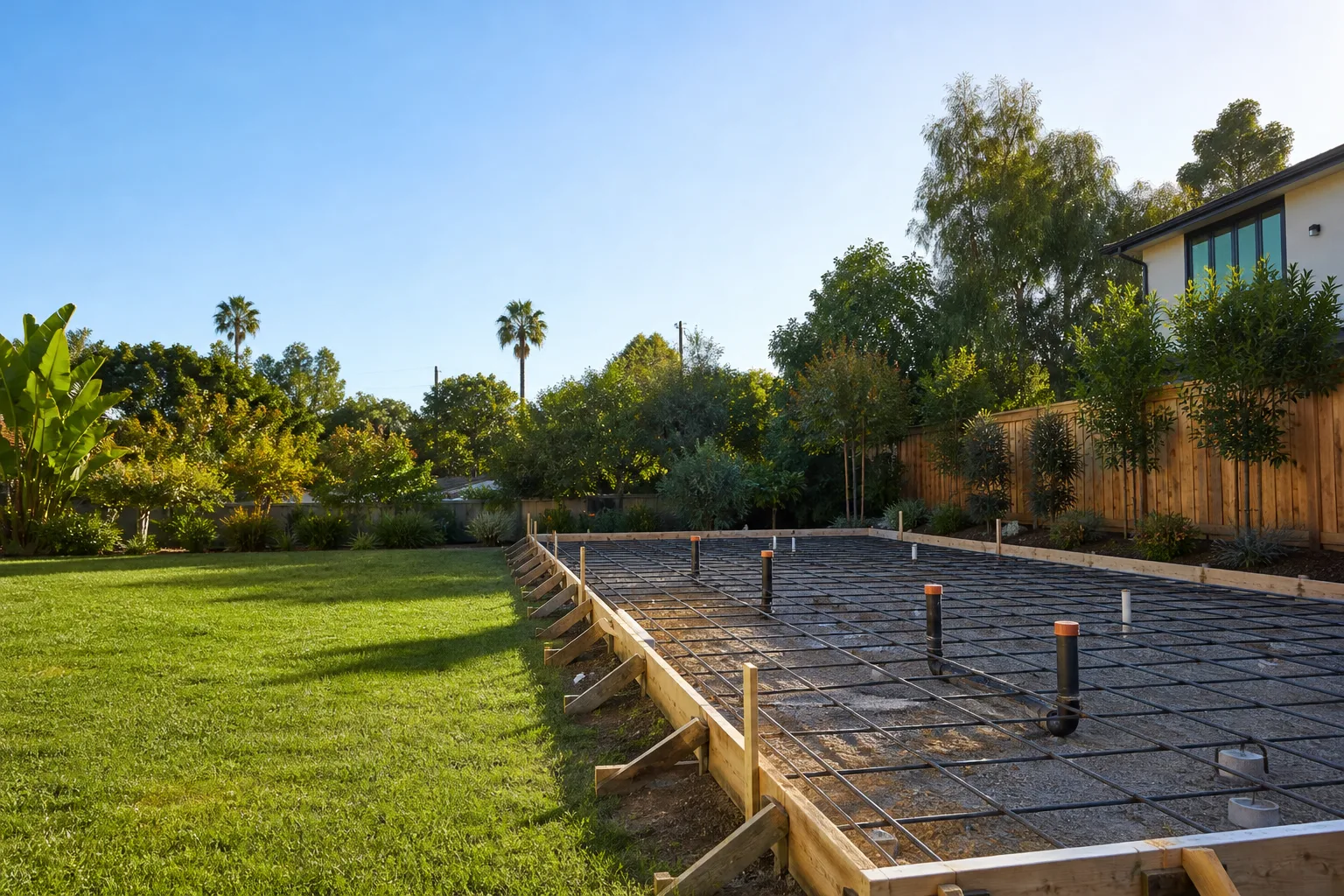
- Structural grading and foundation excavation – licensed contractor on the building permit.
- Owner-permissible decorative hardscape – after all utilities are inspected and buried.
Sun exposure in Las Vegas makes trenching seasonally sensitive. We schedule utility trenchwork in the early morning through summer, because a concrete truck arriving at 2 p.m. to a trench that’s been baking at 110 degrees is a schedule problem disguised as a schedule solution. If you’re building a new detached ADU in Las Vegas, expect the utility sequence to drive the pour date, not the other way around.
Common Mistakes to Avoid
- Assuming the owner-builder exemption covers a rental unit. It does not, and the rental designation is on the permit application from day one. Reclassifying mid-project requires a new permit cycle.
- Trenching over a recorded utility easement. SNWA and NV Energy have enforceable rights, and a concrete pour over their lines will be required to come out at your cost. Check your plat before you dig, not after.
- Hiring a handyman for a lateral tap. A handyman license in Nevada is a different classification and does not cover plumbing, electrical, or gas work. The permit will be rejected and the work redone.
- Trusting a verbal quote on utility scope. In Las Vegas, a written price before work begins is achievable and should be the baseline. Every page of the Haven Standard, Clause 1, states this is standard, not exception.
- Not pulling the required vegetation permit for protected species. Joshua trees and some desert natives require a Clark County removal permit even on private property. Clearing them without it is a code violation.
- Skipping the photo record during site prep. Utility trenches are covered the moment the foundation is poured. If you don’t have photographic evidence of what was buried and inspected, you have no record when a later problem surfaces.
- Re-routing lot drainage without a grading permit. Las Vegas monsoon runoff is not a decorative feature. A swale moved without a county grading permit will trigger a correction order when the neighboring lot floods.
When to Call a Professional
Call a licensed professional for every element of the ADU that touches a utility: water, sewer, gas, electrical, and the structural grading that establishes foundation drainage. That includes any trench deeper than a foot, any connection to a public mainline, any conduit carrying line voltage, and any grading that changes how stormwater leaves your lot. The site prep and utility scope on a rental-designated ADU has zero legally permissible DIY overlap with NRS 624.031 – the statute is not ambiguous on this point, and the consequences of getting it wrong run from re-inspection fees to an uninsurable unit. Ellery ADU Studio Las Vegas offers free estimates in Las Vegas – call (866) 779-3194. Every project is quoted with a written price before work begins, and a Free Second Opinion is available on any written estimate you already have in hand.
Frequently Asked Questions
Almost never, if the ADU is intended for a tenant. NRS 624.031’s owner-builder exemption requires personal use and occupancy, so a rental-designated unit disqualifies the owner-builder framework entirely. The permissible owner scope is limited to vegetation clearing, non-structural grading on your own lot that doesn’t affect drainage, and decorative hardscape outside utility corridors. Call (866) 779-3194 to talk through what your specific lot allows.
NRS 624.031 allows an owner to build on their own property for their own use and occupancy without holding a contractor’s license. It does not cover a rental-designated ADU, and it does not cover work where any subcontractor is involved. Because an ADU almost always requires at least one licensed trade (plumbing, electrical, or gas), the exemption rarely survives contact with a real ADU project in Las Vegas.
The utility disconnects the non-compliant service, refers the property to the local building authority, and charges a re-inspection fee on top of the permit fees required to correct the work. Correction is performed by a licensed contractor at post-facto pricing, and re-energization or re-pressurization happens only after a passing inspection. The full process typically adds weeks to the schedule and more than the original cost of licensed installation. Call (866) 779-3194 for a written scope and price.
Usually not. Standard HO-3 policies exclude damage originating in systems that were installed without required permits or outside code. The exclusion typically applies to the ADU and the primary residence if a shared system is involved, and a liability claim from a tenant injured by a defect in an unpermitted system may not be covered at all. Permits and inspection sign-offs are what keep the policy engaged.
Use the Nevada State Contractors Board lookup portal and confirm four things: the license is active, the classification matches the work (C-1 plumbing, C-2 electrical, C-3 general building), the monetary limit exceeds the contract value, and the disciplinary history is clean. Cross-check the license number against the permit application after the contractor pulls it. Every page of an ADU design and permitting project in Las Vegas should show the same verification standard.
Clearing vegetation, non-structural grading on private property that doesn’t change drainage patterns or affect an easement, and installing decorative hardscape outside utility corridors. Everything else – trenching, water, sewer, gas, electrical, and structural grading – belongs to licensed trades on inspected permits. Call (866) 779-3194 for a free estimate on the licensed scope.
The Bottom Line
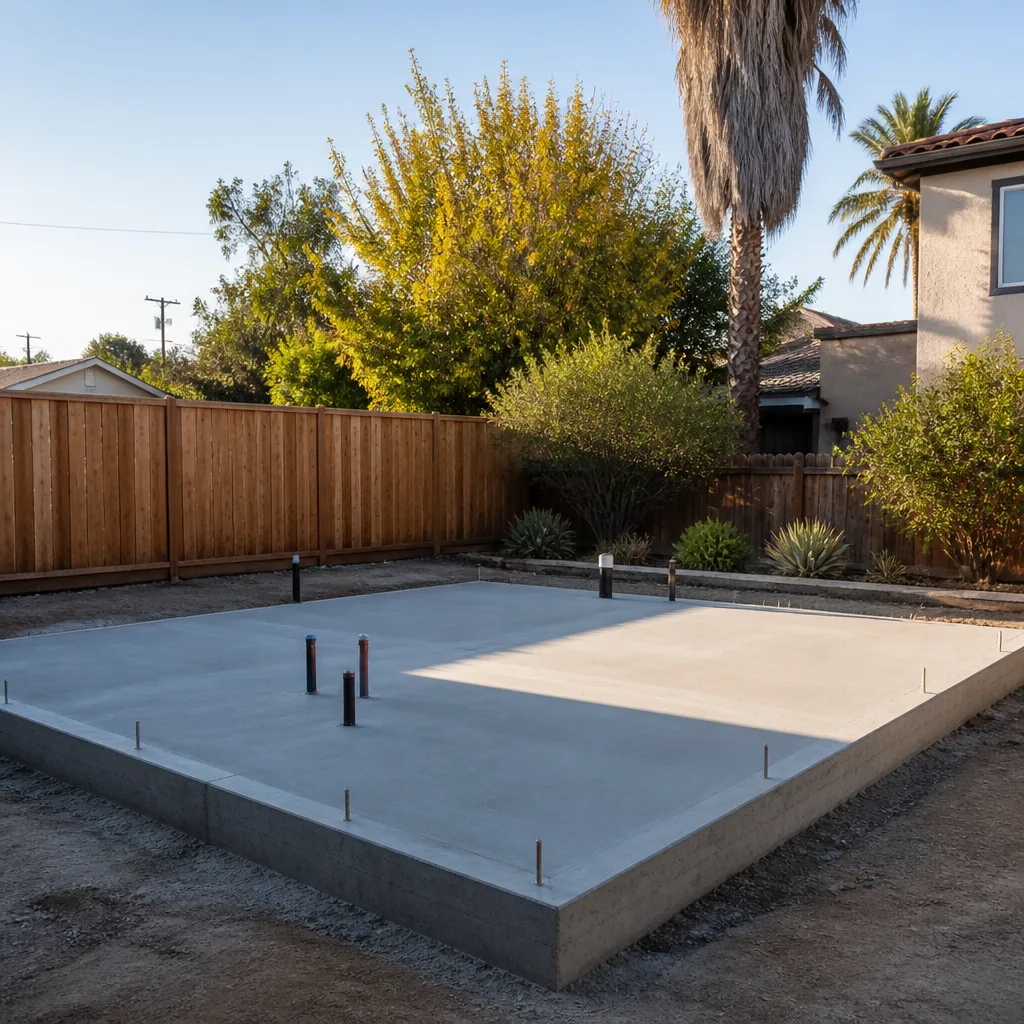
Site prep and utility work for an ADU in Las Vegas contains almost no legally permissible DIY scope – not because the work is uniquely complicated, but because the rental designation disqualifies the owner-builder exemption under NRS 624.031 before a shovel touches the ground. The permissible owner work is limited to clearing, non-structural grading on your own lot, and decorative hardscape outside utility corridors. Everything else runs through licensed trades on inspected permits, and the utility verification process, the insurance policy language, and the NSCB license lookup all reinforce the same conclusion. Permits, license numbers on the record, and a written price before work starts are what make the unit rentable and insurable.
Ellery ADU Studio Las Vegas treats site prep and utilities as one scope inside a single design-build contract – the drawings, the permit set, and the construction at one written price. Our technicians have up to 11 years of experience, and the studio specifies prefab and modular systems from names like Abodu, Cover, and James Hardie as part of the same contract. Each project runs under the Haven Standard, with a written price before work begins, a documented photo record on every visit, and a 365-Day Done Right Promise in writing. Call (866) 779-3194 for a free estimate, and a live person will answer.
Written by the team at Ellery ADU Studio Las Vegas.