Last updated November 17, 2026
ADU Permits, Codes & Inspections in NV: What You Need to Know
Here’s the part most Nevada ADU guides skip: a permit set that satisfies the state model code can still fail plan check in Clark County, because the county adopted the 2018 IBC while enforcing local amendments that predate it. In our experience, that gap is where schedules and budgets quietly break. This guide walks through the four overlapping jurisdictions that govern Las Vegas-area ADUs, how to confirm which one controls your parcel before you submit anything, which code editions each authority enforces as of 2025, the inspection hold-points that trigger re-inspection fees, and where Nevada SB 478 actually protects you. If you’re planning an ADU in Las Vegas, read this before you draw a single line.
Quick Answer
ADU permitting in Nevada runs through four overlapping authorities – Clark County (unincorporated), the City of Las Vegas, the City of Henderson, and the City of North Las Vegas – each enforcing a different mix of code editions and local amendments, and each with its own inspection sequence. You must confirm jurisdiction over your specific parcel using Clark County’s GIS mapping tool before submitting plans, because submitting to the wrong authority restarts your review clock and can cost weeks. The enforceable requirements that survive SB 478 are life-safety, utility connection, and site-specific zoning standards; the discretionary ones municipalities used to impose are largely preempted.
Table of Contents
- Step 1: Confirm Which Jurisdiction Controls Your Parcel
- Which Code Editions Each Las Vegas-Area Jurisdiction Enforces
- Nevada SB 478: What It Preempts and What Still Applies
- The Mandatory Inspection Hold-Points in Clark County
- What a Failed Inspection Actually Costs You
- Impact Fees and Utility Connection Fees by District
- What Belongs in an ADU Permit Set
- Common Mistakes to Avoid
Step 1: Confirm Which Jurisdiction Controls Your Parcel
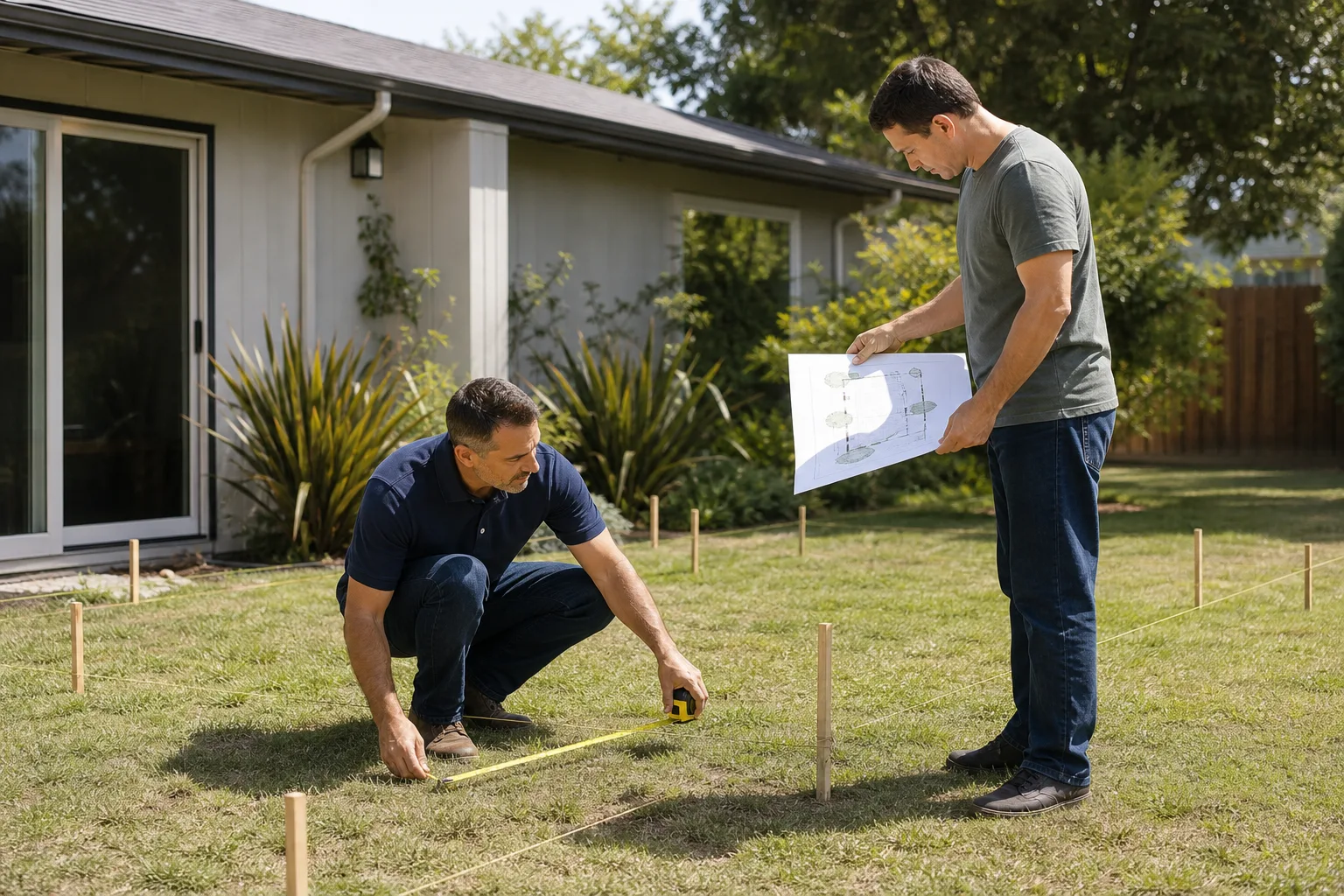
Before you draft a site plan, before you hire a designer, before you talk to anyone about a garage conversion – you confirm jurisdiction. This is the single most common failure point we see in Las Vegas ADU projects. A homeowner in the 89183 ZIP code may assume they’re in “Las Vegas,” but if the parcel sits in unincorporated Clark County, the City of Las Vegas has no authority over it. Submit there and your review resets when it gets bounced to the county.
Here’s the sequence to run, in order:
- Enter your parcel number (APN) into Clark County’s online GIS mapping tool. The Assessor’s parcel viewer and the county’s planning jurisdiction layer both work.
- Read the “jurisdiction” field for your parcel. It will list Clark County, City of Las Vegas, Henderson, North Las Vegas, or one of the smaller incorporated cities.
- Confirm the zoning designation for that parcel as shown on the same layer – the ADU standards differ by zone.
- Screenshot or print the GIS result and keep it in your project file. If a plan checker or inspector later disputes jurisdiction, you have the record.
- Call the planning counter of the authority the GIS names, not the one in your mailing address, and ask for the ADU submittal checklist. Get it in writing or email.
We’ve watched projects lose three to five weeks to this step alone. The county and the city maintain separate review queues, different submittal portals, and different ADU checklists. In Las Vegas, the difference between 89109 (city) and the unincorporated pockets near the 215 Beltway breaks more schedules than any design decision.
Which Code Editions Each Las Vegas-Area Jurisdiction Enforces
Nevada doesn’t adopt a single set of building codes statewide with uniform effective dates. Each local authority adopts its own editions of the International Building Code (IBC), International Residential Code (IRC), National Electrical Code (NEC), and International Mechanical Code (IMC), and each times that adoption to its own cycle. As of 2025, the general picture for the Las Vegas area looks like this:
- Clark County (unincorporated): Adopted the 2018 IBC as its base, with local amendments that predate that edition and remain in force. Some items resolved in the 2024 IBC are still enforced here under local amendment language.
- City of Las Vegas: Follows its own adoption schedule and amendments; confirm the current edition when you pull your submittal checklist – the city has historically run slightly ahead of the county on some adoptions and behind on others.
- City of Henderson: Maintains a separate code adoption and amendment package; Henderson’s ADU review is handled through its own planning and building services counters.
- City of North Las Vegas: Also independent; its plan check and inspection processes run through its own building department.
What does this mean for you in practice? A permit set drawn to the 2018 IBC without accounting for local amendments can still fail plan check on items the 2024 IBC has since resolved. The reverse is also true: designing to 2024 provisions county plan check hasn’t adopted yet creates friction. Our design team spends a real portion of pre-design time on the current adopted editions and amendments for the specific jurisdiction – that’s part of what you get in a ADU Design & Permitting in Las Vegas engagement, and it’s why we don’t treat “permit set” as a generic deliverable.
If you’re converting an existing garage, the code cycle matters differently: existing-structure provisions, egress, and insulation requirements in the IRC often drive the scope. Our Garage Conversion ADU in Las Vegas work starts from a takeoff of what’s actually there – the slab thickness, the wall framing, the existing electrical service – because those facts determine which code provisions apply.
Nevada SB 478: What It Preempts and What Still Applies
Nevada SB 478 was passed to stop municipalities from layering discretionary obstacles onto ADU approval. Before it, an ADU applicant could face subjective design review, arbitrary parking requirements, or owner-occupancy conditions that had nothing to do with safety and everything to do with neighborhood politics. The statute limits what a local government can require as a condition of ADU approval.
What SB 478 preempts, broadly:
- Discretionary design or architectural review standards applied only to ADUs
- Additional parking requirements beyond what the underlying zone requires for the primary residence, in most cases
- Owner-occupancy requirements imposed at the local level as a blanket condition
- Minimum lot size or unit size conditions that exceed state-allowable limits
What remains legally enforceable despite preemption:
- Life-safety standards: egress, smoke and CO detection, structural adequacy, fire separation, and seismic provisions still apply fully.
- Utility connection requirements: water, sewer, and electrical connection standards are not preempted; the utility district sets these.
- Site-specific zoning standards: setbacks, height limits, lot coverage, and floor-area ratios still apply to your parcel as adopted.
- Historic district and hazard-area requirements: if your parcel sits in a designated historic district or a flood zone, those overlays apply.
SB 478 is a floor, not a ceiling. Projects still fail plan check on setback encroachment (the distance between your proposed ADU and the property line), height, and lot coverage – all legally enforceable. In Las Vegas, properties near the older core and in some Henderson subdivisions have tighter lot coverage limits that catch people off guard. Reading your parcel’s specific zoning table matters more than reading SB 478.
The Mandatory Inspection Hold-Points in Clark County
The inspection sequence in unincorporated Clark County differs from the City of Las Vegas in ways that create re-inspection charges if you don’t know which hold-points are mandatory before the next phase can start. Here’s the sequence for a typical detached or converted ADU in Clark County:
- Foundation / slab inspection – before concrete is poured; anchors, rebar, and vapor barrier checked.
- Framing inspection – after framing, before insulation or drywall; shear nailing, headers, and openings checked.
- Rough MEP inspection – rough plumbing, rough electrical, and rough mechanical, often scheduled as one combined or three separate inspections depending on jurisdiction and scope. Conduit, wire, pipe sizing, and venting all verified.
- Insulation inspection – after insulation is installed and before drywall goes up; R-value and installation quality checked.
- Drywall / lath inspection – where required by the jurisdiction; fastening and fire-rated assembly verified.
- Final inspection – all systems, egress, smoke/CO, and finished work verified in one pass, plus utility sign-offs.
In our experience across Las Vegas-area projects, the hold-points that most often trip up homeowners are rough MEP and final. Rough MEP because a single missing nail plate on a plumbing penetration can fail the whole combined inspection. Final because the utility district sign-off and the building department’s final are separate documents, and a project can pass one and fail the other on the same day. We schedule these as separate events, not as one trip.
The City of Las Vegas’s sequence tracks the same broad order but differs on which inspections are combined and on the drywall/lath step. A project permitted under city jurisdiction doesn’t automatically map to the county’s inspection card. Confirm your inspection card against the issuing authority’s checklist, not from memory.
What a Failed Inspection Actually Costs You
A failed inspection means a re-inspection fee, and the fee itself is the smaller cost. The bigger cost is schedule. On a typical Las Vegas-area ADU project, the re-inspection fee runs in the range of a modest flat charge per re-inspection, but the days lost to rescheduling and the downstream trades who have to remobilize add up fast. On a tract of tightly scheduled trade work, a failed rough MEP can push the drywall date by a week or more, and every trade behind it shifts.
Where failed inspections most often originate, in our experience:
- Nail plates missing on plumbing penetrations or electrical runs through framing
- Improper shear nailing or missing hardware at framing
- Incorrect wire gauge or overfilled conduit at rough electrical
- Missing or incorrectly routed dryer vent, range hood, or bathroom exhaust
- Smoke and CO detector locations that don’t match the adopted code edition the inspector is working under
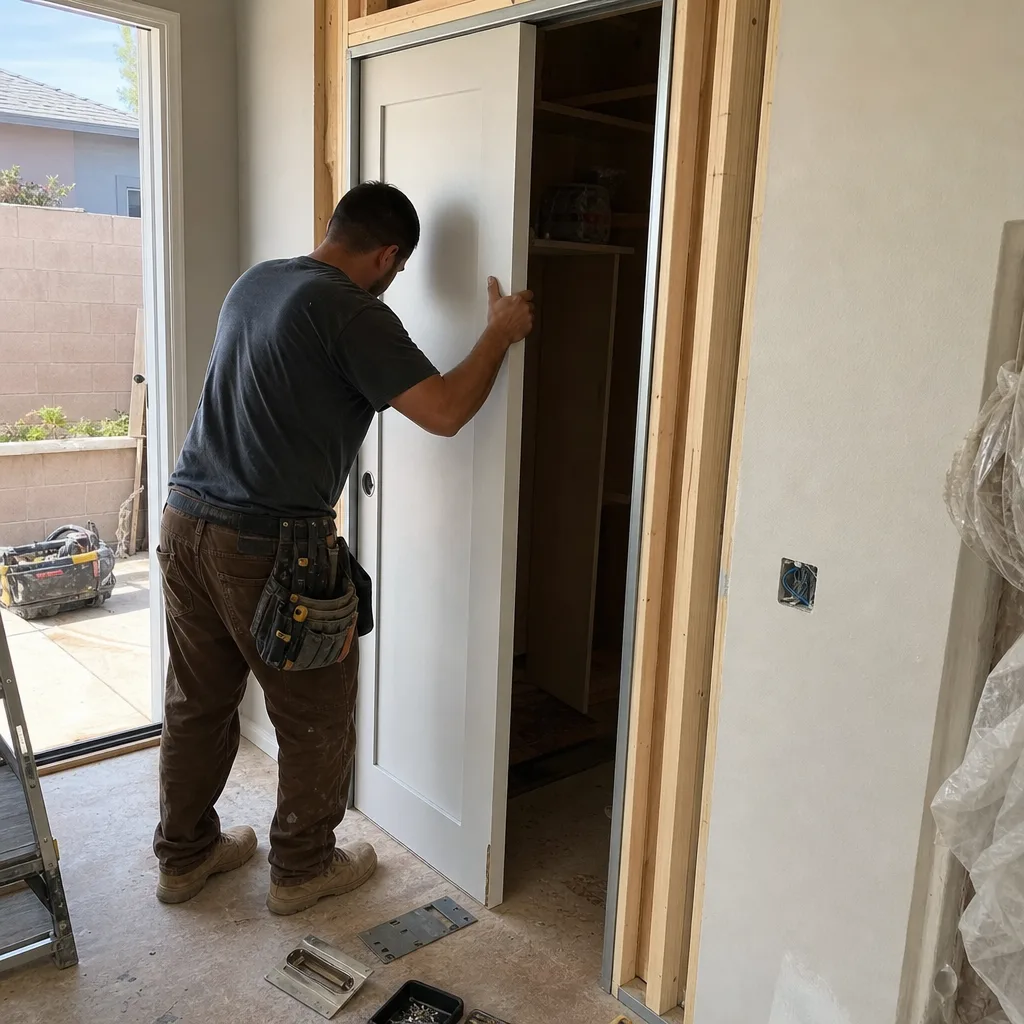
The cheapest re-inspection is the one you prevent with a pre-inspection walk. Before calling for any hold-point, we walk the work against the same checklist the inspector will use. That’s part of how we approach the inspection sequence under the New Detached ADU in Las Vegas process – a documented walk before every inspection call.
Under The Haven Standard, the written price before work starts doesn’t cover re-inspection fees the trade caused, because we don’t cause them. If a scope gap in our drawings causes a plan-check correction or a failed inspection, that’s covered under the 365-Day Done Right Promise – if it’s not done right, we make it right.
Impact Fees and Utility Connection Fees by District
Impact fees and connection fees are where the ADU budget table gets awkward, because the districts that charge them set their own schedules and don’t talk to each other. In the Las Vegas Valley, the water and wastewater side is split between the Las Vegas Valley Water District (LVVWD), which handles water service for a large portion of the valley, and the Clark County Water Reclamation District on the wastewater side – plus separate utility providers in Henderson and North Las Vegas.
What those districts charge for an ADU connection depends on:
- Whether the existing service can carry the new load or needs a meter upsizing
- Whether the wastewater connection needs a new lateral or a tap into an existing one
- Whether the ADU adds a dwelling unit for impact-fee calculation purposes, which affects school and park impact fees collected at building permit
- Whether your parcel is inside or outside a service boundary for a given district
Impact fees are collected by the jurisdiction issuing the permit, not by the utility, and the calculation basis (dwelling unit, square footage, or fixture count) varies. On a garage conversion ADU, the water and wastewater impact often doesn’t change because the fixture count stays the same – but the added dwelling unit can still trigger a school or park impact fee. On a new detached unit with its own kitchen and bath, the utility connection work is real and should be budgeted as a line item.
What we won’t do is quote a fee range on a page that reads the same for every parcel. The only honest number for impact and connection fees on your parcel is the number from your jurisdiction’s fee schedule, read against your specific project scope. We put that line item in the written price before work starts so it’s not a surprise at permit issuance.
What Belongs in an ADU Permit Set
The permit set is the product. Not an afterthought, not a sketch – the complete document package the plan checker approves and the inspector builds against. A permit set that skips a sheet gets a correction notice, and every correction notice costs days.
A complete ADU permit set for a Las Vegas-area project should include:
- Site plan with setbacks, existing and proposed structures, and utility routing
- Floor plans and elevations at the correct scale for the jurisdiction
- Framing plans and structural calculations signed by the engineer of record
- Energy compliance documentation matched to the adopted code edition
- Electrical, plumbing, and mechanical drawings with fixture schedules
- Foundation and connection details
- Title 24 or equivalent energy compliance forms per the jurisdiction
If you’re working with a prefab system from a manufacturer such as Plant Prefab, Boxabl, or Tuff Shed, the set also needs the manufacturer’s structural package, factory inspection documentation, and the site-connection details. Those systems are specifiable within a single contract, but the permit set still has to reflect the site-specific foundation and utility work – the factory drawings alone won’t clear plan check. Our Ellery ADU Studio Las Vegas home page covers how we coordinate this in one contract.
Siding and finish specification also lives in the permit set when the jurisdiction requires it. James Hardie or equivalent fiber cement siding comes up more often than you’d expect on Las Vegas ADUs because of the desert UV load, and if the jurisdiction requires a listed assembly, the specification needs to be in the submittal, not added later.
Common Mistakes to Avoid
- Submitting to the wrong jurisdiction. Your mailing address says “Las Vegas,” but the GIS layer says “unincorporated Clark County.” Two weeks lost to a bounced submittal is the cheapest version of this mistake; the expensive version is a full plan check done against the wrong code edition.
- Designing to the 2024 IBC when the county is enforcing the 2018 IBC with local amendments. A permit set compliant with the state model code can still fail local plan check on items the newer edition resolved. Always design to the adopted edition, not the newest edition.
- Treating SB 478 as a blanket exemption from local requirements. Life-safety, utility connection, and site-specific zoning standards remain enforceable. Setbacks, height, and lot coverage still apply to your parcel in Las Vegas and Henderson.
- Assuming the water and wastewater impact fee is zero on a garage conversion. The fixture count may not change, but the added dwelling unit can still trigger school or park impact fees at permit issuance. Confirm against your district and jurisdiction fee schedule.
- Scheduling the final inspection without the utility district sign-off in hand. The building department’s final and the utility district’s sign-off are separate documents. Passing one and failing the other on the same day is common, and it’s preventable.
- Calling for a rough MEP inspection without a pre-walk. A single missing nail plate on a plumbing penetration or electrical run fails the whole combined inspection. A pre-walk against the inspector’s checklist prevents the re-inspection fee and the schedule hit.
- Relying on the manufacturer’s factory drawings for a prefab ADU without site-specific foundation and utility drawings. The factory package is not a permit set for your parcel. Site-connection details have to be in the submittal.
When to Call a Professional
There are specific points in an ADU project where the cost of getting it wrong is far higher than the cost of getting help. If you’re not sure which jurisdiction controls your parcel, if your permit set was drafted before you confirmed the adopted code edition for that jurisdiction, if you’ve received a correction notice you don’t fully understand, or if a failed inspection has you rescheduling trades – call. If you’ve already got a written estimate from another contractor, we’ll give you a free second opinion on it, no obligation. Ellery ADU Studio Las Vegas offers free estimates in Las Vegas – call (866) 779-3194. A live person answers calls 24/7, and every project we quote comes with a written price before any work begins.
Frequently Asked Questions
Permit fees in Clark County and the City of Las Vegas are calculated against project valuation or square footage, and impact fees are assessed separately by jurisdiction. Every quote we write pairs a permit fee line item with a written price before work starts – call (866) 779-3194 for a free estimate on your specific parcel.
In most cases, yes – Nevada SB 478 limits the conditions a municipality can impose on ADU approval, and single-family zones generally allow an ADU subject to the enforceable site standards: setbacks, height, lot coverage, and life-safety requirements. Confirm the specific zoning standards for your parcel before designing. Call (866) 779-3194 for a free estimate.
Clark County adopted the 2018 IBC as its base code and enforces local amendments that predate that edition, so the 2024 IBC provisions aren’t all in force there yet. The City of Las Vegas, Henderson, and North Las Vegas each run their own adoption schedules. Confirm the current edition with the jurisdiction issuing your permit before finalizing the permit set.
The mandatory hold-points are foundation, framing, rough MEP, insulation, drywall/lath where required, and final – with the utility district sign-off tracked separately from the building department’s final. The City of Las Vegas sequence tracks the same broad order but differs on which steps are combined. A failed inspection costs a re-inspection fee plus schedule days, so a pre-walk against the inspector’s checklist pays for itself.
No. Under Haven Standard Clause 1, every project is quoted with a written price before any work begins, and the scope is locked at signing – no door-side upsells, no scope creep. If the finished ADU isn’t built to the permitted drawings, the 365-Day Done Right Promise requires we make it right. Call (866) 779-3194 for a free estimate.
We handle the permit submission as part of the design-build contract, including the submittal to the correct jurisdiction and any correction notices during plan check. That’s the single-contract advantage: the drawings, the permit set, and the construction are one contract at one written price, so neither the designer nor the builder can point at the other when plan check pushes back.
The Bottom Line

Nevada ADU permitting isn’t one process – it’s four authorities with different code adoption cycles and inspection sequences, and the gap between them is where schedules and budgets break. Confirm your jurisdiction on Clark County’s GIS before you submit anything. Design to the adopted code edition, not the newest one. Respect that SB 478 is a floor, not a ceiling, and that setbacks, height, lot coverage, and life-safety requirements still apply. Budget your impact and connection fees from your specific district’s fee schedule, and pre-walk every inspection hold-point. Done in that order, a Las Vegas ADU clears plan check and inspection without the re-inspection surprises that wreck a project’s second half.
If you’re weighing an ADU as a long-term asset, the first call is the biggest one. Ellery ADU Studio Las Vegas offers free estimates in Las Vegas – call (866) 779-3194 for a written price before any work starts, a documented photo record on every visit, and a 365-Day Done Right Promise backed in writing.
Written by the team at Ellery ADU Studio Las Vegas.