Last updated November 17, 2026
ADU Site Prep & Utilities Warning Signs Every Homeowner Should Know
A utility easement running diagonally across the only viable backyard footprint can legally prohibit ADU construction there. That fact sits in a $12 title search. Discovered after design is complete, it can cost $60,000 in redesign, re-engineering, and lost entitlement time. In our experience pulling records for Las Vegas properties, the most expensive surprises aren’t visible during a walkthrough. They’re buried in the soil report, the utility easement map, and the NV Energy service size record, documents most homeowners never request and most contractors never pull before bidding. This guide tells you exactly which records to pull, what each one looks like, and the red flags to hunt for inside it.
Quick Answer
The site prep and utility warning signs that should stop an ADU project before design are: an undisclosed utility or drainage easement crossing the buildable footprint, a main electrical panel with no capacity headroom for an ADU subpanel, an undersized SNWA water meter, poor drainage that leaves standing water in the yard, tree roots within 10 feet of the sewer lateral, or evidence of a prior septic system. Each of these is documented in a public record or visible on a site visit. Pull the records before you sign a design contract, not after.
Table of Contents
- Which Public Records to Pull Before You Design Anything
- How to Read an Easement Map and What to Flag
- Reading Your NV Energy Service Record for Panel Headroom
- The SNWA Water Meter Size Check
- On-Site Warning Signs: Water, Roots, and Old Septic
- Contractor Proposal Warning Signs
- Common Mistakes to Avoid
- Frequently Asked Questions
Which Public Records to Pull Before You Design Anything
Start with three free or low-cost documents before spending a dollar on design. First, the parcel record from the Clark County Assessor, which gives you the legal description, lot dimensions, and any recorded encumbrances noted on the parcel. Second, the grant deed and any easement documents from the Clark County Recorder. Third, the FEMA Flood Map Service Center report for your address, which tells you flood zone designation. In Las Vegas, this last one matters more than people expect: the Las Vegas Wash and the network of detention basins mean certain parcels carry flood zone designations that appear on no marketing listing.
Here is the lookup path in order:
- Go to the Clark County Assessor’s parcel search. Enter your address. Save the parcel number and the legal description.
- Take that parcel number to the Clark County Recorder’s search. Pull the grant deed and every document that references an easement, right-of-way, or dedication on your lot.
- Open the FEMA Flood Map Service Center. Enter your address. Download the effective FIRM panel and note your zone (X, AE, or another).
- Request the utility easement map from the relevant utility or the county’s right-of-way records. This shows where public utility corridors cross your lot.
Any document you don’t understand is worth the $12 to $40 a title company charges for a professional search. For anyone weighing an ADU build in Las Vegas, the cost of one title search versus the cost of a redraw is not a close call.
How to Read an Easement Map and What to Flag
An easement is a legal right for someone else, usually a utility or the county, to use a strip of your land. You still own the dirt, but you typically cannot build on top of it. On the map, look for hatched or shaded bands with labels like “10′ P.U.E.” (public utility easement), “Drainage Easement,” or “Right of Way.” What you’re flagging:
- A band crossing the middle of your only viable ADU footprint. This is the scenario that kills a project. A 10-foot utility easement through the center of a 20-foot backyard leaves two narrow buildable strips, neither usable.
- A drainage easement at the rear of the lot. Common on Las Vegas parcels that slope toward a wash. It may also mean stormwater is routed across your yard intentionally.
- Overlapping easements at a corner lot. Two corridors can intersect, effectively removing the corner from buildable area.
- “Right of Way” bands wider than the visible street. These sometimes reserve future road widening that removes frontage.
If an easement crosses the footprint, your options are usually to shift the ADU, pursue a setback variance (the extra distance the city requires between your new ADU and the property line), or in rare cases negotiate an abandonment. All three should be scoped, priced, and written before design starts, not discovered mid-construction.
Reading Your NV Energy Service Record for Panel Headroom
Most ADUs need a subpanel fed from the main service. Whether that subpanel is straightforward or requires a utility upgrade comes down to headroom in the existing service. NV Energy keeps a service record tied to your meter. You can request it, and it tells you the size of the existing service in amps and the meter base.
A typical Las Vegas home built in the 1990s or 2000s carries a 200-amp main panel. Older homes in central neighborhoods often carry 100 amps. An ADU with a small kitchen, mini-split HVAC, and an EV charger can add 60 to 100 amps of load. Here is how to read the record:
- 200-amp service with a load calculation confirming headroom: subpanel is usually a straightforward line item, no utility upgrade.
- 200-amp service but already loaded (pool pump, EV, dual AC, spa): the load calculation may push you to an upgrade anyway.
- 100-amp service: a utility service upgrade to 200 amps is typically required. Budget for the meter, the panel, the trench, and the NV Energy coordination.
- Fuse box or zinsco-style panel: replacement is effectively bundled with the ADU scope.
Electrical service work is not a DIY project. A licensed electrician performs the load calculation, files the permit, and coordinates the NV Energy disconnect and reconnect. Get the service record before you finalize the design so the electrical line item is written into the price, not added later.
The SNWA Water Meter Size Check
The Southern Nevada Water Authority sets water service standards, and the meter on your property is sized to the current demand. Adding an ADU adds demand. Find your current meter size stamped on the meter body or listed on your water bill or the LVVWD account record. Most single-family homes in Las Vegas carry a 5/8-inch or 3/4-inch meter.
An ADU addition typically requires upsizing to a 1-inch meter to maintain adequate flow at both units when fixtures run simultaneously. A meter upsizing in Las Vegas usually runs $1,500 to $4,500 depending on the tap location, the trenching required, and the LVVWD fee schedule. Lead time is often 4 to 8 weeks from application to install, which is why this check belongs in pre-design, not month three of construction.
What to flag: a shared meter between the main house and a future ADU (common on older lots), a meter that feeds a detached structure already, or any meter installed before a documented upgrade. Each of these adds cost and coordination you want in the written price from the start.
On-Site Warning Signs: Water, Roots, and Old Septic
Walk the yard after a rain if you can. Failing that, look for the evidence rain leaves behind. The three on-site red flags we see most often on Las Vegas properties:
Standing water patterns
Stained concrete, a darker band of soil along a low fence line, or a depression in the center of the yard all point to drainage that pools. On a lot in a Las Vegas subdivision, that pooling often means the stormwater route is shallow or the soil is caliche-heavy and doesn’t percolate. An ADU sitting in the low spot needs grading, a swale, or a French drain scoped into site prep, not patched after the first monsoon season.
Tree roots near the sewer lateral
An established palo verde, mesquite, or ficus within 10 feet of the likely sewer lateral path is a risk. The lateral runs from the house to the street, and roots find the pipe. Before design, have the lateral camera-scoped. Twenty years of root intrusion is a $3,000 to $8,000 repair, and it will not fix itself.
Evidence of an old septic system
Older Las Vegas parcels, particularly in the older neighborhoods, sometimes still carry a remnant septic or an abandoned leach field. Telltale signs: a low mound in the yard, a concrete cleanout cap protruding from the soil, or a bubbled area with different vegetation. A septic field where you plan to build is a full stop. It has to be located, decommissioned per code, and documented before a foundation is designed.
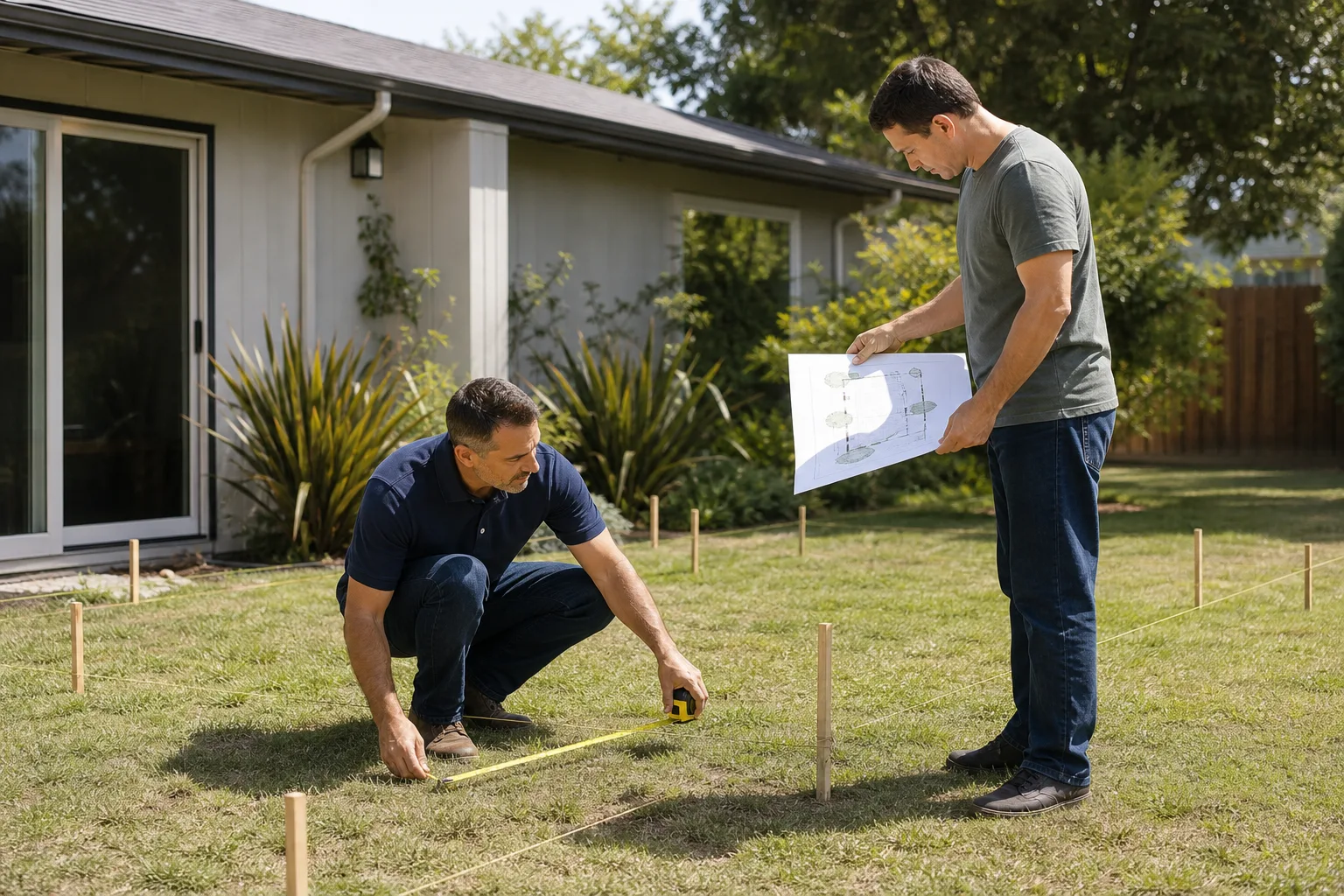
The site visit is one of the five core services we keep under a single contract. A Ellery ADU Studio Las Vegas home consultation includes a documented photo record of what we found on your site, so you have evidence of the issues and the reasoning behind each line item.
Contractor Proposal Warning Signs
A bid is only as honest as what it leaves out. Read every proposal, from any contractor, for these three tells before you sign.
No soils allowance line item
Every ADU foundation proposal in Las Vegas should include a soils allowance. The soil report tells you what the foundation has to handle, and caliche, expansive clay, or undocumented fill can each push the foundation cost by thousands. A proposal without a soils allowance line item is a proposal written to win on price and recover the difference later.
“Owner to coordinate” on utilities
Any proposal where utility coordination is described as “owner to coordinate” is not a complete proposal. If the contractor is not coordinating the NV Energy service record, the SNWA meter upsizing, and the water and sewer taps, you’re being asked to do the part of the job that most often derails the schedule. The written scope should name who coordinates each utility and confirm the cost is inside the price.
No mention of 811 marking
Before any excavation, someone has to call 811 to have underground utilities marked. This is a state law requirement in Nevada, not a courtesy. Look for it in the site prep scope. A proposal that doesn’t mention 811 marking is a proposal that hasn’t thought carefully about what happens when the excavator hits a gas or fiber line.
Common Mistakes to Avoid
- Skipping the title search. A $12 title search is the cheapest insurance you can buy against a $60,000 redesign. Pull it before design, not after.
- Assuming a 200-amp panel is enough. Headroom is not the same as size. Verify the load calculation before you commit to an electrical scope that assumes no service upgrade.
- Ignoring the SNWA meter size. Wait times for a meter upsizing in Las Vegas stretch 4 to 8 weeks. Start early or the schedule pushes.
- Treating water pooling as cosmetic. A yard that pools after a rain is telling you the ADU footprint will need grading and drainage scoped into site prep.
- Assuming a low-lead proposal covers the same work. A bid without a soils allowance, without 811 marking, and with “owner to coordinate” on utilities is not a lower bid. It’s an incomplete one.
- Not scoping the sewer lateral before design. A camera scope costs a few hundred dollars. A root-damaged lateral replacement costs thousands and is not covered by an ADU budget that didn’t include it.
- Getting only one proposal and no second opinion. A free second opinion on any written estimate you already hold is the fastest way to spot what the first bid left out.
When to Call a Professional
Call a professional when any of the following is true: an easement crosses the only viable footprint and you want to evaluate whether a variance is realistic; the NV Energy service record shows 100-amp service or a fuse panel; the water meter needs upsizing and the timeline matters to your build schedule; or the site visit reveals standing water, tree roots near the lateral, or evidence of a prior septic system. Each of these is a design problem, a permitting problem, and a cost problem bundled together, and all three have to be solved in writing before you sign. Electrical service upgrades, panel work, and gas line work are genuinely dangerous and should only be done by a licensed professional. Ellery ADU Studio Las Vegas offers free estimates in Las Vegas, pulled from the records before the design begins. Call (866) 779-3194.
For the design and permit set stage, our ADU Design & Permitting in Las Vegas service handles the entire scope from drawings through the entitlements. If you’re exploring a conversion instead of a new build, our Garage Conversion ADU in Las Vegas service often triggers the same utility checks, particularly on older garages served by a dedicated or shared panel.
Frequently Asked Questions
Pull four: the Clark County Assessor parcel record, the Clark County Recorder grant deed and any recorded easements, the FEMA flood zone determination for your address, and the NV Energy service record for your meter. Request the SNWA water account meter size at the same time. Together these four tell you whether the backyard has buildable footprint, whether the panel and meter can serve the ADU, and whether the lot carries a flood or drainage designation nobody mentioned. Call (866) 779-3194 for an exact quote – estimates are free.
Typical ranges in Las Vegas: a panel subpanel without a service upgrade generally runs $2,500 to $5,000, a full service upgrade from 100 to 200 amps generally runs $4,000 to $9,000, and a SNWA meter upsizing generally runs $1,500 to $4,500 with a 4 to 8 week timeline. Sewer lateral repairs from root intrusion generally run $3,000 to $8,000. These are ranges, not quotes: the written price for your project is set by us before work starts, per Haven Standard Clause 1. Call (866) 779-3194 for an exact quote.
Yes. A utility or drainage easement crossing your only viable footprint can legally prohibit building in that location. Your options are to redesign the footprint, pursue a setback variance requiring additional distance between the ADU and the property line, or in rare cases apply to have the easement abandoned. All three options should be scoped and priced before design starts.
Two checks: the service record from NV Energy tells you the size (100 or 200 amps typically), and a licensed electrician performs a load calculation to confirm headroom. Size alone is not enough: a 200-amp service that already feeds an EV, a pool, and a spa may have no room. The calculation is the answer, and it belongs in the proposal before you commit.
Standing water patterns, tree roots within 10 feet of the likely sewer lateral, mounded soil or exposed cleanout caps indicating a prior septic or leach field, and existing grading relative to the proposed footprint. In Las Vegas, caliche presence and the stormwater route also matter. The visit produces a documented photo record of what was found and the reasoning behind each site prep line item.
Three: a bid with no soils allowance line item, utility coordination described as “owner to coordinate,” and no mention of 811 marking in the site prep scope. Each of these is a scope gap that shows up as a change order later. If you want a free second opinion on any written estimate you already have, call (866) 779-3194 – estimates are free.
The Bottom Line
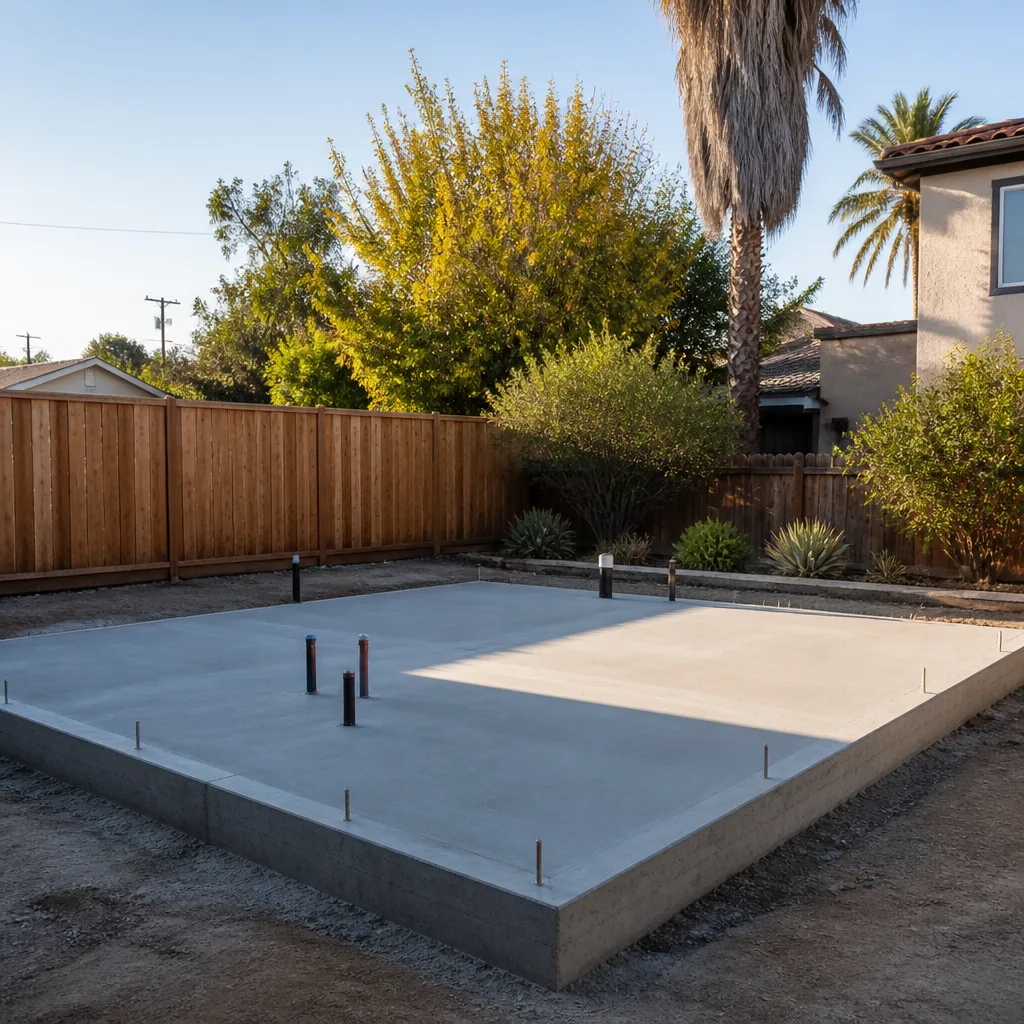
The cheapest way to protect an ADU budget is to spend the small money first: a title search, a service record, a camera scope on the lateral, a flood zone report. Each of these answers a question before design locks in a footprint. The warning signs in this guide are all readable in advance: easements on the recorded map, service size in the NV Energy record, meter size in the SNWA account, water pooling and old septic on the site. Read the records, read the proposal for what’s missing, and get a written price before work starts. That is the model. For a project of this size, in Las Vegas, the documentation is the product.
Thinking through a new detached build? See our New Detached ADU in Las Vegas service for the full site prep and utility scope under one contract. We also coordinate prefab platform specifications from builders including Plant Prefab and Tuff Shed within the same written scope when a homeowner prefers a prefabricated shell, and specify James Hardie cladding assemblies when the design calls for fiber cement.
Call (866) 779-3194 to schedule a free estimate and a free second opinion on any written estimate you already have. A live person answers calls 24/7.
Written by the team at Ellery ADU Studio Las Vegas.