Last updated November 17, 2026
DIY vs Professional ADU: The Las Vegas Homeowner’s Decision Guide
Most homeowners asking whether to build an ADU themselves are asking the wrong question. The real issue in Las Vegas isn’t whether you can swing a hammer. It’s what happens at resale. Nevada’s owner-builder exemption requires you to disclose “owner-builder construction” on the title record. That flag follows the property permanently. Every title company, appraiser, and home inspector for the next buyer will see it, and offers often drop by more than the labor you saved. This guide walks through exactly what the exemption allows, where a licensed trade is legally mandatory regardless, what the honest cost comparison looks like, and which parts of a Las Vegas ADU you can safely finish yourself once the rough inspections pass.
Quick Answer
In Las Vegas, DIY is legally viable only under Nevada’s owner-builder exemption, and only when you meet its conditions: the structure is for your own use, you intend to occupy it, and you sell only after a set period. It also triggers a permanent resale disclosure, restricts your ability to finance or appraise rental income from the unit, and still requires licensed subcontractors for electrical service, gas lines, and structural work. For most homeowners weighing an ADU as a long-term asset, the professional route wins on resale value, lending, and permit defensibility.
Table of Contents
- What Nevada’s owner-builder exemption actually permits
- The resale disclosure most DIY guides skip
- Trade scopes that require a licensed professional no matter what
- Honest cost comparison: GC markup vs owner-builder carrying costs
- Which ADU components are genuinely owner-friendly
- How lenders underwrite ADU rental income in Las Vegas
- Step-by-step: the professional ADU process in Las Vegas
- Common mistakes to avoid
What Nevada’s owner-builder exemption actually permits
Nevada Revised Statutes Chapter 624 governs contractors and the owner-builder carve-out. The short version: if you build for your own use, on your own property, without hiring unlicensed labor and without selling the finished structure to a buyer as a contractor would, you may act as your own general contractor. The exemption is not a shortcut around building codes. It’s a shortcut around a contractor’s license, and only when the conditions are met.
Here’s what it allows, stated plainly:
- You may pull permits in your own name for work on your principal residence.
- You may live in the finished ADU yourself or use it as non-rented dwelling space.
- You may serve as the general contractor for scopes of work that don’t require a licensed trade under Nevada law.
And what it prohibits, which is where most DIY plans fall apart:
- You cannot use the exemption to build a structure you intend to sell as a speculator.
- You cannot hire unlicensed crews and still claim owner-builder status. If a licensed subcontractor pulls permits under your project, you are required to disclose their work.
- You cannot avoid inspection. Every phase still gets inspected by Clark County or the applicable jurisdiction, and re-inspection fees stack up fast.
- You cannot convert a personal-use ADU to a rental quickly without triggering additional scrutiny from your lender and, potentially, the county.
The exemption is workable. It is not free. Every DIY guide that skips the four limits above is leaving you with a half-truth, and our team regularly speaks with Las Vegas homeowners who learned about the sell-trigger restriction after they’d already pulled permits. If your ADU is meant to generate rent, the exemption is not the right tool. For the professional version of this process, see our ADU Design & Permitting in Las Vegas page.
The resale disclosure most DIY guides skip
When an ADU is built under the owner-builder exemption, Clark County records it. That recording shows up in the property’s title history, and it’s disclosed in the seller’s real property disclosure form. The phrase buyers see and appraisers note is “owner-builder construction.” It carries real market consequences.
- Appraisers may require additional documentation to count the structure’s square footage in the valuation, and some lenders will not treat owner-built square footage the same as professionally built.
- Home inspectors often write up owner-built structures with a heavier scrutiny list, even when the work is code-compliant.
- Buyers’ agents use the flag as negotiating leverage. In our experience on Las Vegas resale conversations, a documented professional build typically holds offer strength far better than an owner-built unit, even when both structures are identical on paper.
The disclosure stays with the title. It does not age out. Twenty years from now, the flag is still there. That’s the trade: you saved the general contractor markup, and you accepted a permanent, recorded annotation that everyone with a financial stake in your property will read.
Is it a dealbreaker? For some buyers, no. For most buyers aged 32 to 50 who bought into a metro-core or affluent inner suburb at a high price between 2015 and 2025, it is. Those buyers priced in the assumption that the asset would appraise cleanly. A flagged structure is a variable they’ll discount against.
Trade scopes that require a licensed professional no matter what
The owner-builder exemption is not a blanket permission. Nevada law independently requires licensed trades for specific work, and no exemption overrides that. These scopes are non-negotiable.
- Electrical service and panel work. Any new service, sub-panel, meter tie-in, or branch circuit work at the service level requires a licensed electrician. Even if you can legally do branch wiring in some minor cases, the service end of an ADU is a licensed scope.
- Gas lines. New gas service, gas piping runs, and appliance connections are licensed-plumber work in Nevada. An ADU with gas cooking, a gas water heater, or gas HVAC requires a plumber with the right endorsement.
- Structural engineering and load-bearing work. Foundation design, shear walls, header details, and any load-bearing modification require both an engineer’s stamp and a licensed framing crew. The county will not pass structural inspection on a DIY-only install without an engineer-of-record sign-off.
There’s also the safety component. A 240-volt service connection wired without proper load calculation, grounding, or AFCI protection isn’t a weekend risk. It’s a persistent hazard behind the drywall for whoever lives there. Gas work that isn’t pressure-tested and permitted can leak silently for months. Our crews see the aftermath of this in Las Vegas often enough that we’ll say it plainly: this is not the place to test your skills. The professional version of these scopes runs through our New Detached ADU in Las Vegas page.
Honest cost comparison: GC markup vs owner-builder carrying costs
Every DIY-versus-pro cost comparison worth reading has to put two numbers on the table, not one. Most homeowner guides only show the general contractor markup. That’s half the story.
The obvious cost of going pro is the GC markup. A licensed general contractor typically adds a percentage to the subcontractor bids to cover supervision, scheduling risk, insurance, and warranty. That’s a real number, and we won’t pretend it’s small. The less obvious cost of going owner-builder is the carrying cost. Here’s the honest side-by-side, with ranges you’d see on a Las Vegas ADU project:
- Re-inspection fees. A failed inspection costs you a re-inspection fee in Clark County plus the crew’s time to correct and reschedule. Inexperience on inspection readiness can mean three to six failed inspections across a six-month build, each in the low hundreds of dollars plus a lost week.
- Material waste. Owner-builders typically overbuy framing lumber, drywall, tile, and fasteners by 15 to 25 percent in the first phase because quantities aren’t dialed in. A $40,000 framing budget can leak $3,000 to $6,000 into waste alone.
- Time cost. A professional ADU typically runs 6 to 9 months from permit approval to final inspection. Owner-built timelines often run 14 to 22 months, sometimes longer. That’s 8 to 13 extra months of carrying cost on the property: interest, taxes, insurance, and lost rental income.
- Lost rental income. A Las Vegas ADU that would rent for a substantial monthly figure if professionally built is worth zero in rent for the extra eight months the owner-built version takes to finish. That delta alone can exceed the GC markup.
Run those four numbers against your GC markup. Sometimes DIY edges ahead. Most of the time it doesn’t, and the owner-built version comes with the permanent disclosure discount layered on top. Our Garage Conversion ADU in Las Vegas page lays out the numbers on the most common conversion scope. When you’re ready for a written price that puts every line item on the page before work begins, that’s what our Free Second Opinion on any estimate already in hand is for.
Which ADU components are genuinely owner-friendly
After rough inspections pass, the remaining scopes narrow to finish work, and some of that is genuinely suitable for a homeowner who wants to put in sweat equity without touching the disclosure-flagging scopes. Here’s the honest list.
- Finish carpentry. Baseboard, casing, door hanging, closet shelving, and trim install are all reasonable DIY scopes once the walls are closed and inspected. If you’re detail-oriented and own a miter saw, this is real labor savings.
- Painting. Interior paint and exterior touch-up are genuine DIY-friendly scopes. Budget the prep time honestly. Poor prep is the single most common reason a painted finish fails inside two years.
- Landscaping and hardscape. Desert landscaping around the ADU, path lighting, pavers, and drip irrigation are typically unpermitted scopes and fully owner-friendly in Las Vegas. Pay attention to drainage away from the structure. Our monsoon weeks in July and August will find any grading you skipped.
- Fixtures. Light fixtures that connect to existing junction boxes, faucets supplied by already-inspected plumbing stubs, and finish hardware are fine to install yourself.
What’s not owner-friendly even after rough inspections: any gas trim connection, any new electrical circuit beyond fixture swap, and any window or door change that touches the structural opening. Those reopen permits and reopen the review process.
How lenders underwrite ADU rental income in Las Vegas
This is where the professional-versus-owner-built gap matters most and where DIY guides go quiet. If you’re financing the ADU in part based on the rental income it will generate, your lender needs to count that income in the underwriting. Not every lender will, and some won’t count owner-built rental income without additional documentation.
The specific requirements vary by loan program, but here’s what loan officers typically want to see:
- A recorded certificate of occupancy. Both build types can produce this, but professional projects often clear CO sooner because the trade sequence is enforced and inspections don’t stall.
- Appraiser confirmation of the ADU as a legal, rentable unit. An appraiser counting the square footage and rental income will look for the permit record, the disclosure record, and the structural documentation. Owner-built units sometimes require a second appraisal with a rental income addendum, which delays closing and can cost low four figures.
- A defensible rent estimate. In Las Vegas, lenders often reference comparable ADU rents in the immediate neighborhood. In metro-core and inner-suburb areas, those comps are strong. In more outlying pockets, comps are thinner, and an owner-built flag can push a lender to using a lower “conservative” rent figure.
- A clean permit history. Every permit pulled, every final inspection cleared, no open corrections on the record. Certified professional builds satisfy this by default. Owner-built units sometimes bury a correction that never got cleared.
Ask your loan officer, before you decide, whether they’ll count owner-built ADU rental income at full value or discount it. If the answer is “we need more documentation,” the honest comparison shifts further toward the professional route.
Step-by-step: the professional ADU process in Las Vegas
Every ADU we design, permit, and build since 2015 has run through the same documented sequence. Here’s what that looks like on the Las Vegas side, so you know what the professional path actually delivers.
- Written price before work starts. Every project is quoted with a line-item written price before any drawings or permits move forward. That’s Clause 1 of The Haven Standard.
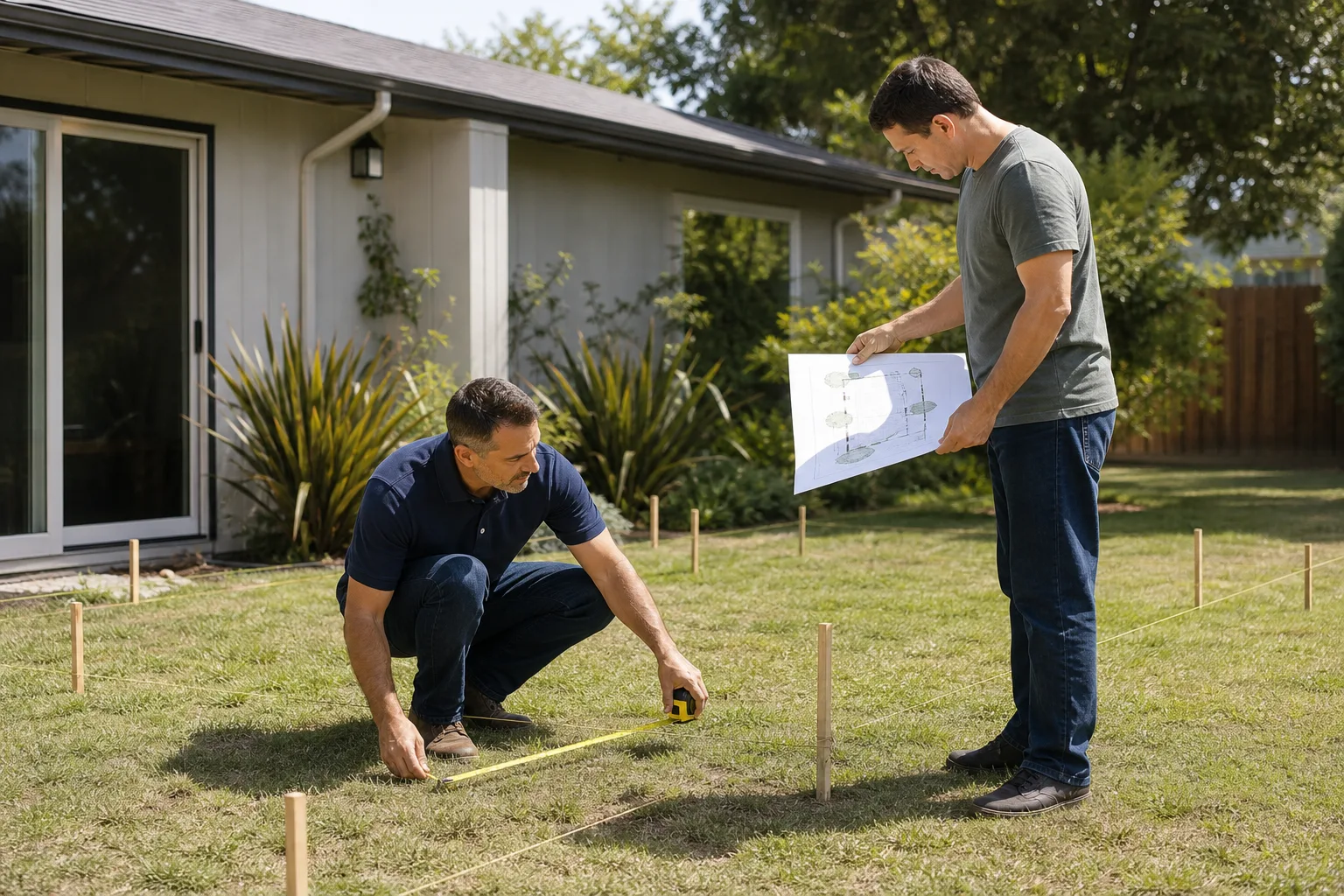
- Site assessment and slab verification. Existing slab thickness, utility locations, and setback measurements are documented on site, with a photo record. A 4-inch slab is within range for a garage conversion; a 3-inch slab changes the foundation line item before the drawings are finalized.
- Permit set and submittal. Zoning, setback, and Clark County or City of Las Vegas permit applications are prepared as a package. Setback variance (the extra distance the city may require between your ADU and the property line) is resolved before submission, not after.
- Trade coordination and inspection. Electrical, plumbing, gas, and structural scopes are performed by licensed trades with permits in the project’s name, scheduled to clear inspection on the first pass.
- Prefab and modular coordination where applicable. Where a client wants a factory-built unit, we specify and coordinate systems from Dvele, Mighty Buildings, and Plant Prefab within the same single contract, so the modular manufacturer’s permit path and the site prep path don’t drift.
- Finish scopes and documented completion. Finish work closes out, and every client receives the documented photo record from each visit, plus the 365-Day Done Right Promise in writing – if the finished ADU is not built to the permitted drawings, we make it right.
There’s a reason this process runs 6 to 9 months instead of 18. Each phase runs in parallel where it can, and every gate is documented. Start at our Ellery ADU Studio Las Vegas home page to see how these projects are scoped.
Common Mistakes to Avoid
- Assuming the owner-builder exemption covers rental use. It doesn’t. Rental ADUs trigger lender, appraisal, and county scrutiny that the exemption is not designed for. If rental income is the point of your ADU, plan for a professional build from the start.
- Sleeping on the resale disclosure. Every title company and inspector for the next buyer will see the “owner-builder construction” flag. If you’re planning to sell within five years, weigh that disclosure into the numbers before you break ground.
- Underestimating the Clark County inspection sequence. Foundation, framing, rough electrical, rough plumbing, rough mechanical, insulation, and final. Each phase is a separate inspection, each has its own readiness requirements. Skipping a phase step means a re-inspection fee and lost schedule.
- Treating cost comparisons as markup-versus-no-markup. The honest comparison includes waste, re-inspection fees, and months of carrying cost. Owner-built rarely wins once those are on the table.
- Skipping the loan officer conversation. If you’re financing based on rental income, ask before you build whether your lender counts owner-built rent at full value. Get that in writing.
- Overlooking the Las Vegas monsoon window. July and August monsoon storms will find every drainage and grading gap. If your ADU plans involve site work, plan the finish grading and hardscape around those weeks.
- Hiring unlicensed crews while claiming owner-builder status. That’s the specific path that turns an exemption into a liability. If a licensed sub performs the work, it discloses. If an unlicensed crew performs it, you may not get through inspection at all.
When to Call a Professional
Call a professional for any ADU you plan to rent, finance, sell within a decade, or build to more than garage conversion complexity. Call for anything that touches the electrical service, gas line, or structural frame, regardless of owner-builder status. Call if your property has a variance exposure, a slab under 4 inches, or existing utility geometry that isn’t already documented. And call if any part of the plan will be entered on a loan application as income-generating asset, because a professionally built, professionally documented structure is what most lenders will underwrite at full value.
Ellery ADU Studio Las Vegas offers free estimates in Las Vegas – call (866) 779-3194. Every project starts with a written price, a documented photo record, and a Free Second Opinion on any written estimate you already have in hand. All work is performed by background-checked, uniformed, licensed trades, and our technicians have up to 11 years of experience across design, permitting, and construction coordination.
Frequently Asked Questions
Yes, but only under Nevada’s owner-builder exemption, which requires the structure be for your own use and occupancy, restricts how quickly you can sell, and still requires licensed trades for electrical service, gas lines, and structural work. The exemption is real, but narrower than most DIY guides describe. Call (866) 779-3194 to walk through whether your specific plan fits it.
Yes. The “owner-builder construction” flag stays on the property’s title record permanently, and appraisers, inspectors, and buyer’s agents all read it. In our experience, professionally built ADUs hold offer strength better than owner-built units of identical finish. Call (866) 779-3194 for a free estimate and we’ll walk through the professional build path.
Sometimes, but often not at full value. Lenders frequently require additional appraisal documentation for owner-built ADUs, and some discount the rental income figure. A professionally built unit with a clean permit record and a standard certificate of occupancy clears the underwriting path more reliably. Call (866) 779-3194 to discuss the documentation we provide.
Typically 6 to 9 months from permit approval to final inspection, depending on whether the scope is a garage conversion or new detached ADU. Owner-built timelines often run 14 to 22 months because trade scheduling and inspection readiness stall. Call (866) 779-3194 for a written project timeline on your specific property.
Yes. Every scope still requires permits and inspections whether you build under the owner-builder exemption or hire a professional. Skipping permits on a Las Vegas ADU triggers the same county scrutiny as any other ADU, and it doesn’t avoid the title-record consequences. Call (866) 779-3194 for a written price on a fully permitted build.
Finish carpentry, interior and exterior painting, landscaping and hardscape, and fixture swaps are genuinely owner-friendly scopes after rough inspections pass. Gas trim connections, new electrical circuits, and structural opening changes are not. Call (866) 779-3194 to discuss a hybrid scope where you handle finish and we handle the permit set and core construction.
The Bottom Line
The DIY-versus-professional ADU question in Las Vegas is not a skill question. It’s a liability question with three parts: what the owner-builder exemption actually allows under Nevada law, what permanent disclosure it writes onto your title record, and what lenders will do with your ADU when it comes time to finance or sell. For homeowners weighing an ADU as a long-term asset rather than a weekend project, the professional route is nearly always the stronger financial position, even after the GC markup is factored in. And the professional route comes with documented drawings, written prices, and a warrantied build. Every project we take starts with a written price, a documented photo record on every visit, and the 365-Day Done Right Promise in writing. Ready to put real numbers on your ADU? Call (866) 779-3194 to schedule your free estimate.
Written by the team at Ellery ADU Studio Las Vegas.