Last updated November 17, 2026
ADU Site Prep & Utilities Troubleshooting: Common Problems and How to Fix Them
When a contractor discovers an unexpected sewer conflict during ADU site prep and hands you a $22,000 change order, the first question isn’t “how do we fix it” – it’s “was this in the soil report you said you reviewed?” That single question separates two very different situations, and the difference is worth tens of thousands of dollars. Site and utility surprises on a Las Vegas ADU fall into two categories: problems that were knowable before construction started, and conditions that genuinely could not have been predicted. This guide shows you how to tell which one you’re looking at before you sign anything, and what to ask for when you aren’t sure.
Quick Answer
Most ADU site and utility problems in Las Vegas are knowable in advance through a proper geotechnical report, an 811 utility locate, and a service-capacity check – so when one shows up mid-build, the homeowner should demand the documentation trail before paying a change order. Genuine concealed conditions, like a compromised water lateral or a buried septic tank that no record shows, are a shared risk that honest contracts define in writing. The fix is a paper trail, not a handshake.
Table of Contents
- Differing Site Conditions vs. Concealed Conditions: Who Pays?
- The Five Most Common Las Vegas ADU Utility Discoveries
- The 811 “Call Before You Dig” Process in Nevada
- Abandoned Septic Tanks and the Pre-Sewer Era
- Caliche, Soil, and the Depth Your Bid Assumed
- When Excavation Hits a Compromised Water Main
- A Decision Framework for Evaluating Change Orders
- The Paperwork That Prevents Most of This
Differing Site Conditions vs. Concealed Conditions: Who Pays?
The phrase that decides who absorbs a site surprise is buried in your construction contract, and most homeowners never read it until there’s a dispute. Two terms matter. A differing site condition is a physical condition that differs materially from what the contract documents indicated – and in most standard contracts, that risk sits with the contractor, who is expected to have investigated the site before bidding. A concealed condition is something that genuinely could not be discovered by reasonable inspection, like a septic tank no record shows or a water lateral corroded from the inside out. Concealed conditions are often a shared risk, meaning the cost is negotiated rather than simply handed to you.
The distinction matters because a contractor who mislabels a knowable problem as concealed shifts cost to you that should be theirs. Here’s what to look for in the contract language before you sign:
- A defined site investigation scope. The contract should state what was reviewed – soil report, 811 locate, service capacity check – so there’s a baseline for what “knowable” means.
- An explicit differing-site-condition clause. This tells you the contractor accepts the risk of conditions that a reasonable site investigation would have found.
- A concealed-condition clause with a notification requirement. The contractor must stop and notify you in writing before proceeding, and the cost is handled per an agreed formula.
- A markup cap on changes. If the contract doesn’t cap the contractor’s markup on change orders, it should. Ten to fifteen percent on actual documented cost is a common, defensible range in the Las Vegas market.
In our experience, most site-prep disputes on Las Vegas ADUs trace back to a contract that never distinguished the two categories at all. Under Ellery ADU Studio Las Vegas home‘s Haven Standard, the scope is locked at signing and the written price is set before work starts, which removes most of the ambiguity these clauses exist to resolve.
The Five Most Common Las Vegas ADU Utility Discoveries
After enough Las Vegas projects, the surprises stop being surprising. These are the five discoveries that show up again and again, and each one is worth understanding before you break ground on a detached ADU or a Garage Conversion ADU in Las Vegas.
- Abandoned septic tanks from the pre-sewer-connection era. Older neighborhoods that connected to municipal sewer decades ago sometimes left the tank in the ground. Excavation hits a void, a lid, or worse. Cost to remove and properly abandon: often $3,000 – $8,000.
- Unmarked irrigation lines. Landscape irrigation is rarely on any utility map. A trench through a mainline can flood a corner of the lot and require re-grading. Repair is usually modest, $500 – $2,500, but the schedule hit can be real.
- Undersized main electrical service. An ADU with its own range, HVAC, and EV charger can push a 100-amp service past its limit. Upgrading to 200-amp service runs roughly $3,000 – $7,000 in Las Vegas, sometimes more if the panel location requires a meter move.
- Storm drain easements. A recorded drainage easement across the buildable area can shrink your footprint or force a foundation redesign. This is discoverable on the plat map and should never be a mid-build surprise.
- Caliche beyond the depth assumed in the bid. Las Vegas caliche – the cemented calcium-carbonate layer common across the valley – can turn a routine footing excavation into a jackhammer job. If the bid assumed 2 feet and the layer starts at 4, that’s a real cost, often $4,000 – $15,000 depending on footprint.
Notice that four of the five are knowable before a shovel moves. That’s the point. A proper New Detached ADU in Las Vegas bid should account for each one, or state the assumptions explicitly so a mid-build number can be checked against them.
The 811 “Call Before You Dig” Process in Nevada
Nevada law requires you to contact 811 before any excavation so utilities can mark their lines, and skipping it is how a routine dig becomes a liability crisis. The process is straightforward, but the liability chain is where homeowners get hurt.
- Call 811 or submit online at least two business days before you dig. The locate request covers public utilities – gas, electric, water, telecom, sewer mains.
- Wait for the marks. Each affected utility marks its lines. The marks expire after a set window, so a stale locate on a project that stalled does not count.
- Hand-dig within the tolerance zone around each mark. Nevada uses a tolerance zone around marked utilities where mechanical excavation is not allowed.
- Document the marks with photos before digging. This is your evidence if something goes wrong.
Here’s the part that catches owners: 811 does not mark private lines – irrigation, landscape lighting, a private line to a detached shop, and your own sewer lateral from the house to the main. If a contractor hits a marked public utility, the excavator who called in the locate and the utility share the liability picture, and the event is documented. If they hit an unmarked private line, the liability chain lands on whoever failed to locate it – and unless your contract puts private-locate responsibility on the contractor, that can be you. Ask, in writing, who is responsible for private locates before the first trench is dug.
Abandoned Septic Tanks and the Pre-Sewer Era
Las Vegas grew fast, and parts of the valley connected to municipal sewer in waves. Neighborhoods developed before that connection sometimes had septic systems that were abandoned in place rather than removed. A tank left in the ground is a void under your future ADU footprint, and it’s a problem you want to know about at the design stage, not after the excavation subcontractor’s machine breaks through a lid.
The fix depends on what’s found. A properly abandoned tank – pumped, filled, and documented – is often a non-issue if the record exists. An undocumented tank that turns up during excavation needs to be pumped, crushed or filled, and documented, and the cost to do it correctly in the Las Vegas market typically runs $3,000 – $8,000, with more if the tank sits directly under the proposed foundation and forces a redesign.
The good news: county records and historical sewer-connection dates can usually tell you whether a property ever had septic. That’s a pre-design research question, and on any project we touch, it gets answered before a foundation plan is drawn. If your contractor’s response to “did you check for an abandoned tank” is a shrug, that’s a red flag worth heeding.
Caliche, Soil, and the Depth Your Bid Assumed
Caliche is the defining soil feature of the Las Vegas valley, and it’s the single most common source of “the bid didn’t cover this” conversations. This cemented layer can start near the surface or sit several feet down, and it varies block to block. A geotechnical report – a soil study done by a licensed engineer before design – tells you how deep it runs and what excavation will actually require. A bid without a geotech report is a bid based on a guess.
When caliche shows up deeper and harder than assumed, the cost is real. Breaking through it requires heavier equipment, more time, and sometimes specialized attachments. For a typical ADU footprint, the difference between a bid that assumed soft soil and a site that’s hard caliche can be $4,000 – $15,000, and possibly more if the footing design has to change.
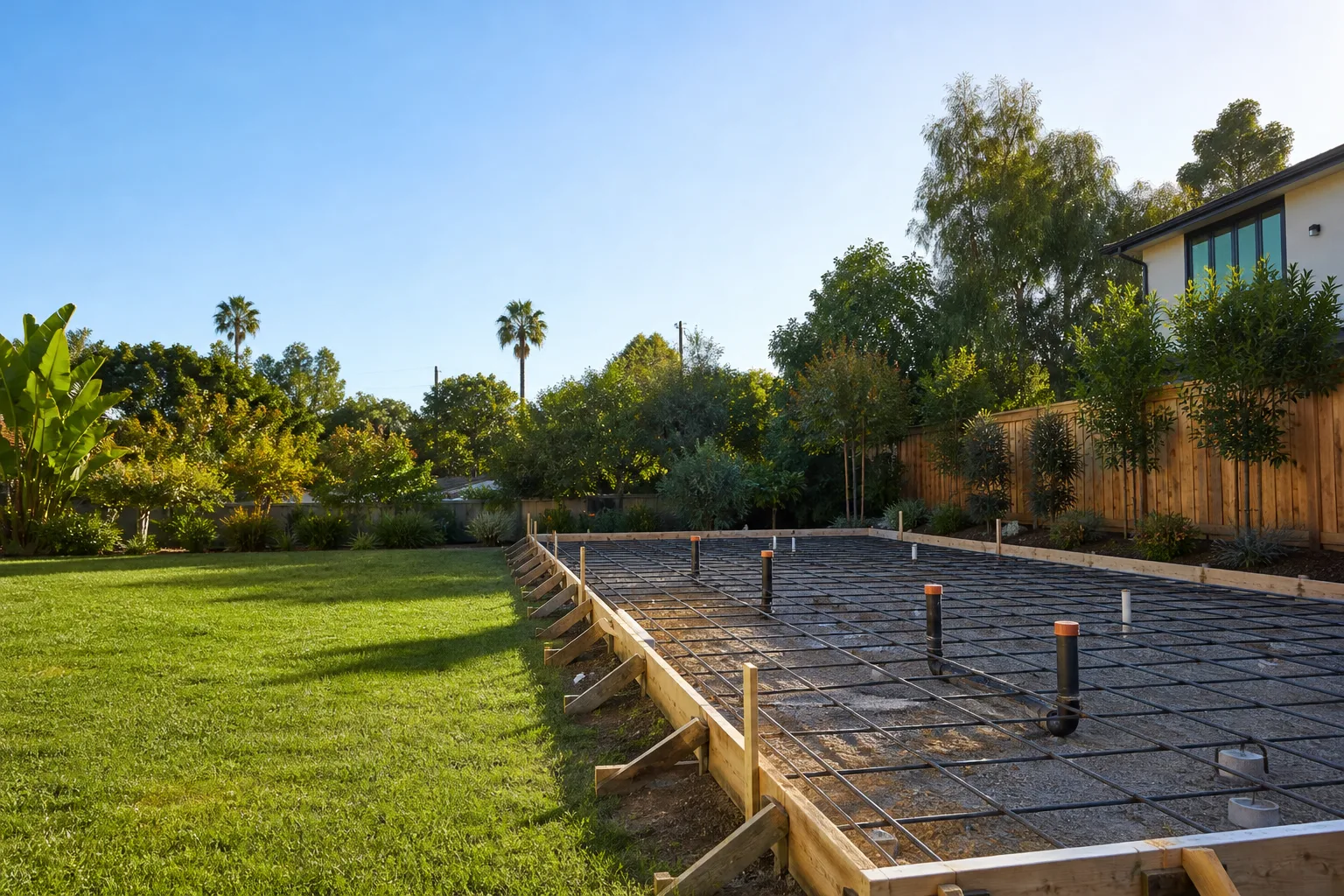
The way to prevent this is simple and unglamorous: commission the geotech report, and make sure the bid references its findings. Under Ellery’s ADU Design & Permitting in Las Vegas scope, the soil work is part of the permit set, not a separate surprise. That’s how a soil condition stays on the “knowable” side of the ledger.
When Excavation Hits a Compromised Water Main
Sometimes the surprise isn’t in the soil – it’s in the pipe. Excavation for an ADU foundation or a new utility trench can expose a water service lateral that’s been quietly corroding for decades. A lateral that looks fine from the meter can be paper-thin at the point where the trench crosses it. When that happens, you’re dealing with the Southern Nevada Water Authority’s repair process, and it’s a different animal from a private plumbing repair.
The sequence usually looks like this:
- Stop work and shut off the affected water. The excavator and the utility coordinate to isolate the line.
- SNWA inspects and determines ownership. The portion of the lateral on the utility side of the meter is SNWA’s responsibility; the portion on your side is yours. The exact boundary matters.
- Repair or replace the lateral. SNWA handles its side; a licensed contractor handles yours, and the repair must pass inspection.
- Document everything with photos and the utility’s work order. This records what was found and who did what.
Costs vary widely depending on where the failure is and how much pipe needs replacing, but a compromised lateral repair on the homeowner side commonly lands in the $2,000 – $9,000 range in the Las Vegas market. This is one of the few genuine concealed conditions on the list, and a good contract treats it as a shared risk rather than an automatic homeowner charge.
A Decision Framework for Evaluating Change Orders
When a change order lands on your table, the question is not “do I trust this contractor” – it’s “does this number correspond to a documented, verifiable condition?” Use this framework every time.
- Request the documentation. Photos of the condition in place, the geotech report section that addresses it, the 811 locate ticket, and any utility work order. No documentation, no signature.
- Ask which category it falls into. Is this a differing site condition the contractor should have found, or a genuine concealed condition? Make them say it in writing.
- Check the markup against the contract. A reasonable markup on documented actual cost is typically in the 10 – 15% range. If the change order is a lump sum with no cost breakdown, ask for the breakdown.
- Get an independent cost opinion on anything over roughly $5,000. A second set of eyes on a large change order is cheap compared to the change order. Ellery offers a free second opinion on any written estimate you already have in hand.
- Compare against the original bid assumptions. If the bid said “assumes soft soil to 3 feet” and the condition is at 6 feet, the change is defensible. If the bid said nothing, that’s the contractor’s gap.
The 365-Day Done Right Promise is the backstop here. If the finished ADU isn’t built to the permitted drawings, we make it right – in writing, before the project starts. That’s the kind of clause you want in your own contract, whoever builds it.
The Paperwork That Prevents Most of This
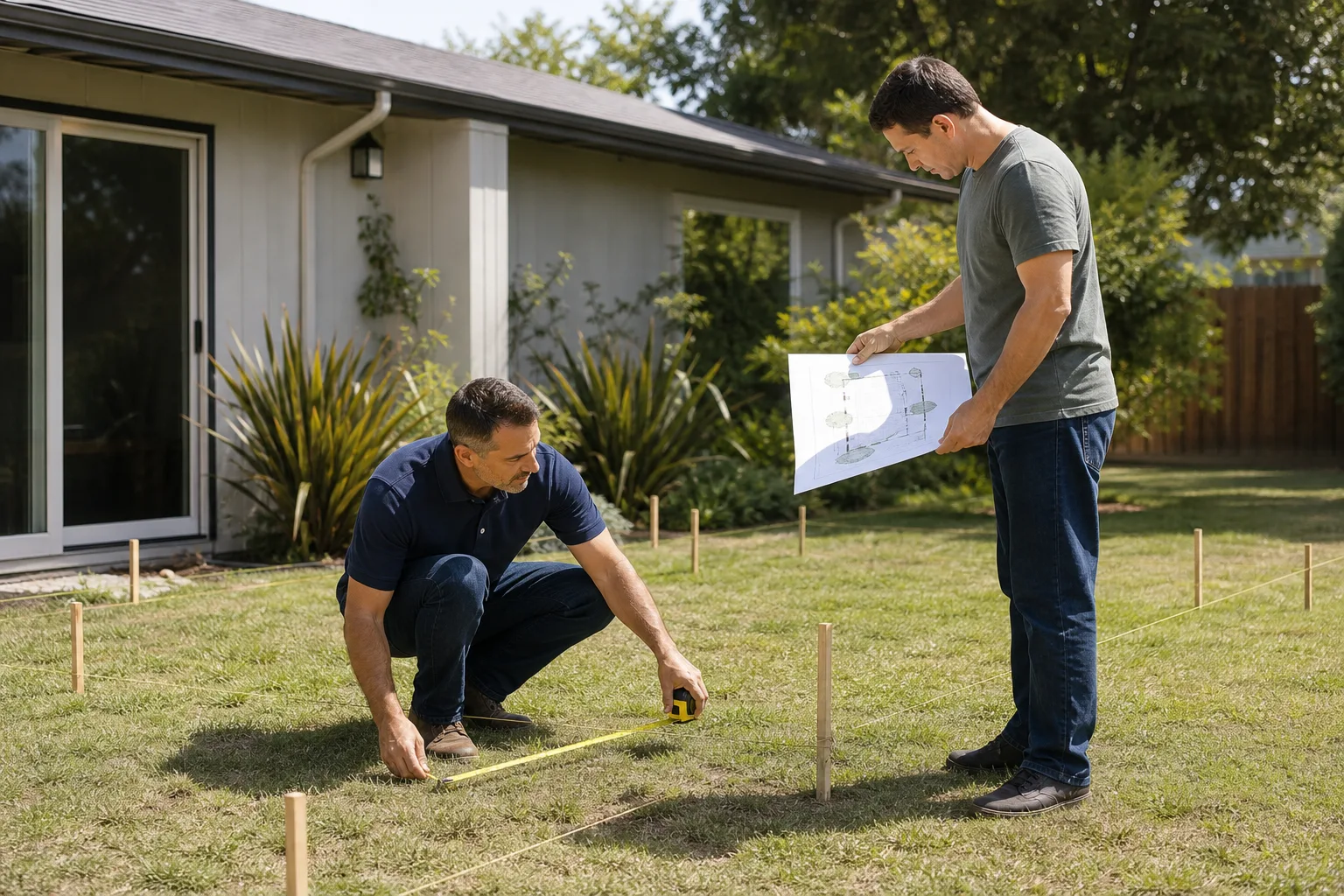
The uncomfortable truth is that most ADU site and utility surprises are paperwork failures. The soil report wasn’t commissioned. The 811 locate was skipped or expired. The service capacity was never checked. The plat map wasn’t read for easements. Five documents, done before design, prevent the majority of the change orders we see on Las Vegas ADU projects.
- Geotechnical report – soil composition, caliche depth, groundwater, bearing capacity.
- 811 locate ticket – public utilities marked and photographed, with a stated responsibility for private locates.
- Service capacity check – the existing electrical service size and what the ADU will demand.
- Plat map and easement review – recorded easements, setbacks, and drainage.
- Historical septic and sewer-connection research – county records on whether the property ever had septic.
That’s the entire difference between a knowable problem and a concealed one. On every project Ellery builds, we include a documented photo record on every visit, so you get evidence of what was found and what was done – not a summary of how it felt. Every project is quoted with a written price before any work begins, per Haven Standard Clause 1, so there’s a baseline to compare any change order against.
Common Mistakes to Avoid
- Signing a contract with no site-condition clause. Without a differing-site-condition provision, every surprise lands on you by default. Read for it before you sign.
- Skipping the geotech report to save time. A soil report is a few thousand dollars; a mid-build caliche surprise can be several times that. In Las Vegas, the caliche risk alone justifies it.
- Relying on an expired 811 locate. Locates expire for a reason. If your project stalled for a month, the marks are stale and the liability picture changed.
- Assuming 811 covers your irrigation and private lateral. It doesn’t. Private locates are a separate, written responsibility.
- Paying a lump-sum change order with no cost breakdown. Demand documented actuals and a stated markup. “It’s a big job” is not a number.
- Not reading the plat map for easements. A recorded storm drain easement across the buildable area is discoverable before design. Finding it after excavation is a redesign.
- Accepting a contractor’s verbal “we checked all that.” Ask for the reports. Verify the 811 ticket. The documentation is the difference between trust and hope.
When to Call a Professional
Some ADU site and utility work is dangerous enough that the safe answer is to call a professional rather than dig. Excavation near a buried gas line, any work touching an energized electrical panel or service lateral, and any situation involving a compromised water main under pressure are all cases where a mistake can injure someone or flood a property. Don’t hand-dig near unmarked lines, don’t open a service panel to “take a look,” and don’t try to cap a leaking lateral yourself. A licensed excavator with a current 811 locate and a licensed electrician or plumber for the utility connections is the right team, and their liability coverage protects you as much as their skill does. Ellery ADU Studio Las Vegas offers free estimates in Las Vegas – call (866) 779-3194 to schedule a site review before you break ground.
Frequently Asked Questions
It depends on the discovery, but common ranges are $3,000 – $8,000 for an abandoned septic tank removal, $3,000 – $7,000 for a 200-amp service upgrade, $4,000 – $15,000 for deeper-than-assumed caliche, and $2,000 – $9,000 for a homeowner-side water lateral repair. The question that matters more than the number is whether the condition was knowable in advance. Call (866) 779-3194 for a free estimate – and a free second opinion if you already have a written change order in hand.
Often it’s knowable through county records and historical sewer-connection research, which makes it the contractor’s responsibility to investigate before bidding. If the records genuinely don’t show it and no reasonable site investigation would have found it, it can qualify as a concealed condition with shared risk. Ask for the records search in writing before you accept either classification.
No. 811 marks public utilities – gas, electric, water, telecom, and sewer mains – but not private lines like irrigation, landscape lighting, or your own lateral. Those require a separate private locate, and the contract should state who is responsible for it. If that responsibility isn’t in writing, you’re carrying the risk.
A markup of roughly 10 – 15% on documented actual cost is a common, defensible range in the Las Vegas market. Anything above that needs justification, and a lump-sum change order with no cost breakdown should be challenged. Ask for the documentation, get an independent cost opinion on large items, and don’t sign a number you can’t trace back to a condition.
Yes. Utility connections and site work associated with an ADU permit are subject to inspection by the jurisdiction that issues the permit, and the work has to be done to the permitted drawings to pass. That’s also why permits are pulled and inspections passed before a project closes out under our 365-Day Done Right Promise. Call (866) 779-3194 to talk through your jurisdiction’s process.
Sometimes yes, and a good designer will look for it – but setbacks, easements, and lot coverage often constrain where the ADU can go more than soil does. The soil condition has to be dealt with wherever the building has to sit. The earlier you commission the geotech report and read the plat map, the more room you have to adjust the footprint before design. Call (866) 779-3194 for a free estimate and a site review.
The Bottom Line
Most ADU site and utility surprises in Las Vegas aren’t surprises at all – they’re documentation gaps. A geotechnical report, an 811 locate with a stated private-locate responsibility, a service capacity check, a plat map review, and a septic-records search catch the majority of them before a shovel moves. When a genuine concealed condition does turn up, the contract language decides who pays, and a fair contract treats it as shared risk rather than an automatic homeowner charge. Read your site-condition clauses before you sign. Demand the documentation on every change order. And when a number doesn’t trace back to a condition, get a second opinion. Ellery ADU Studio Las Vegas offers free estimates and free second opinions on written estimates you already have – call (866) 779-3194.
Written by the team at Ellery ADU Studio Las Vegas.