Last updated November 17, 2026
ADU Site Prep & Utilities Maintenance Schedule: What to Do and When
PVC sewer laterals installed in Las Vegas caliche soil can develop root intrusion from a single nearby mesquite tree within three years. That blockage becomes landlord liability the first time a tenant reports a sewage backup, and it’s the kind of failure no one photographs until the water is already on the floor. An ADU’s site infrastructure – the utility laterals, the electrical service disconnect, the drainage swales – ages on a schedule that has almost nothing to do with the building sitting on top of it. This guide lays out the calendar we use on Las Vegas ADUs, built around the valley’s heat, alkaline water, and hard soil.
Quick Answer
An ADU’s site utilities need a specific recurring maintenance calendar in Las Vegas, not a generic one-year checklist. Sewer laterals should be camera-scoped every five years (sooner if a mesquite or ficus is within 20 feet), the water heater anode rod should be replaced every 3-4 years because 290 ppm hard water eats it roughly twice as fast as the national average, exterior conduit and meter bases should be inspected every spring for UV degradation, and monsoon drainage checks belong in July before the season turns. Items that touch gas, electrical service, or the sewer line itself require a licensed Nevada contractor – not a homeowner with a weekend and a YouTube tab.
Table of Contents
- Why Las Vegas ADU Infrastructure Ages on a Different Schedule
- The Las Vegas Seasonal Maintenance Calendar
- Sewer Laterals, Caliche Soil, and Root Intrusion
- Hard Water and the Water Heater Anode Rod
- Exterior Conduit, Meter Bases, and UV Degradation
- Irrigation Audits and Monsoon Drainage
- Licensed Contractor vs. Owner-Serviceable Tasks
- Common Mistakes to Avoid
Why Las Vegas ADU Infrastructure Ages on a Different Schedule
Most ADU maintenance guidance written for the Pacific Northwest assumes mild soil, moderate sun, and water that runs slightly acidic. Las Vegas breaks all three assumptions. The valley’s soil is heavily alkaline caliche – a calcium carbonate hardpan that grips pipe walls, resists settling, and moves root growth in unexpected directions. Water arrives at 290 ppm hardness on average, which is roughly three times the “very hard” threshold the EPA uses. And the sun hits exterior equipment more than 294 days a year, with summer UV indices that crack plastic conduit in under a decade.
What that means for an ADU on your property is straightforward. The building envelope might hold up for 30 years without more than paint and caulk. The site infrastructure underneath and around it will not. The utility laterals, the exterior disconnect, the low-voltage conduit – these are the components where we see the first failures on Las Vegas ADUs, usually between year 4 and year 7.
If your ADU was built by a prefab provider like Boxabl or Mighty Buildings, the unit itself may arrive with its own maintenance schedule attached. That schedule covers the box. It rarely covers the trench, the lateral, the meter base, or the swale – which is why the calendar below exists separately.
The Las Vegas Seasonal Maintenance Calendar
Here is the actual sequence we recommend, organized by month. If you’re building new, this is the calendar you’ll live with once the ADU is occupied. If you’re buying a property that already has one, this is what to schedule first.
- January: Walk the perimeter after any winter rain. Check that water is moving away from the ADU foundation toward the swale, not pooling against the slab. Small ponding now becomes a settled slab in August.
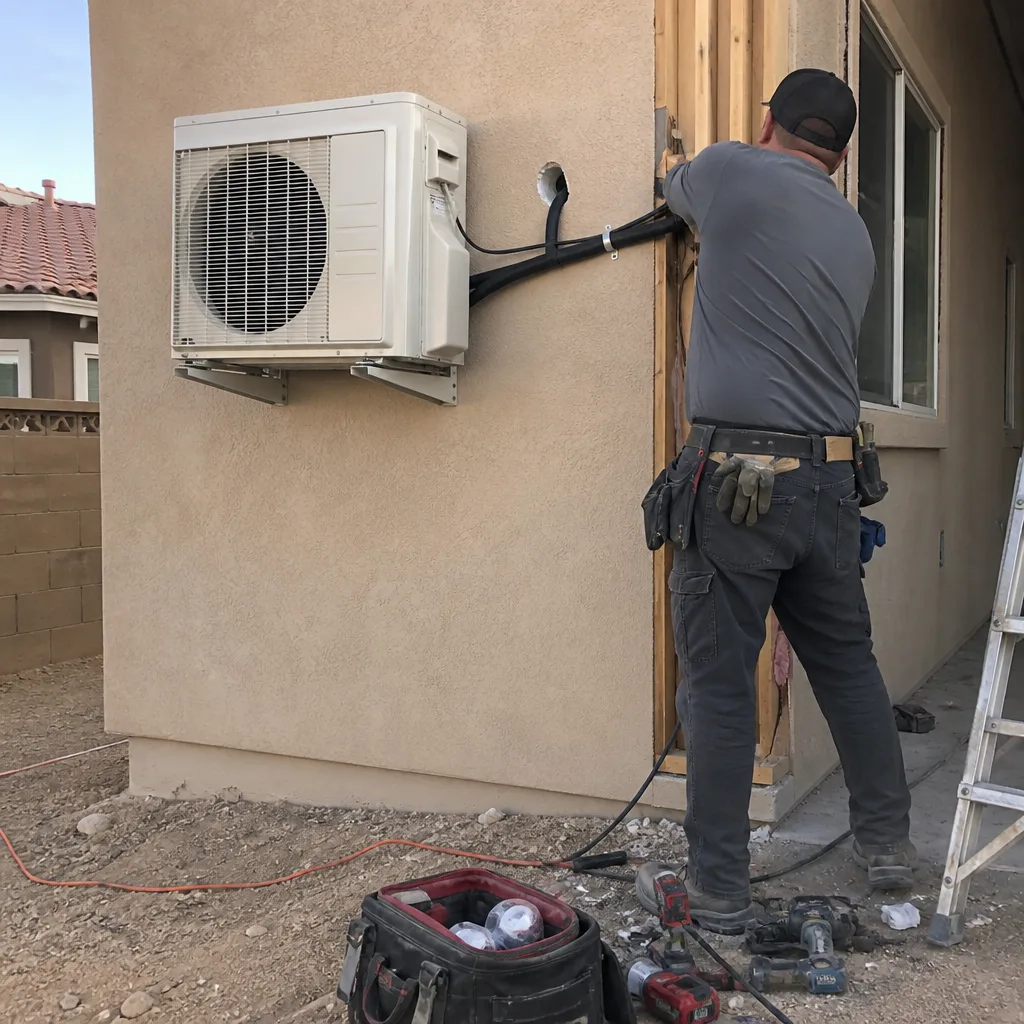
- March: Spring exterior conduit inspection. Look for cracked PVC, faded meter bases, and sun-bleached fittings. UV damage is cumulative, and spring is when it becomes visible.
- April: Test the irrigation controller against SNWA’s current watering day schedule, and run a manual cycle to check for geysers and broken heads.
- May: Service the evaporative cooler before the first 100-degree week, not after. Once the season locks in, cooler service wait times stretch.
- June: Pre-monsoon drainage check. Clear any debris from swales, French drains, and downspout discharge points. If your ADU has a flat roof or low-slope section, verify scuppers are clear.
- July: Monsoon season begins. After any storm that drops more than a quarter-inch in an hour, walk the drainage path and confirm it flowed. Note soil movement or new cracks in the slab or patio.
- September: Third-quarter water heater inspection. Check for anode rod degradation (see section below) and listen for mineral scale rattling. Scale buildup in hard water is audible before it’s visible.
- October: Evaporative cooler shutdown. Drain the unit, cover it, and disconnect the water line to the pad. Leaving a cooler wet through winter can crack the pad housing and split the water line at the first freeze.
- November: Annual NV Energy meter seal inspection. This is a visual check that the meter base is intact, the seal is unbroken, and there’s no corrosion at the lugs. If anything looks off, NV Energy needs to be involved, not your handyman.
- December: Year-end records review. Photograph every utility component (lateral cleanout, meter, disconnect, water heater data plate, irrigation controller). File these with the property records. When a tenant calls in year 6 about a slow drain, you’ll have a baseline.
Between the calendar items, there’s the five-year cycle: sewer lateral camera scope, water heater flush, and a full re-walk of the site utilities with a licensed contractor. The rest of this guide explains why each of those matters in Las Vegas specifically.
Sewer Laterals, Caliche Soil, and Root Intrusion
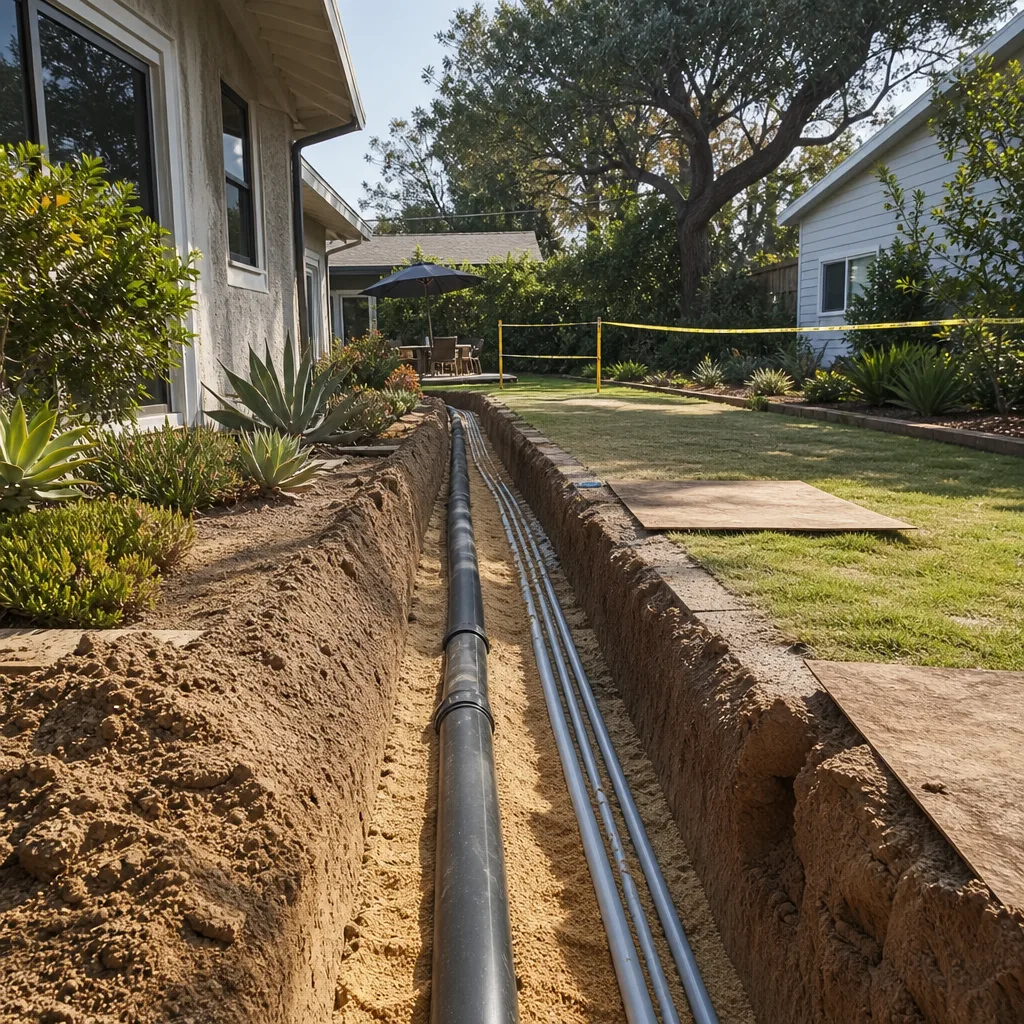
The sewer lateral is the pipe that carries waste from your ADU to the city main. It runs underground, it’s usually 4 inches in diameter, and on most Las Vegas properties built within the last 30 years it’s PVC. The assumption most owners make is that PVC is permanent. It isn’t – not in this soil, not with the trees this valley tolerates.
Here’s the specific combination we see: a mesquite, ficus, or palm tree planted within 20 feet of the lateral, PVC joined with a glue or gasket that shrinks slightly in summer heat cycles, and caliche soil that holds water at the trench line. The tree finds the moisture. Roots find the pipe joints. Within three to five years of the tree reaching canopy size, you have an intrusion.
Symptoms worth noting:
- Slow drains that recur across multiple fixtures in the ADU
- Gurgling from the shower or tub when the toilet flushes
- Sewage smell in the ADU after heavy irrigation cycles
- A soft or sunken patch of ground between the ADU and the main line cleanout
- Tree canopy that’s unusually green over the lateral path even in midsummer
The only reliable diagnosis is a camera scope of the lateral. Every five years is the standard interval we recommend, and every three years if a mesquite or ficus is within 20 feet. A camera scope typically runs a few hundred dollars and finds a problem while it’s still a $600 rooter job instead of a $4,000 lateral replacement under a finished patio.
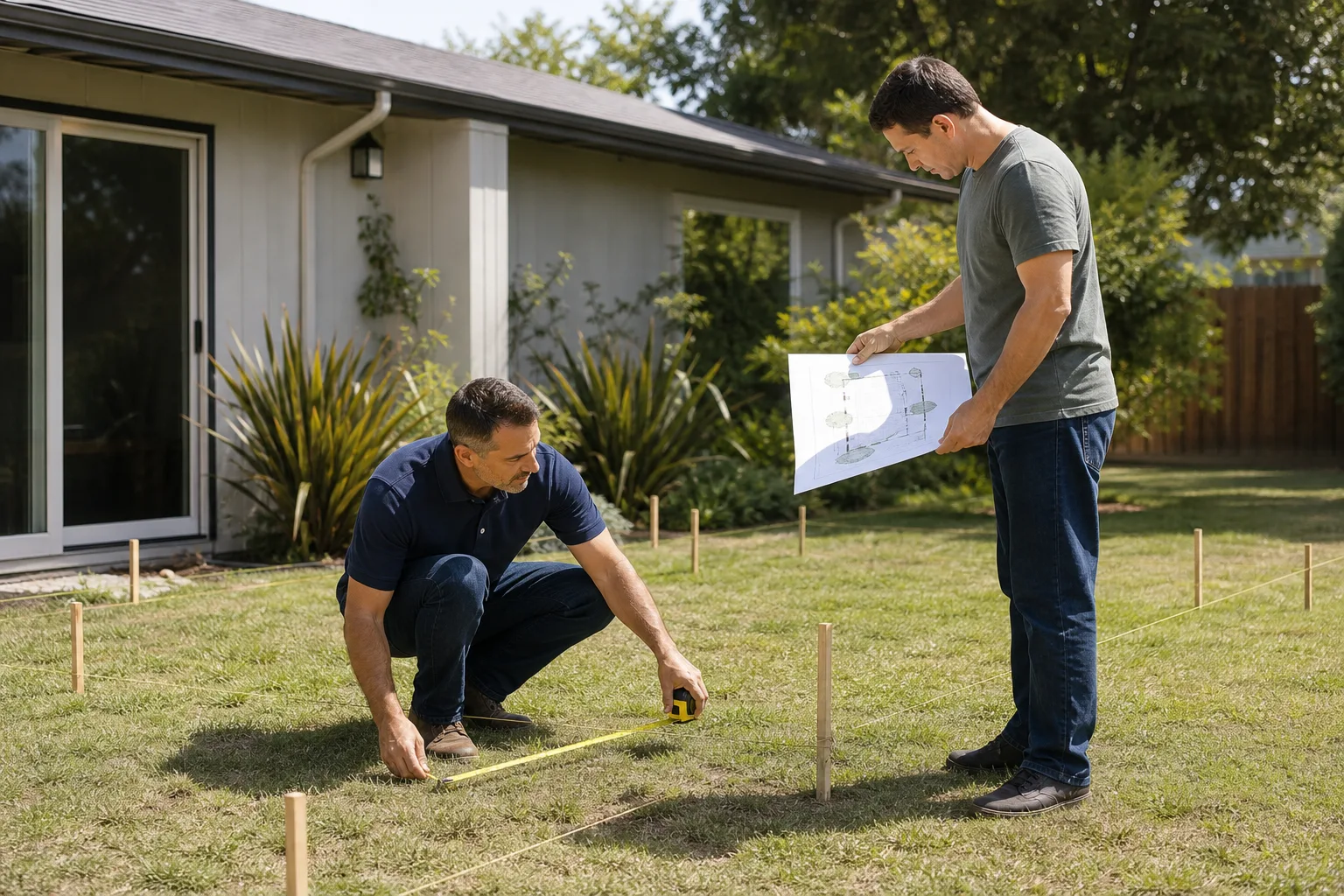
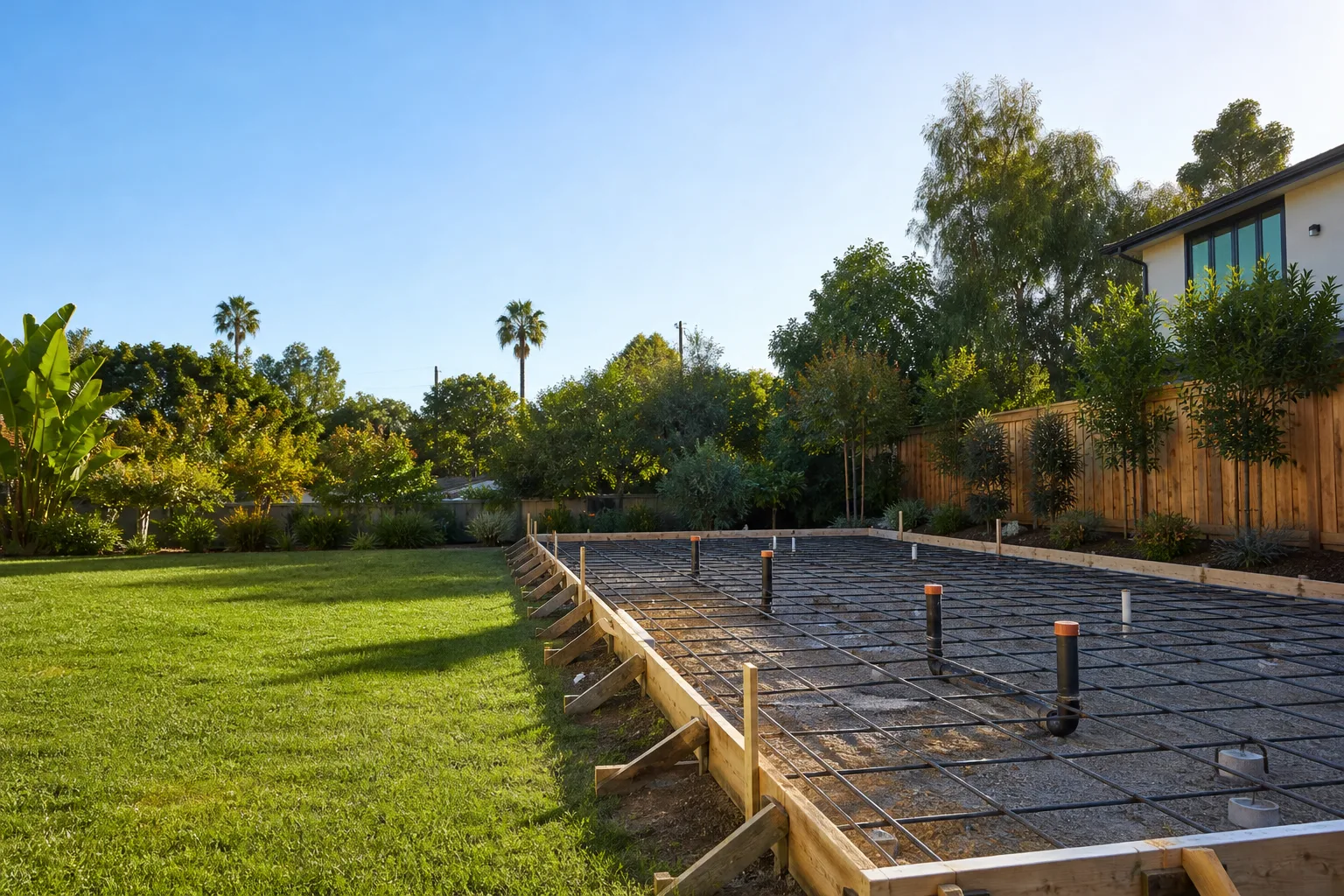
If you’re still in the planning stage, the site prep scope is where you address this. A new detached ADU needs its lateral planned around existing trees, not through their root zones. That’s a conversation we have during the site plan phase, before the trench is ever dug.
Hard Water and the Water Heater Anode Rod
Las Vegas water averages about 290 ppm hardness. The Water Quality Association classifies anything above 180 ppm as “very hard.” What that number translates to inside a tank water heater is scale – calcium carbonate that precipitates out on the heating element and the tank lining and accelerates anode rod consumption. The anode rod is the sacrificial metal rod that corrodes before the tank does. When it’s gone, the tank begins to rust from the inside.
The national average replacement interval for an anode rod is 5-7 years. In Las Vegas, for an ADU with hard water and no softener, that interval compresses to roughly 3-4 years. In practical terms: if you install a water heater when the ADU is finished, you should plan to inspect the anode at year 3 and replace it by year 4.
What to actually do at the inspection:
- Shut off the water heater power at the breaker – not the thermostat dial.
- Shut off the cold inlet valve.
- A licensed contractor loosens the anode nut and threads the rod out. This is one of those jobs that looks simple and isn’t, because the rod is 3-5 feet long and needs headroom above the heater – the water heater closet in most ADUs was not planned for that clearance.
- If more than 50% of the rod is consumed, replace it. If it’s coated in white scale and the core is exposed, replace it.
- While the rod is out, flush the tank to clear sediment, and reinstall or replace the element if it’s scaled.
Owners who skip the anode rod and just wait for a leak end up replacing the whole tank within 6-8 years. Owners who replace the rod on schedule get 12+ years out of the tank. The math on that alone is worth putting an annual inspection on the calendar.
If the ADU uses a tankless unit, the scale issue goes the other way: the heat exchanger scales up faster than a tank, but there’s no anode to replace. The descaling interval in Las Vegas hard water is annually, not every two years like most manufacturers recommend nationally. If your ADU was specified with a tankless system, that annual descale is the single highest-value maintenance task on the whole schedule.
Exterior Conduit, Meter Bases, and UV Degradation
Las Vegas has more than 294 sunny days per year. UV exposure is not evenly distributed across the day; summer afternoons do most of the damage. The parts of your ADU’s electrical system most exposed to it are the exterior conduit runs (from the meter base to the subpanel and from the subpanel to the ADU), the conduit fittings, and the meter base enclosure itself.
What degrades first in Las Vegas:
- PVC conduit – a rigid PVC conduit rated for outdoor use holds up well for about 8-10 years before the surface chalks and the fittings become brittle. Schedule 40 above-ground PVC is more vulnerable than Schedule 80. If your ADU’s conduit was run in Schedule 40 in direct sun, plan on replacing the fittings by year 8.
- Meter base enclosures – the plastic housing on older meter bases fades and cracks. Once cracked, water ingress is a real risk, and NV Energy will require replacement at the next meter change.
- Liquid-tight flexible conduit – used to make the final connection to the AC condenser and the water heater, this junction is where UV cracks first show. Inspect the outer jacket annually.
- Original cable jacket at the disconnect – sunlight degrades the outer sheathing of service-entry cable. A short run exposed at the disconnect should be in conduit, not bare.
The NV Energy annual meter seal inspection is a real task, not a formality. The meter base has a tamper seal on it installed by NV Energy. That seal should be intact. If it’s broken – by weather, by a contractor who pulled the meter without notifying NV Energy, or by a vandal – you have an open electrical enclosure. The fix goes through NV Energy, and a licensed electrician handles the physical meter base replacement. Do not attempt this yourself.
Spring is the right time to schedule the inspection, because UV damage that becomes visible in March is damage that arrived over the winter and is about to be stressed by another summer. A licensed electrician can do a visual inspection of the whole exterior run in under an hour.
Irrigation Audits and Monsoon Drainage
The Southern Nevada Water Authority offers free landscape irrigation audits, and if your ADU includes any outdoor irrigation – even a single drip zone – the audit is worth scheduling. The audit isn’t about water savings, though that’s the WSA’s motivation. The audit is about identifying overwatering patterns that create root pressure on sewer laterals and standing water against the ADU foundation.
What the audit typically catches:
- Zones set to run twice as long as the landscape needs
- Heads aimed at hardscape or the ADU wall rather than planted areas
- Drip emitters over the lateral path
- Controller schedules that haven’t been adjusted since installation
The overspray and overwatering issues directly feed the root intrusion problem covered above. Trees grow toward continuous moisture. If the audit finds you’re watering a zone in the ADU’s back corner heavily, the ficus there is growing toward the lateral faster than it would on a lean schedule.
Monsoon drainage works the other way. The July through September storms in Las Vegas can drop an inch of water in 20 minutes, and the flat ground of most residential lots doesn’t shed it quickly. What you need to verify before monsoon season is:
- The swale between the ADU and the main house is graded and clear.
- Any French drain at the ADU foundation is flowing to a discharge point that’s actually draining.
- Downspouts on the main house discharge away from the ADU slab, not toward it.
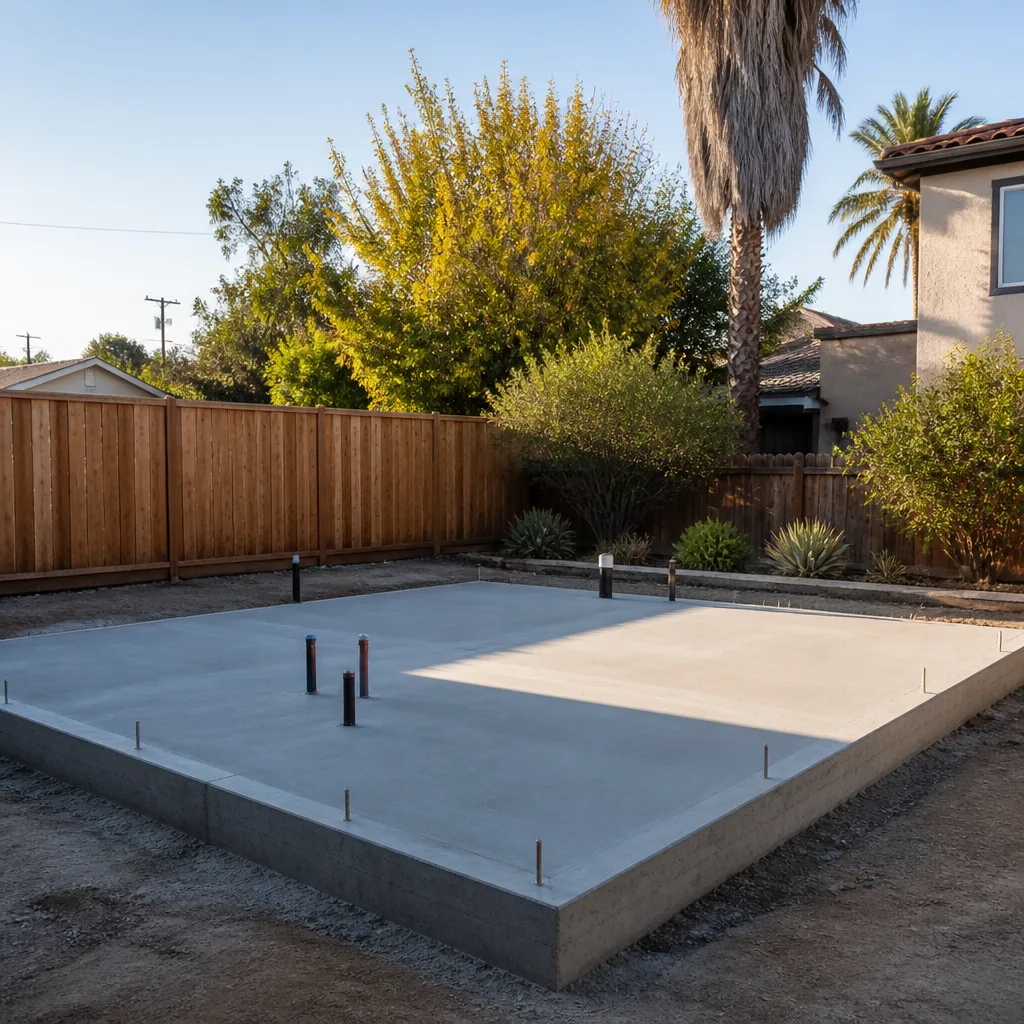
- The ADU slab edge has no gap between the slab and the stucco, where water can wick in.
The pre-monsoon check is one hour of walking and clearing. The cost of skipping it is a settled slab or an undermined foundation, which is a five-figure repair. We schedule this check for a specific June date, not a general “before monsoon” reminder, because Las Vegas storms arrive with two days’ notice at most.
Licensed Contractor vs. Owner-Serviceable Tasks
Which maintenance items a Las Vegas ADU owner can legally handle personally versus which require a licensed Nevada contractor depends on two things: whether the work touches a permitted utility system (electrical, gas, plumbing beyond a fixture), and whether the ADU is a rental. The second point matters more than most owners realize, because a rental property imposes a higher duty of care on the landlord.
Owner-serviceable tasks (no license required):
- Visual inspections and photographs of any component
- Evaporative cooler pad replacement and seasonal cover/uncover
- Clearing debris from swales, drains, and downspout outlets
- Testing irrigation controller operation and adjusting schedules
- Replacing light bulbs and HVAC air filters
- Flushing a tank water heater (draining sediment) with the power off
- Caulking exterior gaps around penetrations
Licensed Nevada contractor required:
- Anode rod replacement (requires plumbing license for the water heater connection)
- Any work inside the electrical panel or meter base
- Any gas line inspection, repair, or connection
- Sewer lateral camera scope and any repair
- Water heater replacement or tankless descaling that involves opening the unit
- Replacing exterior conduit or service-entry cable
- Any gas appliance connection or disconnection
The distinction is not just about technical difficulty. For a rental ADU, doing electrical or gas work without a license creates a liability exposure that a single tenant injury claim can convert into a serious problem. The cost of a licensed contractor for these tasks is a fraction of the risk.
A note on gas specifically: Nevada law requires that any gas line work – including inspection, repair, or connection – be performed by a licensed contractor. We don’t recommend owner-inspection of gas lines beyond noting any smell of mercaptan (the sulfur-like odorant added to natural gas) and calling the utility immediately. Gas line work is one of the areas where the “save money” instinct is expensive in ways that aren’t scaled to the money saved.
Common Mistakes to Avoid
- Treating the maintenance schedule as one-year and done. The heaviest items on the calendar – sewer lateral scope, water heater anode, irrigation audit – run on 3-5 year cycles. A single annual inspection will miss every one of them.
- Skipping the lateral scope because nothing’s backing up. Root intrusion and caliche scale develop silently for 18-24 months before any drain symptom appears. By the time water backs up, you’re already looking at a repair, not an inspection.
- Waiting for the evaporative cooler to quit before servicing it. In Las Vegas, cooler service in June is a 2-week wait. In May, it’s next-day. The cooler that fails in the first 105-degree week means the ADU tenant has no cooling until a technician can get to it.
- Replacing a water heater instead of the anode rod. In hard water markets like Las Vegas, an 8-year-old tank with a consumed anode is a candidate for replacement – but a 5-year-old tank with a consumed anode just needs a new rod, and that’s a $100-200 job, not a $1,500 one.
- Running exterior conduit inspection only when it visibly cracks. UV damage starts at the fittings and the junction points well before the conduit body shows it. In March, the failure is already there and another summer is about to find it.
- Scheduling monsoon drainage checks in August. The check has to happen before the storms, ideally in June. If the swale is blocked, discovering it during a storm means discovering it with water already against the slab.
- Doing gas or electrical work without a license on a rental ADU. This is the mistake that carries the highest legal exposure and the smallest cost savings. Licensed contractor, always, for these items.
When to Call a Professional
Call a licensed professional for any of the following on a Las Vegas ADU: any sewage backup or recurring slow drain (lateral scope, same week), any gas smell or gas connection work, any electrical panel, meter base, or exterior conduit replacement, water heater anode rod replacement at the year-3 or year-4 inspection, tankless water heater descaling, and any post-monsoon water intrusion into the ADU’s slab edge or wall. Also call a professional after any storm that drops more than half an inch in an hour, to verify the drainage path held.
For the scope of work and an accurate written price before anything starts, Ellery ADU Studio Las Vegas offers free estimates across Las Vegas. We’ve built our practice on a written price before work begins (Haven Standard, Clause 1), a documented photo record on every visit, and a live person who answers the phone at (866) 779-3194. If you already have a written estimate from another contractor, we’ll do a free second opinion on it – no obligation, no pressure.
Frequently Asked Questions
Every five years is the standard interval, and every three years if a mesquite, ficus, or palm tree is within 20 feet of the lateral path. Caliche soil and PVC joint movement in summer heat cycles create the conditions for root intrusion faster than in softer soils. The cost of a scope now is a fraction of a lateral replacement, so we recommend putting the five-year date on the calendar at the time the ADU is finished.
Las Vegas water averages 290 ppm hardness, which is roughly three times the “very hard” threshold. That hardness accelerates anode consumption from the national 5-7 year interval to 3-4 years locally. Tankless water heaters also need annual descaling in Las Vegas, not the every-other-year schedule most manufacturers publish.
NV Energy installs and reseals the meter at the meter base. You hire a licensed electrician for the visual inspection of the meter base itself and any replacement. If the seal is broken or the base is damaged, the electrician handles the enclosure work and NV Energy handles the seal. Schedule this annually, ideally in spring before summer load hits the panel.
Optional, free, and worth it if the ADU has any outdoor irrigation. The audit identifies overwatering patterns that feed root growth near sewer laterals and standing water against the ADU foundation. It’s not mandatory, but it’s the least expensive way to catch a problem before it becomes a lateral scope and a foundation report.
You can do visual inspections, cooler pad swaps, drainage clearing, and irrigation controller adjustments yourself on a rental ADU. Any work touching the electrical panel, gas lines, water heater connection, or sewer lateral requires a licensed Nevada contractor. On a rental, the liability math makes licensed work the only defensible option for those items.
The first-year calendar should include a post-monsoon drainage walk in September (after the first full monsoon cycle), a water heater anode inspection in March, and a spring photo record of every utility component (lateral cleanout, meter, disconnect, water heater data plate, irrigation controller). That photo baseline is what makes year-5 diagnosis possible. Our crews include this photo record on every visit as part of our standard practice – documented evidence, not a summary.
The Bottom Line
An ADU in Las Vegas has two maintenance schedules: the building, which is forgiving, and the site utilities, which are not. The infrastructure calendar is driven by specific local conditions – 290 ppm hard water, caliche soil, 294+ sunny days, monsoon season that runs July through September. Sewer lateral scopes every five years, water heater anode replacement every 3-4 years, spring exterior conduit and meter base inspection, July monsoon drainage check, October cooler shutdown, pre-spring irrigation audit. That’s the whole calendar. The rest is documentation and a licensed contractor for anything touching electrical, gas, water heater, or lateral work. Get the calendar in place, and the ADU utilities stop being something you worry about and start being something you maintain on schedule.
If you’re planning a new ADU, or if a Las Vegas ADU you own needs its first proper utilities assessment, we can help. Our design-build model under the Ellery ADU Studio Las Vegas home covers site prep and utilities alongside ADU Design & Permitting in Las Vegas, Garage Conversion ADU in Las Vegas, and New Detached ADU in Las Vegas – all on one contract at one written price. We coordinate prefab and modular systems from providers like Plant Prefab and Tuff Shed when that’s the right fit, and we handle the site trench, the laterals, and the drainage plan under the same scope. Call (866) 779-3194 for a free estimate. We answer live, any hour. If you already have a written estimate, we’ll give you a second opinion on it at no cost. The Haven Standard governs every project: written price before work starts (Clause 1), photo record on every visit, and the 365-Day Done Right Promise – if it’s not built to the permitted drawings, we make it right, in writing, before the project starts.
Written by the team at Ellery ADU Studio Las Vegas.