Last updated November 17, 2026
Junior ADU & Interior Conversion Maintenance Schedule: What to Do and When
The day your JADU permit closes, your landlord obligations start. That’s the part most owners miss. A junior ADU carved from an existing bedroom or den inherits every bit of the original home’s deferred maintenance, but the moment it becomes a rentable unit, that maintenance stops being your private inconvenience and becomes a habitability question under Nevada law. A fan that rattles is now a code citation waiting to happen. We’ve walked Las Vegas homeowners through this exact transition, and the pattern is consistent: the systems that were “fine for us” are not fine when someone else lives there. What follows is a dated, task-specific calendar so you know what gets checked in January versus July, and which systems are yours to maintain versus shared with the primary dwelling.
Quick Answer
A junior ADU in Las Vegas needs a documented maintenance calendar that covers smoke and CO detectors monthly, bathroom exhaust ventilation quarterly, door-lock hardware on the separating wall quarterly, and a full habitability inspection twice a year in spring and fall. Systems the JADU shares with the primary dwelling, like the electrical panel and main sewer lateral, stay on the main house schedule. Systems that became the JADU’s own responsibility at permit close, including dedicated circuit breakers and egress window hardware, need their own tracked log. Under Nevada Revised Statutes Chapter 118A, you’re the one who answers for all of it.
Table of Contents
- Which Systems the JADU Shares and Which It Owns
- How NRS Chapter 118A Habitability Rules Map to Your Calendar
- The Three Maintenance Items Most Cited in Clark County Complaints
- The Monthly and Quarterly Checklist
- The Las Vegas Seasonal Calendar: August Monsoon and October Transition
- Why Documented Maintenance Logs Protect You
- The Full Annual Walk-Through, Month by Month
- When a Task Crosses Into Professional Territory
Which Systems the JADU Shares and Which It Owns
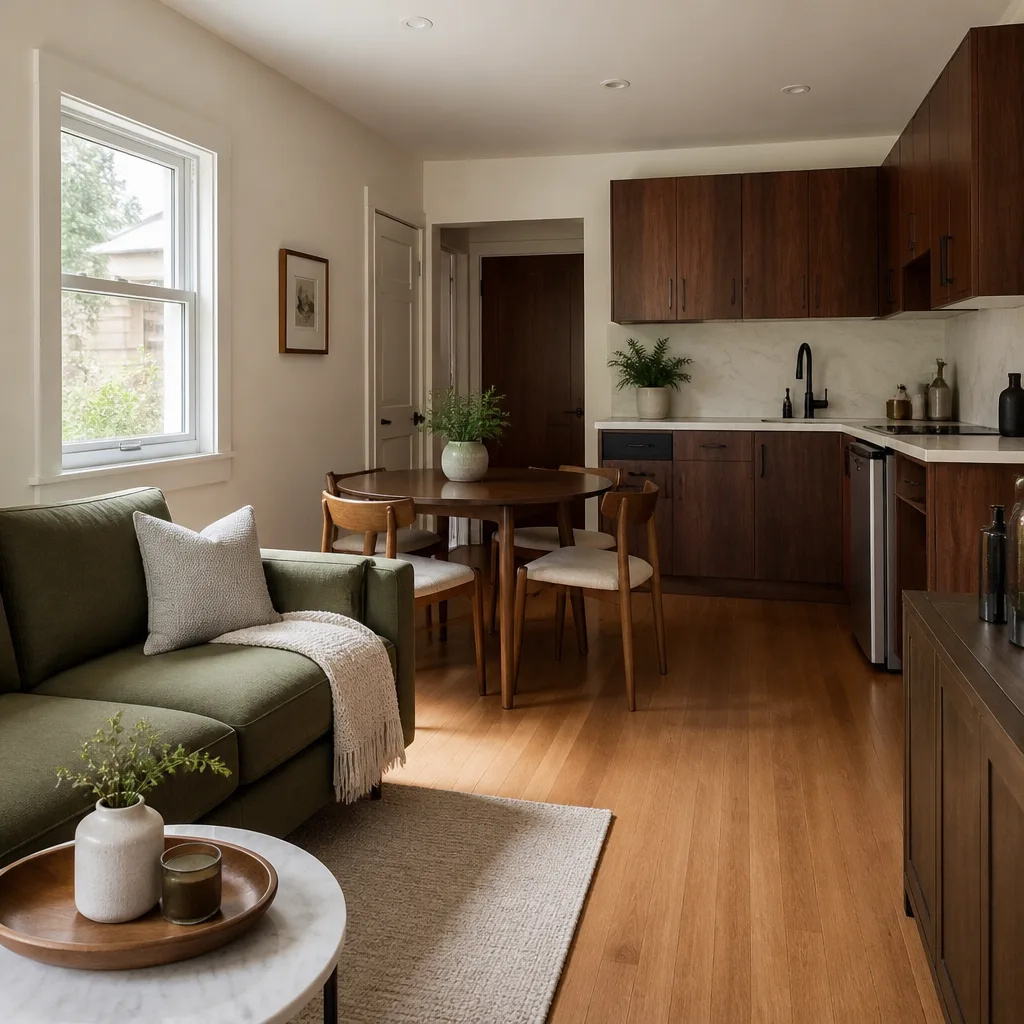
This is the first thing to settle, and it’s the question that trips up almost every owner we’ve worked with on a garage conversion ADU in Las Vegas or an interior carve-out. A junior ADU is not a fully independent building. It borrows infrastructure from the main house, and the permit set draws a line around what stays shared and what becomes the unit’s own.
Shared systems, which remain on the primary dwelling’s maintenance schedule:
- The electrical panel. A JADU typically adds a subpanel or dedicated breakers inside the existing service. The main panel still serves both, so panel inspections stay a whole-property task, not a unit task.
- The main sewer lateral. The line from the house to the street is shared. Root intrusion or a blockage affects both units, and it’s a single repair.
- The water heater, unless the permit set specifies a dedicated unit. Most junior ADUs share the primary water heater. If yours got its own, add it to the independent list below.
- The roof and exterior envelope. The JADU sits under the same roof. No separate roof schedule.
Systems that became the JADU’s own responsibility at permit close:
- Dedicated circuit breakers. The breakers feeding the JADU’s kitchenette, bathroom, and outlets are labeled in the panel but belong to the unit. Trip-testing them is now a unit task.
- Egress window hardware. Every sleeping room needs an operable egress window. The latch, the screen, and the opening mechanism are life-safety equipment and need quarterly attention, not annual.
- Bathroom exhaust ventilation. The JADU bathroom’s fan is separate from the main house system in most conversions. It’s now a habitability item.
- Smoke and CO detectors. The JADU needs its own interconnected detectors, and they’re the unit’s to maintain.
- Door-lock hardware on the separating wall. The door between the JADU and the main house is a security and privacy device. It’s cited in complaints more often than you’d expect.
If you’re still in planning, the ADU Design & Permitting in Las Vegas stage is where this line gets drawn on paper. Get it right in the permit set and the maintenance calendar writes itself.
How NRS Chapter 118A Habitability Rules Map to Your Calendar
Nevada Revised Statutes Chapter 118A sets the habitability floor for rental housing in this state, and it doesn’t care that your unit is attached to your house. The statute lists conditions a landlord must maintain: working smoke detectors, functioning plumbing and hot water, adequate heating, safe electrical systems, and weather-tight windows and doors, among others. A tenant can raise these as a defense or a complaint, and Clark County code enforcement responds to them.
Here’s how the statutory requirements translate into inspection intervals. Generic “check annually” advice doesn’t hold up, because different items fail on different clocks.
- Smoke and CO detectors: test monthly, replace batteries at the daylight saving time changes in March and November, replace the whole unit per the manufacturer’s date code (typically every 10 years). These are the single most-cited habitability item in Clark County complaints.
- Bathroom exhaust ventilation: inspect the fan and clean the grille quarterly; verify airflow to the exterior every six months. A fan that runs but doesn’t move air is a moisture and mold problem waiting to be cited.
- Heating: verify operation every October before the first cold snap, and confirm the thermostat holds temperature. Las Vegas winter nights get cold enough that a failed heat pump becomes an emergency.
- Plumbing and hot water: check for leaks and test hot water temperature quarterly. A water heater serving two units works harder than one serving a single household.
- Weather-tight windows and doors: inspect seals and weatherstripping every August before monsoon season and again in spring.
- Electrical: trip-test the JADU’s dedicated breakers semi-annually and inspect outlets and switch plates for damage quarterly.
The habitability statute doesn’t specify a calendar. It specifies outcomes. Your documented maintenance log is how you show you maintained them.
The Three Maintenance Items Most Cited in Clark County Complaints
We’ve reviewed enough Clark County rental housing complaints and inspection outcomes to see the same three items surface again and again. They’re cheap to maintain and expensive to ignore.
1. Smoke and CO detector functionality. A dead detector in a unit with a sleeping occupant is the fastest route from a maintenance oversight to a serious liability claim. Test monthly, log the date, and don’t rely on the tenant to tell you it’s chirping. The JADU needs interconnected detectors so a fire in one part of the unit alerts the whole unit, and CO detection near any gas appliance or attached garage.
2. Bathroom exhaust ventilation. In a Las Vegas JADU with a small bathroom, a fan moving inadequate air turns every shower into a moisture load the unit can’t shed. The complaint usually shows up as visible mold on the ceiling or peeling paint. Clean the grille quarterly, verify the fan exhausts to the exterior and not into the attic, and replace a weak fan rather than argue about it.
3. Door-lock hardware on the separating wall. The connecting door between the JADU and the main house is a privacy and security device. A latch that doesn’t seat, a deadbolt that sticks, or a door that doesn’t close fully gets cited as a security defect. Inspect quarterly, lubricate the mechanism, and replace failing hardware promptly. This one is easy to overlook because it feels like an interior door, but it’s the boundary between two households.
The Monthly and Quarterly Checklist
Keep this short list where you’ll actually see it. The monthly items take ten minutes. The quarterly items take an hour and prevent the expensive surprises.
Monthly:
- Press the test button on every smoke and CO detector in the JADU and confirm the alarm sounds.
- Look under the bathroom and kitchenette sinks for moisture or staining.
- Confirm the egress window in the sleeping room opens and closes smoothly.
Quarterly:
- Clean the bathroom exhaust fan grille and confirm airflow with a tissue test at the vent.
- Trip-test the JADU’s dedicated circuit breakers and reset them.
- Inspect door-lock hardware on the separating wall and the unit’s entry door; lubricate and tighten.
- Test hot water temperature at the JADU tap.
- Check weatherstripping on exterior doors and windows.
The Las Vegas Seasonal Calendar: August Monsoon and October Transition
Las Vegas maintenance isn’t generic. Two points on the calendar matter more than the rest, and they don’t show up on national checklists.
August: pre-monsoon window and door seal check. The desert monsoon season brings sudden intense rain and wind between July and September. Water intrusion through a failed window seal in a JADU shows up as staining on interior drywall, and by then the repair is bigger than the seal. Walk the unit’s exterior windows and doors in early August, check caulking and weatherstripping, and confirm the flashing above any converted garage door opening is intact. On a conversion, that former garage opening is the most likely leak point.
October: swamp-cooler-to-heat-pump transition. Plenty of Las Vegas homes still run evaporative cooling, and the heating system may be a separate heat pump or furnace. In October, before the first cold night, verify the heating system operates, confirm the thermostat holds temperature, and if the home uses a swamp cooler, confirm it’s been drained and winterized and the heating side is running. A JADU tenant without heat in December is a habitability complaint, not a service call.
Add two more seasonal notes: in April, service the cooling system before the first triple-digit week, because HVAC technicians book out fast in May. In December, re-check exterior door seals and any exposed pipe runs against a hard freeze, which Las Vegas gets more often than newcomers expect.
Why Documented Maintenance Logs Protect You
A maintenance log is the difference between “we maintain the unit” and “here is what we did, on this date, with a photo.” In a tenant dispute, the log is your evidence of reasonable care. In an insurance claim after a water leak or a fire, the log shows the systems were maintained and the failure wasn’t neglect. Most policies don’t require a log, but most adjusters respond differently to a claim with dated records than to one without.
What a useful log contains:
- Date and task performed, with the specific unit and system named.
- A photo of the item before and after, especially for detector tests, fan cleaning, and any repair.
- Who performed the work, whether you or a technician, and the invoice or receipt for any professional service.
- Any tenant-reported issue and how it was resolved, with dates.
This is the same principle behind the documented photo record we provide on every visit at Ellery ADU Studio Las Vegas: evidence of what was found and what was done, not a summary of how it felt. Under The Haven Standard, that record is a written commitment, and it’s the kind of documentation a landlord should replicate in a smaller way for a JADU.
The Full Annual Walk-Through, Month by Month
Here’s the whole year in one place, so nothing falls through the cracks. Print it, tape it inside a cabinet in the JADU, and check items off as you go.
- January: Post-holiday detector battery check; inspect for any storm damage from winter rain; confirm heating holds temperature on a cold night.
- February: Check under-sink plumbing and the water heater for leaks; test the JADU’s dedicated breakers; lubricate door hardware.
- March: Daylight saving battery change for all detectors; clean the bathroom fan; inspect exterior door seals.
- April: Service the cooling system before the heat; test egress window operation; check window screens and seals.
- May: Confirm HVAC cooling performance; inspect the roof above the JADU for lifted shingles or debris; check exterior caulking.
- June: Verify bathroom exhaust airflow; check for condensation or moisture staining; test detectors.
- July: Pre-monsoon inspection begins; check window and door seals, flashing, and drainage away from the unit.
- August: Full monsoon seal check; re-test egress window hardware; inspect for any water intrusion after the first storm.
- September: Post-monsoon check for staining or leaks; clean the bathroom fan; inspect door locks.
- October: Swamp-cooler winterization and heat-pump transition; confirm heating operation before the first cold night; trip-test breakers.
- November: Daylight saving battery change; check exterior seals against cold and wind; test detectors.
- December: Freeze-protection check on exposed pipes; test heating again; year-end log review and photo record update.
Common Mistakes to Avoid
- Treating the JADU like a spare room. Once it’s rented, the maintenance standard changes from “good enough for us” to the habitability floor in NRS 118A. Skipping that shift is the most common error we see.
- Assuming the main house schedule covers the JADU. Detectors, exhaust fans, and separating-wall locks won’t get checked unless you put them on their own list. They aren’t on the primary dwelling’s calendar.
- Ignoring the egress window until inspection day. A latch that sticks in July may not open in a fire. Test it quarterly, not annually.
- Running the bathroom fan without verifying it exhausts outside. A fan ducted into the attic moves moisture from the bathroom into the structure. Confirm exterior termination.
- Skipping the August seal check because “it never rains here.” The monsoon is real, and a failed window seal in a converted garage opening is a costly repair.
- Keeping no written log. Without dates and photos, a tenant dispute becomes your word against theirs. The log is your defense.
- Heating the JADU on a shared thermostat with no verification. If the JADU shares the main HVAC, confirm in October that the unit actually reaches temperature on its own, not just the main house.
When to Call a Professional
Most JADU maintenance is owner-level work: testing detectors, cleaning fan grilles, lubricating door hardware, checking seals. A few tasks cross into professional territory and shouldn’t be handled casually. Call a licensed electrician for any work inside the panel, for a breaker that trips repeatedly, or for outlets that feel warm or show scorch marks. Electrical work is not a homeowner task beyond pressing a test button. Call an HVAC technician for a heat pump that won’t hold temperature, a cooling system that loses performance, or any refrigerant work. Call a plumber for a water heater that leaks, a sewer lateral that backs up, or persistent moisture you can’t trace. And if you’re planning the JADU itself or reworking a conversion, the New Detached ADU in Las Vegas and interior conversion services are where a design-build approach saves you from the blame gap between designer and builder. Ellery ADU Studio Las Vegas offers free estimates in Las Vegas and a Free Second Opinion on any written estimate you already hold. Call (866) 779-3194.
Frequently Asked Questions
Test them monthly and change batteries at the March and November daylight saving time changes. Smoke and CO detector functionality is the most-cited habitability item in Clark County rental complaints, so monthly testing with a dated log is the minimum. Replace the whole detector per the manufacturer’s date code, typically every 10 years. If you’re unsure how many detectors the unit needs, call (866) 779-3194 for a free estimate.
Yes. Once the unit is rented, Nevada Revised Statutes Chapter 118A habitability requirements apply to it the same as any rental, regardless of whether it’s attached to your primary dwelling. That covers working detectors, plumbing, hot water, heating, safe electrical, and weather-tight windows and doors. The statute specifies outcomes, not a calendar, so a documented maintenance log is how you show compliance.
The electrical panel, main sewer lateral, roof, and (usually) the water heater stay on the primary dwelling’s schedule because they’re shared. The JADU’s dedicated circuit breakers, egress window hardware, bathroom exhaust fan, detectors, and separating-wall door locks are the unit’s own responsibility. Write the line down at permit close so you’re not guessing later.
Window and door seals, caulking, weatherstripping, and flashing above any converted garage opening. Do the walk-through in early August, before the first storm, because water intrusion through a failed seal shows up as drywall staining and a bigger repair. If you find a leak you can’t trace, call (866) 779-3194 for a free estimate.
October, before the first cold night. Verify the heating system operates, drain and winterize the evaporative cooler if the home uses one, and confirm the JADU reaches temperature on its own. A tenant without heat in December is a habitability complaint, so this check is not optional.
It’s your evidence of reasonable care: dated tasks, photos, and receipts that show the systems were maintained. In a dispute or an insurance claim, a documented log changes the conversation from assertion to record. The same principle behind the documented photo record we include on every visit applies to any landlord: evidence, not summary.
The Bottom Line
A junior ADU maintenance schedule in Las Vegas comes down to a few clear rules. Separate the systems the unit shares with the primary dwelling from the ones it owns. Test smoke and CO detectors monthly. Clean the bathroom fan and inspect the separating-wall locks quarterly. Run the full habitability check twice a year, and put the August monsoon seal check and October heat transition on the calendar in ink. Keep a dated log with photos, because under NRS Chapter 118A the documentation is your defense. The floor is a hard minimum once someone else lives there, and skipping it turns a ten-minute task into a citation.
If you’re planning a junior ADU or interior conversion, or you want a free second opinion on a written estimate you already have, the team at Ellery ADU Studio Las Vegas is here. Every project is quoted at one written price before any work starts, under The Haven Standard, with a documented photo record and a 365-Day Done Right Promise in writing. Visit our Ellery ADU Studio Las Vegas home to see how the design-build model keeps drawings, permitting, and construction under one contract, call (866) 779-3194 for a free estimate, and know that a live person answers calls 24/7.
Written by the team at Ellery ADU Studio Las Vegas.